Beauty Beyond Orphanhood: The Story of Esther
"And he brought up Hadassah, that is, Esther, his uncle's daughter: for she had neither father nor mother, and the maid was fair and beautiful; whom Mordecai, when her father and mother were dead, took for his own daughter." - Esther 2:7
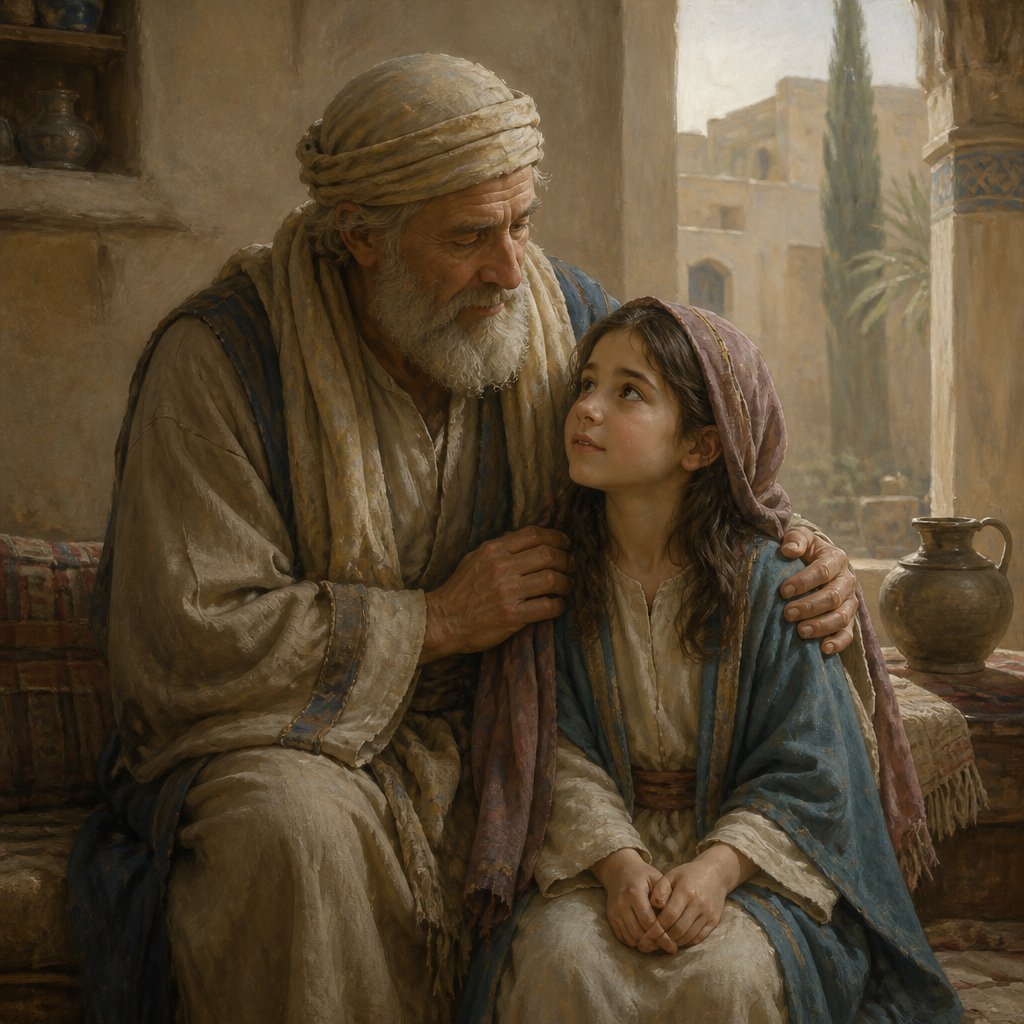
The story of Esther is one of courage, beauty, and divine providence. In Esther 2:7, we encounter a young woman named Hadassah, known popularly as Esther, who emerged from the shadows of her orphaned status to become a queen of great significance in the Persian Empire and a pivotal figure in the history of Israel. The verse states: "And he brought up Hadassah, that is, Esther, his uncle's daughter: for she had neither father nor mother; and the maid was fair and beautiful; whom Mordecai, when her father and mother were dead, took for his own daughter" (Esther 2:7, KJV).
This brief verse holds a wealth of implications about identity, legacy, and the hand of God in seemingly deserted circumstances. Esther, like many of us at different points in our lives, faced the daunting reality of loss and loneliness. Orphaned, and without the immediate support of parents, Esther might have been set on a path that indicated obscurity or even despair. However, it was Mordecai, her cousin, who stepped in to fulfill the role of a father and provided her with love and guidance. This speaks volumes about the importance of community and family support that can emerge from unexpected places. Mordecai's act sets a profound example of how we can step into the gaps left by tragedy and loss in the lives of those around us.
In today’s fast-paced world, many face the realities of feeling abandoned, lost, or forgotten. We might find ourselves asking, “What purpose could God possibly have for my life?” Esther’s life, rich with divine favor and purpose, challenges this narrative by showcasing a beautiful truth: God can— and does— work through those deemed insignificant or unloved.
Esther's beauty wasn't just physical; it transcended to her inner qualities—her bravery, wisdom, and ultimately, her willingness to stand for her people. The scripture describes her as "fair and beautiful," indicative of both her outward appearance as well as an inner attractiveness that resonated with those around her. This dual beauty teaches us that while physical beauty can gain attention, it is the beauty of character and integrity that influences and leaves a lasting legacy.
When Esther was chosen to be presented before the king, she did not come as an individual with a pedigree or a known lineage. Her humble beginnings contrast starkly with the royal platform she eventually occupied. This transition reflects the heart of the Gospel: From humble, often unnoticed beginnings can rise greatness if one is willing to embrace their identity in God.
As readers of Esther’s story, we are reminded that God has a plan that often operates in the shadows; He is attuned to our cries even when we feel abandoned. Esther may have felt alone in her loss, but ultimately, her story illustrates that the uniqueness of her situation was used for a greater good—the salvation of her people. In the same way, our perceived weaknesses or disadvantages can be transformed into strengths for the edification of others.
Further, Mordecai's involvement in Esther's life emphasizes the critical role of mentorship and support. Are there people in your life whom you could encourage or nurture? Like Mordecai, God places us in relationships that shape our identities and pave the way for us to fulfill our destinies.
In conclusion, Esther's journey teaches us that beauty and purpose often come from unexpected places. Even if life has left you feeling like an orphan, remember that you are valued, loved, and placed exactly where God needs you to be. Every hardship we face could very well be a stepping stone toward our highest calling. Are you willing to embrace your journey, trusting God's perfect plan for your life, as Esther did? Let us look beyond our circumstances and allow God to use our stories for something magnificent.
Want to reflect more on Esther 2:7?
Continue your spiritual journey with Bible Chat — an AI-powered tool for exploring God's Word through conversation. Ask questions, discover connections, and deepen your understanding.
Get Our Apps


Esther 2:7 Artwork

Esther 2:7 - "And he brought up Hadassah, that is, Esther, his uncle's daughter: for she had neither father nor mother, and the maid was fair and beautiful; whom Mordecai, when her father and mother were dead, took for his own daughter."
"And he brought up Hadassah, that is, Esther, his uncle's daughter: for she had neither father nor mother, and the maid was fair and beautiful; whom Mordecai, when her father and mother were dead, took for his own daughter." - Esther 2:7

Esther 7:2 - "And the king said again unto Esther on the second day at the banquet of wine, What is thy petition, queen Esther? and it shall be granted thee: and what is thy request? and it shall be performed, even to the half of the kingdom."

Esther 5:7 - "Then answered Esther, and said, My petition and my request is;"

Esther 7:1 - "So the king and Haman came to banquet with Esther the queen."

Esther 7:6 - "And Esther said, The adversary and enemy is this wicked Haman. Then Haman was afraid before the king and the queen."

Esther 7:7 - "¶ And the king arising from the banquet of wine in his wrath went into the palace garden: and Haman stood up to make request for his life to Esther the queen; for he saw that there was evil determined against him by the king."

Esther 9:7 - "And Parshandatha, and Dalphon, and Aspatha,"

Esther 2:22 - "And the thing was known to Mordecai, who told it unto Esther the queen; and Esther certified the king thereof in Mordecai's name."

"So the king and Haman came to banquet with Esther the queen." - Esther 7:1

Esther 8:7 - "¶ Then the king Ahasuerus said unto Esther the queen and to Mordecai the Jew, Behold, I have given Esther the house of Haman, and him they have hanged upon the gallows, because he laid his hand upon the Jews."
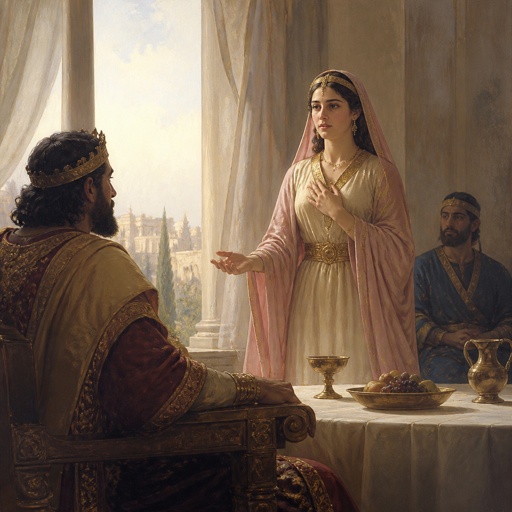
"Then answered Esther, and said, My petition and my request is;" - Esther 5:7

Esther 7:5 - "¶ Then the king Ahasuerus answered and said unto Esther the queen, Who is he, and where is he, that durst presume in his heart to do so?"
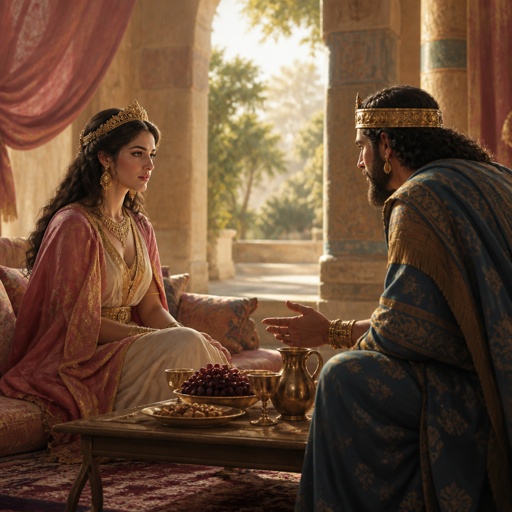
"And the king said again unto Esther on the second day at the banquet of wine, What is thy petition, queen Esther? and it shall be granted thee: and what is thy request? and it shall be performed, even to the half of the kingdom." - Esther 7:2

Esther 5:2 - "And it was so, when the king saw Esther the queen standing in the court, that she obtained favour in his sight: and the king held out to Esther the golden sceptre that was in his hand. So Esther drew near, and touched the top of the sceptre."
"And Parshandatha, and Dalphon, and Aspatha," - Esther 9:7

Esther 2:20 - "Esther had not yet shewed her kindred nor her people; as Mordecai had charged her: for Esther did the commandment of Mordecai, like as when she was brought up with him."

Esther 5:2

Esther 5:2

Esther 5:2

Esther 2:11 - "And Mordecai walked every day before the court of the women's house, to know how Esther did, and what should become of her."

Esther 6:7 - "And Haman answered the king, For the man whom the king delighteth to honour,"

Esther 2:10 - "Esther had not shewed her people nor her kindred: for Mordecai had charged her that she should not shew it."

"And Esther said, The adversary and enemy is this wicked Haman. Then Haman was afraid before the king and the queen." - Esther 7:6

Esther 7:3 - "Then Esther the queen answered and said, If I have found favour in thy sight, O king, and if it please the king, let my life be given me at my petition, and my people at my request:"

Esther 5:2 - "And it was so, when the king saw Esther the queen standing in the court, that she obtained favour in his sight: and the king held out to Esther the golden sceptre that was in his hand. So Esther drew near, and touched the top of the sceptre."

"And the thing was known to Mordecai, who told it unto Esther the queen; and Esther certified the king thereof in Mordecai's name." - Esther 2:22

Esther 2:16 - "So Esther was taken unto king Ahasuerus into his house royal in the tenth month, which is the month Tebeth, in the seventh year of his reign."

Esther 8:2 - "And the king took off his ring, which he had taken from Haman, and gave it unto Mordecai. And Esther set Mordecai over the house of Haman."

Esther 7:10 - "So they hanged Haman on the gallows that he had prepared for Mordecai. Then was the king's wrath pacified."