The Hidden Path of Purpose: Lessons from Esther 2:14
"In the evening she went, and on the morrow she returned into the second house of the women, to the custody of Shaashgaz, the king's chamberlain, which kept the concubines: she came in unto the king no more, except the king delighted in her, and that she were called by name." - Esther 2:14
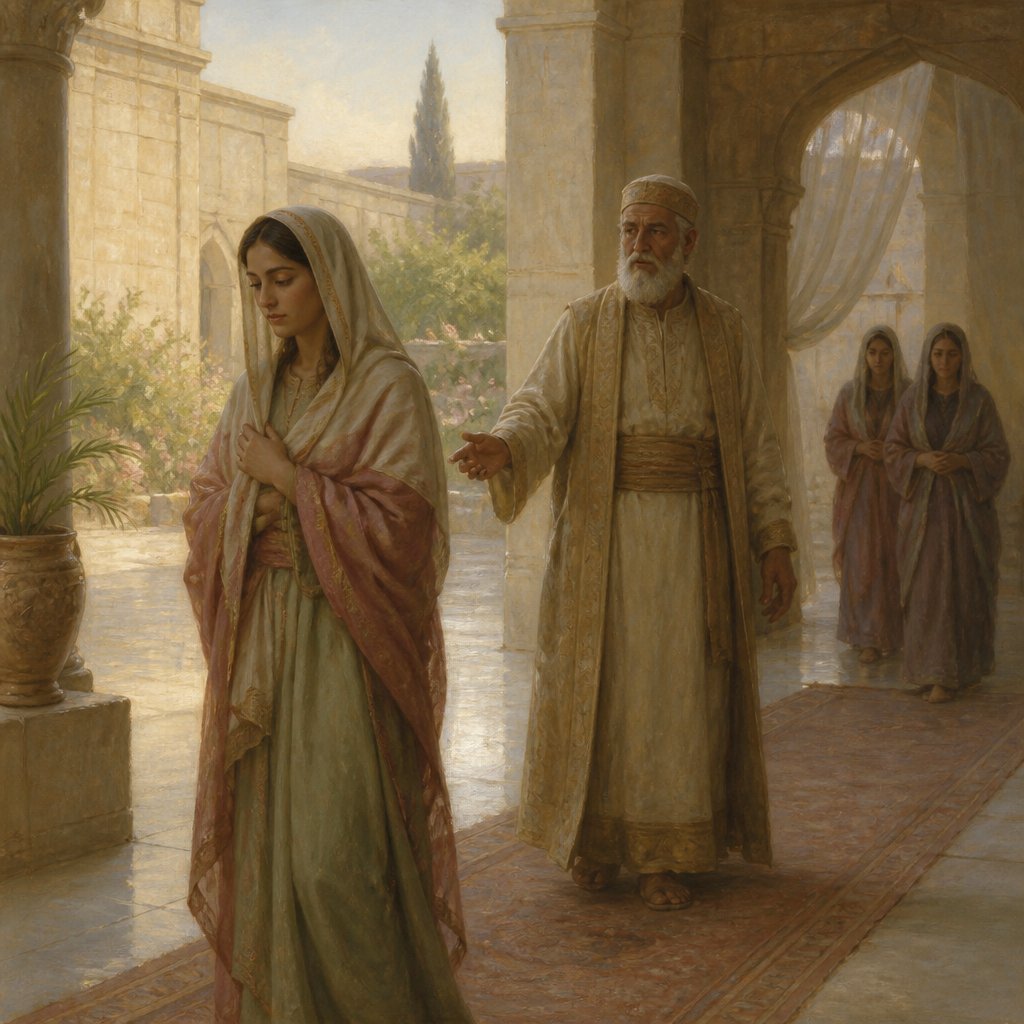
In the book of Esther, we encounter a remarkable young woman whose life was mysteriously woven into the grand tapestry of God’s plan. Esther 2:14 (KJV) reads: "In the evening she went, and on the morrow she returned into the second house of the women, to the custody of Shaashgaz, the king's chamberlain, which kept the concubines: she came in unto the king no more, except the king delighted in her, and that she were called by name."
This verse comes at a pivotal moment in Esther's life. She had already experienced the turmoil of being uprooted from her home, thrust into a beauty pageant to win the heart of the Persian king, Ahasuerus. It was a process that stripped her of her identity as an ordinary Jewish girl and placed her in a tenuous position as a potential queen. But even as her beauty made her stand out, what begins to unfold is more than just a search for a queen; it is a search for purpose in a challenging and often dark world.
When we examine the roles described here, we see the stark reality of Esther’s situation. "The second house of the women" was not a place of honor but rather one of confinement, where women were kept separate from the king unless they were summoned. The term "concubines" implies a status of diminished value—these were women who were beautiful but had none of the authority or esteem that a queen would have.
Esther’s story here is a poignant reminder of the often-hidden paths to purpose. While she desires to be cherished by the king, she unmasks the deeper truth that our worth is not defined by human approval or accolades. The verse concludes with the simple but profound truth: her return to the second house signified an acceptance of her current station, and she came in unto the king no more "except the king delighted in her." This points to the delicate orchestration that God has for each of our lives. The waiting period, while feeling like a descent into obscurity, was, in reality, a preparation season for her destiny.
As we reflect on our lives, we can sometimes feel like Esther, caught in situations that seem trivial or limiting. It is essential to remember that every moment of waiting is an opportunity for growth and preparation. The "custody of Shaashgaz" is a symbol of seasons when we feel unseen or overlooked, perhaps waiting for a call that never seems to come. But God is at work, shaping us, refining us, and positioning us where we need to be for His purpose to unfold.
What does it mean to be "called by name?" In Esther's case, her favor with the king was not random but rather divinely orchestrated. In our lives, being called by name signifies divine recognition and purpose. It reassures us that God sees us, knows us, and, in His perfect timing, will call us into the fullness of what we are meant to fulfill.
This chapter of Esther’s life guides us to trust in God's sovereignty and timing. The world may try to label us, box us in, or ignore us, but we can find comfort in the knowledge that we have a purpose beyond our immediate circumstances. God desires to use us, often in unexpected ways. As we navigate the uncertainties of our journey, let us tune our hearts to hear His gentle whisper, reminding us of our divinely appointed destinies.
Esther's story teaches us that in our times of waiting, we must remain faithful, patient, and hopeful. We never know how our season of preparation is setting the stage for a divine call. Indeed, we serve a powerful God who knows our names and has written our stories, and we can trust that each chapter serves a greater purpose. As you meditate on this passage, ask yourself: "In what ways is God preparing me for my purpose? How can I remain faithful during my waiting period?" Trust Him; the King has you in His heart.
Want to reflect more on Esther 2:14?
Continue your spiritual journey with Bible Chat — an AI-powered tool for exploring God's Word through conversation. Ask questions, discover connections, and deepen your understanding.
Get Our Apps


Esther 2:14 Artwork

Esther 2:14 - "In the evening she went, and on the morrow she returned into the second house of the women, to the custody of Shaashgaz, the king's chamberlain, which kept the concubines: she came in unto the king no more, except the king delighted in her, and that she were called by name."
"In the evening she went, and on the morrow she returned into the second house of the women, to the custody of Shaashgaz, the king's chamberlain, which kept the concubines: she came in unto the king no more, except the king delighted in her, and that she were called by name." - Esther 2:14

Esther 6:14 - "And while they were yet talking with him, came the king's chamberlains, and hasted to bring Haman unto the banquet that Esther had prepared."

Esther 2:22 - "And the thing was known to Mordecai, who told it unto Esther the queen; and Esther certified the king thereof in Mordecai's name."

Esther 5:2 - "And it was so, when the king saw Esther the queen standing in the court, that she obtained favour in his sight: and the king held out to Esther the golden sceptre that was in his hand. So Esther drew near, and touched the top of the sceptre."

Esther 2:20 - "Esther had not yet shewed her kindred nor her people; as Mordecai had charged her: for Esther did the commandment of Mordecai, like as when she was brought up with him."

Esther 7:2 - "And the king said again unto Esther on the second day at the banquet of wine, What is thy petition, queen Esther? and it shall be granted thee: and what is thy request? and it shall be performed, even to the half of the kingdom."

Esther 5:2

Esther 5:2

Esther 5:2

Esther 2:11 - "And Mordecai walked every day before the court of the women's house, to know how Esther did, and what should become of her."

Esther 2:10 - "Esther had not shewed her people nor her kindred: for Mordecai had charged her that she should not shew it."

Esther 9:14 - "And the king commanded it so to be done: and the decree was given at Shushan; and they hanged Haman's ten sons."

Esther 5:2 - "And it was so, when the king saw Esther the queen standing in the court, that she obtained favour in his sight: and the king held out to Esther the golden sceptre that was in his hand. So Esther drew near, and touched the top of the sceptre."

"And the thing was known to Mordecai, who told it unto Esther the queen; and Esther certified the king thereof in Mordecai's name." - Esther 2:22

Esther 2:16 - "So Esther was taken unto king Ahasuerus into his house royal in the tenth month, which is the month Tebeth, in the seventh year of his reign."

Esther 8:2 - "And the king took off his ring, which he had taken from Haman, and gave it unto Mordecai. And Esther set Mordecai over the house of Haman."
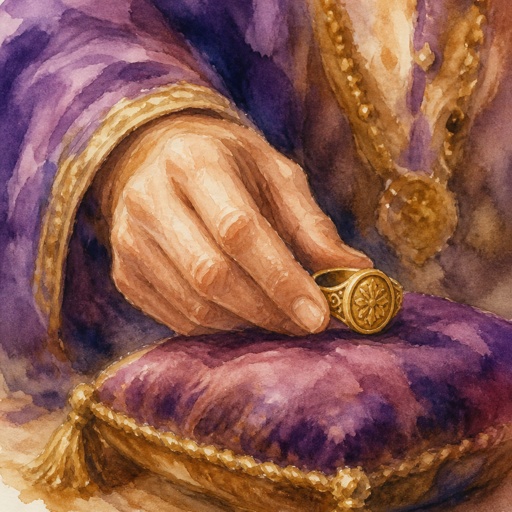
Esther 8:2 focus on the ring

Esther 3:14 - "The copy of the writing for a commandment to be given in every province was published unto all people, that they should be ready against that day."

"And while they were yet talking with him, came the king's chamberlains, and hasted to bring Haman unto the banquet that Esther had prepared." - Esther 6:14

Esther 2:15 - "¶ Now when the turn of Esther, the daughter of Abihail the uncle of Mordecai, who had taken her for his daughter, was come to go in unto the king, she required nothing but what Hegai the king's chamberlain, the keeper of the women, appointed. And Esther obtained favour in the sight of all them that looked upon her."

Esther 2:2 - "Then said the king's servants that ministered unto him, Let there be fair young virgins sought for the king:"

Esther 8:14 - "So the posts that rode upon mules and camels went out, being hastened and pressed on by the king's commandment. And the decree was given at Shushan the palace."

Esther 2:17 - "And the king loved Esther above all the women, and she obtained grace and favour in his sight more than all the virgins; so that he set the royal crown upon her head, and made her queen instead of Vashti."

Esther 2:7 - "And he brought up Hadassah, that is, Esther, his uncle's daughter: for she had neither father nor mother, and the maid was fair and beautiful; whom Mordecai, when her father and mother were dead, took for his own daughter."
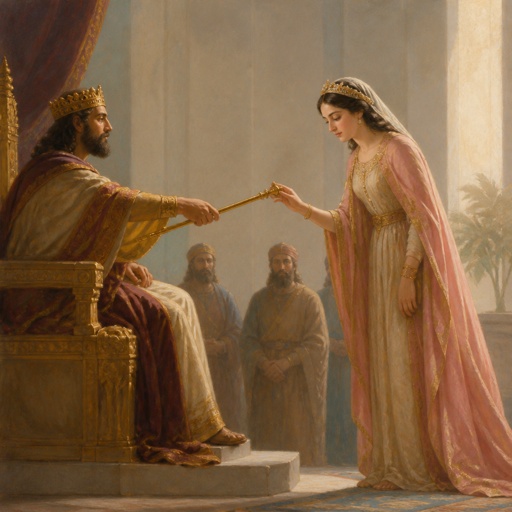
"And it was so, when the king saw Esther the queen standing in the court, that she obtained favour in his sight: and the king held out to Esther the golden sceptre that was in his hand. So Esther drew near, and touched the top of the sceptre." - Esther 5:2

Esther 2:8 - "¶ So it came to pass, when the king's commandment and his decree was heard, and when many maidens were gathered together unto Shushan the palace, to the custody of Hegai, that Esther was brought also unto the king's house, to the custody of Hegai, keeper of the women."

Esther 1:14 - "And the next unto him was Carshena, Shethar, Admatha, Tarshish, Meres, Marsena, and Memucan, the seven princes of Persia and Media, which saw the king's face, and which sat the first in the kingdom;)"

Esther 2:19 - "And when the virgins were gathered together the second time, then Mordecai sat in the king's gate."

Esther 1:2 - "That in those days, when the king Ahasuerus sat on the throne of his kingdom, which was in Shushan the palace,"