The Courage of Vashti: Standing for Integrity in the Face of Power
"But the queen Vashti refused to come at the king's commandment by his chamberlains: therefore was the king very wroth, and his anger burned in him." - Esther 1:12
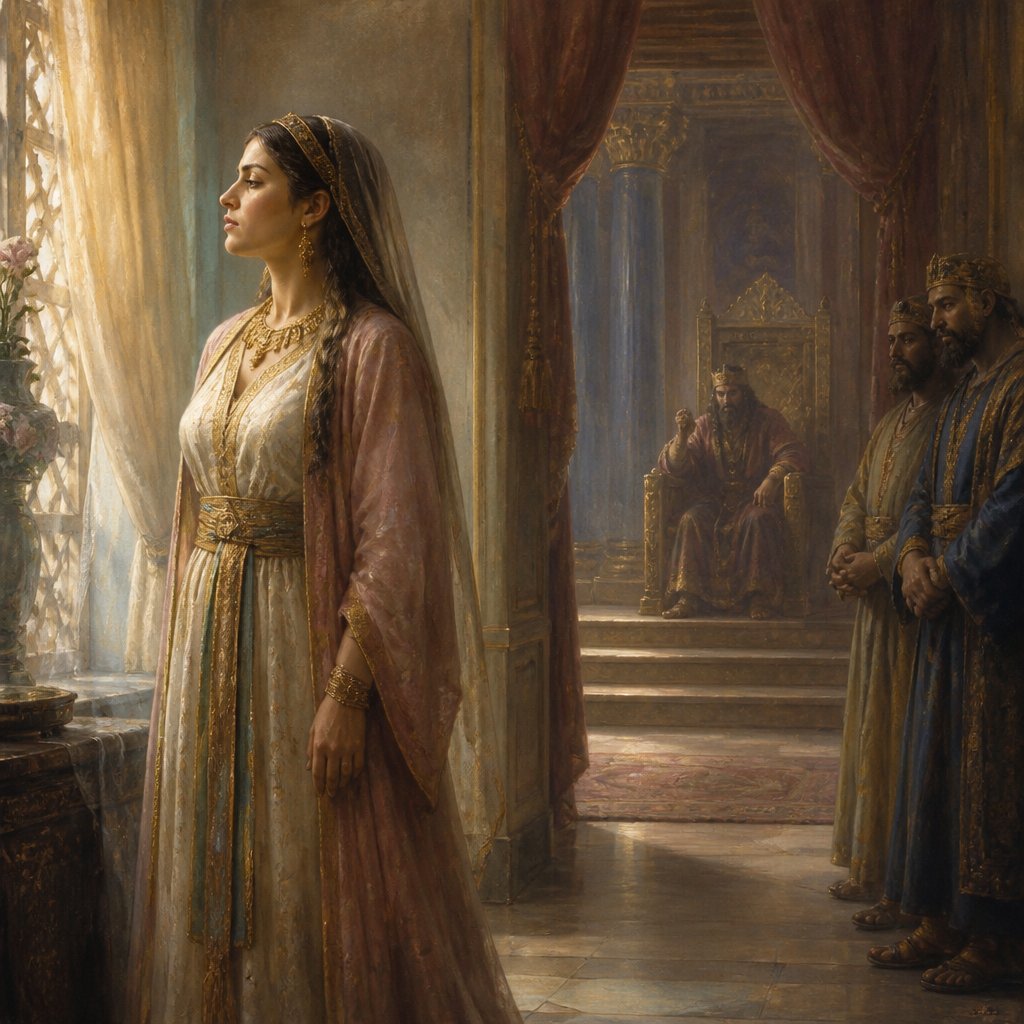
The book of Esther presents us with a drama that unfolds not just in the royal court but in the very hearts of those who are part of it. At the center of this pivotal moment is Queen Vashti, a woman whose refusal to comply with King Ahasuerus’s command speaks volumes about integrity and strength. For today’s reflection, we turn to Esther 1:12 (KJV), which states, "But the queen Vashti refused to come at the king's commandment by his chamberlains: therefore was the king very wroth, and his anger burned in him."
In the context of the story, Vashti was summoned by King Ahasuerus during a grand banquet where he sought to display her beauty before his guests. This command, however, was not merely a playful request; it was laden with the weight of authority and societal expectation. The insistence of the king’s chamberlains served to highlight the disparity between the power that the king wielded and the agency that Vashti possessed as an individual.
Vashti's refusal is a moment of profound significance. It provides a glimpse into her character and the values she held dear. At a time where women were often seen as mere possessions rather than individuals with dignity and autonomy, she stood her ground against the demands placed upon her. This act of defiance in a patriarchal society was akin to a spark igniting a powder keg of cultural expectations. Today, we find in Vashti an exemplar of courage and conviction necessary for any believer who desires to stand firm in their values.
When faced with situations where our integrity may be compromised, we reflect on Vashti's choice. Her refusal does not stem from mere obstinacy; rather, it arises from a sense of self-respect and an understanding of her worth. Vashti chose to protect her dignity instead of complying with an unreasonable request. As she stood before the king’s command, she weighed her options carefully and chose integrity over pleasing those in power. In a world filled with peer pressure—be it social, professional, or familial—her example reminds us that sometimes saying 'no' is the most courageous choice one can make.
Let us also consider the repercussions of her refusal. The passage notes that the king was "very wroth" and that "his anger burned in him." In Vashti’s decision to stand up for herself, there were consequences. This reminds us that often, standing for what is right may not be met with approval. It emphasizes a crucial lesson that alignment with truth sometimes results in backlash. Yet, we must remember—every stance for righteousness carries its own weight. God honors those who honor Him, even if the world does not immediately recognize it.
In our modern context, we may find ourselves in situations similar to Vashti’s. Perhaps it’s a workplace scenario where unethical practices are encouraged, or maybe it’s social pressures that demand conformity at the expense of authenticity. In these moments, we are called to seek God's wisdom and strength to act with honor. Like Vashti, our decisions should align with our inner convictions, grounded in the truth of God’s Word and in line with our identity as children of God.
Ultimately, Vashti’s story does not end simply with her refusal. Her actions set the stage for the rise of Esther and a narrative of deliverance that would soon unfold. This demonstrates a key principle of faith: our choices, especially those taken in courage, can have rippling effects that contribute to a greater purpose that we may not yet fully understand. Let us therefore be inspired by the courage of Vashti who stood firmly for her convictions, understanding that true beauty is found in honoring God and ourselves. May we always choose integrity, even when the world urges compromise.
Want to reflect more on Esther 1:12?
Continue your spiritual journey with Bible Chat — an AI-powered tool for exploring God's Word through conversation. Ask questions, discover connections, and deepen your understanding.
Get Our Apps


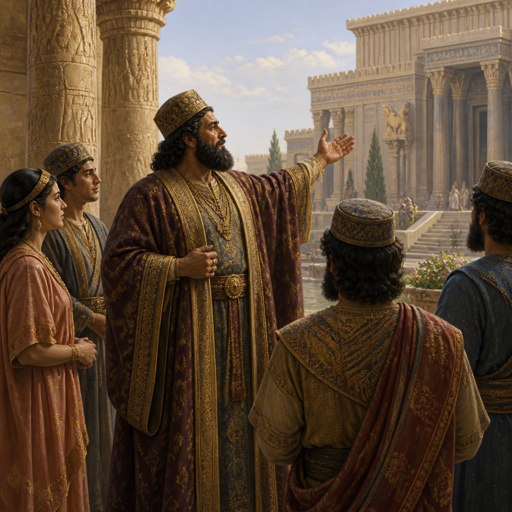
Esther 1:12 Artwork

Esther 1:12 - "But the queen Vashti refused to come at the king's commandment by his chamberlains: therefore was the king very wroth, and his anger burned in him."
"But the queen Vashti refused to come at the king's commandment by his chamberlains: therefore was the king very wroth, and his anger burned in him." - Esther 1:12

Esther 4:12 - "And they told to Mordecai Esther's words."

Esther 7:1 - "So the king and Haman came to banquet with Esther the queen."
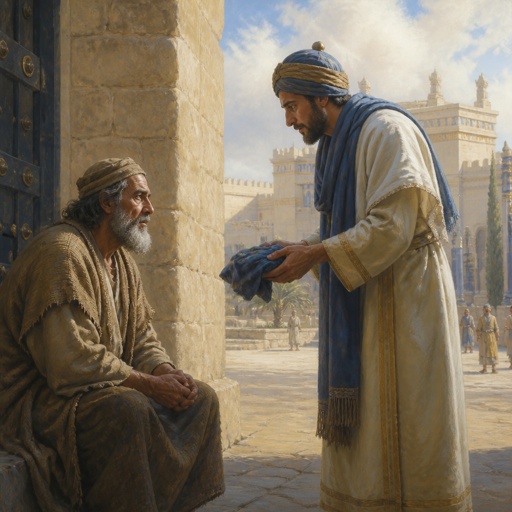
"And they told to Mordecai Esther's words." - Esther 4:12

Esther 1:2 - "That in those days, when the king Ahasuerus sat on the throne of his kingdom, which was in Shushan the palace,"

Esther 1:17

Esther 8:1 - "On that day did the king Ahasuerus give the house of Haman the Jews' enemy unto Esther the queen. And Mordecai came before the king; for Esther had told what he was unto her."

Esther 5:12 - "Haman said moreover, Yea, Esther the queen did let no man come in with the king unto the banquet that she had prepared but myself; and to morrow am I invited unto her also with the king."

Esther 1:6

Esther, the courageous queen

"So the king and Haman came to banquet with Esther the queen." - Esther 7:1

Esther 6:12 - "¶ And Mordecai came again to the king's gate. But Haman hasted to his house mourning, and having his head covered."

Esther 9:12 - "¶ And the king said unto Esther the queen, The Jews have slain and destroyed five hundred men in Shushan the palace, and the ten sons of Haman; what have they done in the rest of the king's provinces? now what is thy petition? and it shall be granted thee: or what is thy request further? and it shall be done."

Esther 8:12 - "Upon one day in all the provinces of king Ahasuerus, namely, upon the thirteenth day of the twelfth month, which is the month Adar."
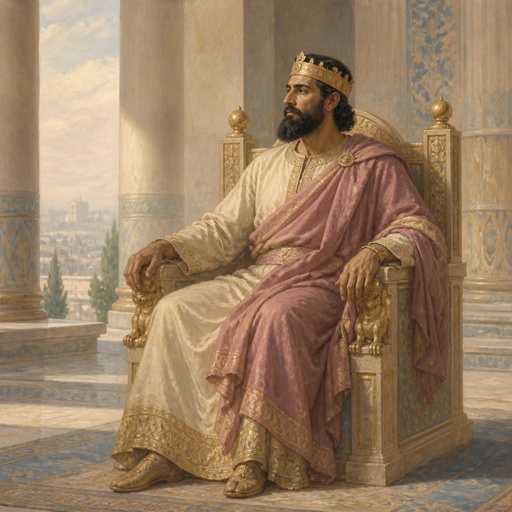
"That in those days, when the king Ahasuerus sat on the throne of his kingdom, which was in Shushan the palace," - Esther 1:2

Esther 10:1 - "And the king Ahasuerus laid a tribute upon the land, and upon the isles of the sea."

Esther 1:21 - "And the saying pleased the king and the princes; and the king did according to the word of Memucan:"

"On that day did the king Ahasuerus give the house of Haman the Jews' enemy unto Esther the queen. And Mordecai came before the king; for Esther had told what he was unto her." - Esther 8:1

Esther 5:1 - "Now it came to pass on the third day, that Esther put on her royal apparel, and stood in the inner court of the king's house, over against the king's house: and the king sat upon his royal throne in the royal house, over against the gate of the house."

Esther 1:9 - "Also Vashti the queen made a feast for the women in the royal house which belonged to king Ahasuerus."

Esther 1:1 - "Now it came to pass in the days of Ahasuerus, (this is Ahasuerus which reigned, from India even unto Ethiopia, over an hundred and seven and twenty provinces:)"

Esther 6:1 - "On that night could not the king sleep, and he commanded to bring the book of records of the chronicles; and they were read before the king."

Hosea 1:2-11;2:14;3:5

Esther 1:11 - "To bring Vashti the queen before the king with the crown royal, to shew the people and the princes her beauty: for she was fair to look on."
"Haman said moreover, Yea, Esther the queen did let no man come in with the king unto the banquet that she had prepared but myself; and to morrow am I invited unto her also with the king." - Esther 5:12

Esther 1:13 - "¶ Then the king said to the wise men, which knew the times, (for so was the king's manner toward all that knew law and judgment:"

Esther 1:7 - "And they gave them drink in vessels of gold, (the vessels being diverse one from another,) and royal wine in abundance, according to the state of the king."

Esther 1:4 - "When he shewed the riches of his glorious kingdom and the honour of his excellent majesty many days, even an hundred and fourscore days."

Esther 2:1 - "After these things, when the wrath of king Ahasuerus was appeased, he remembered Vashti, and what she had done, and what was decreed against her."