Seeking the Welfare of Our People: Lessons from Mordecai
"For Mordecai the Jew was next unto king Ahasuerus, and great among the Jews, and accepted of the multitude of his brethren, seeking the wealth of his people, and speaking peace to all his seed." - Esther 10:3
**Introduction**
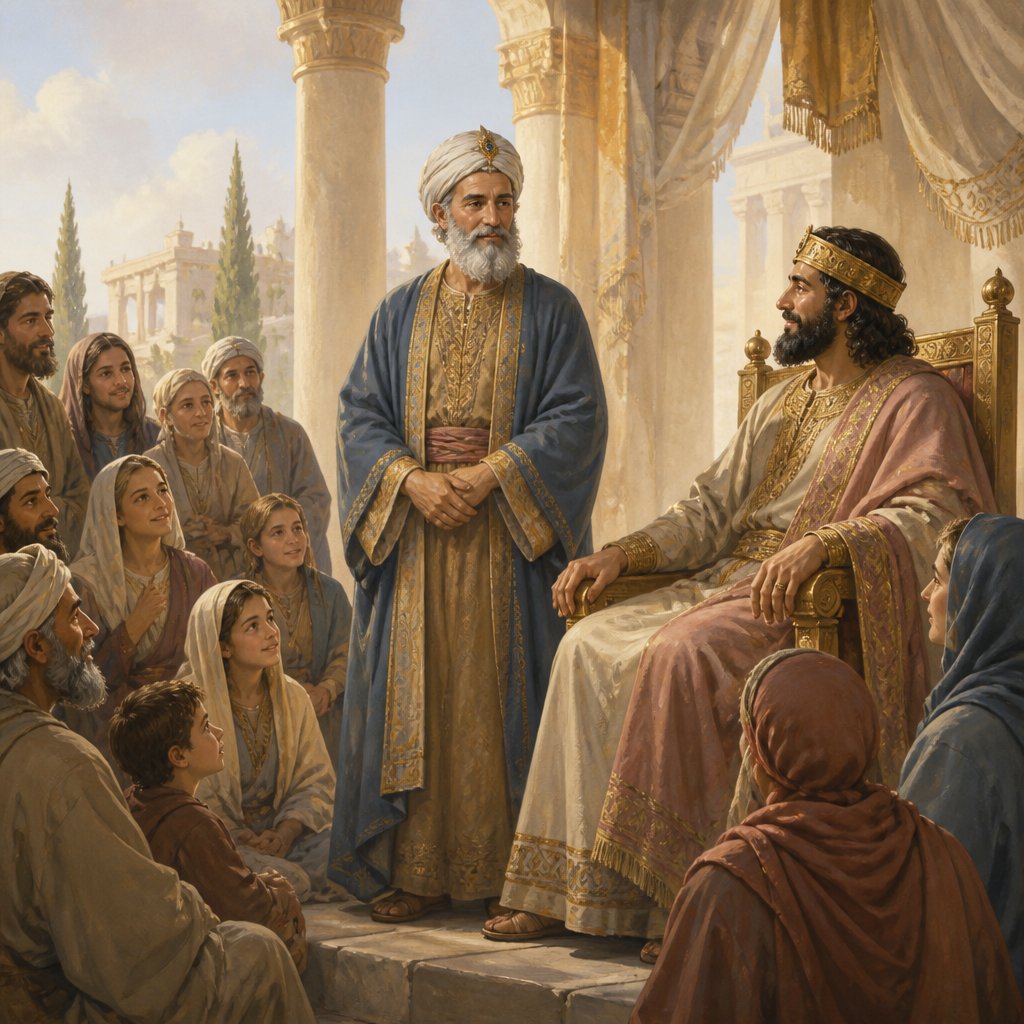
The Book of Esther introduces us to profound themes of identity, community, and divine providence, all encapsulated in the experiences of the Jewish people in a foreign land. As we turn our focus to Esther 10:3, we are reminded of a remarkable figure in this narrative: Mordecai. The verse says, "For Mordecai the Jew was next unto king Ahasuerus, and great among the Jews, and accepted of the multitude of his brethren, seeking the wealth of his people, and speaking peace to all his seed."
Mordecai’s life encapsulated a spirit of selflessness, leadership, and responsibility toward his people. His actions serve as a model for followers of Christ today, teaching us about community engagement and spiritual fidelity in tumultuous times.
**Contextualizing Mordecai’s Influence**
Mordecai’s rise to prominence in the midst of the Persian Empire is a testament to his faith and strategic acumen. He did not seek his position for personal gain but became a conduit for blessing his people. This is crucial for understanding what it means to be a leader in any context. In our contemporary world, the essence of leadership should not be a matter of power or privilege, but of service and responsibility. Mordecai’s ambition was tied to the well-being of the Jews rather than his own ascent, which is clear in his actions as he navigated the complexities of the royal court.
**Seeking the Wealth of His People**
The essence of Mordecai’s mission—"seeking the wealth of his people"—is a call to engage deeply in the lives of those around us. When we think of wealth, we often view it through the lens of material prosperity. However, Biblical wealth encompasses peace, security, and spiritual prosperity. As followers of Christ, we are called to uplift our communities, supporting initiatives that promote well-being and peace. Mordecai embodied a holistic approach to leadership by focusing not only on the immediate needs but also on the long-term welfare of his community.
In practical terms, this may mean advocating for the marginalized, leading social initiatives, or simply being a source of encouragement and hope to those around us. Are we ready to bear the burdens of our community, or do we often withdraw into our own safety nets? Mordecai didn’t shy away from risk; his actions during Haman’s plot were both courageous and self-sacrificial.
**Speaking Peace to All His Seed**
Moreover, Mordecai is described as "speaking peace to all his seed." Here we encounter a transformative idea: peace is not merely the absence of conflict but the presence of righteousness and joy. In Christ, who is our peace (Ephesians 2:14), we have a model of how to communicate tranquility and comfort amid chaos. Mordecai's commitment to peace reflects an understanding of communal harmony and unity. In our families, workplaces, and communities, we must endeavor to be peacemakers, as Jesus called us blessed (Matthew 5:9).
Oftentimes, this path involves vulnerability and the courage to confront darkness with the light of Christ. Speaking peace is also about confronting injustices with love and showing empathy towards those who are suffering. Underneath our collective strife often lies a longing for understanding and connection, something Mordecai endeavors to fulfill.
**Conclusion: A Call to Action**
As believers, we can reflect on Mordecai's story and take actionable steps toward being advocates for our communities. Consider:
- How can you practically seek the welfare of those around you?
- In what ways might your influence in your family, workplace, or church foster peace and unity?
- Are there specific injustices you are called to confront, either locally or globally, inspired by Mordecai’s courage?
Each of us is in a position to act, much like Mordecai. Let us strive to fulfill the calling that compels us to seek the common good and embrace a role—large or small—in God’s plan for peace and prosperity. May we, like Mordecai, live lives that profoundly bless those around us, instilling hope and healing in every action.
Want to reflect more on Esther 10:3?
Continue your spiritual journey with Bible Chat — an AI-powered tool for exploring God's Word through conversation. Ask questions, discover connections, and deepen your understanding.
Get Our Apps


Esther 10:3 Artwork

Esther 10:3 - "For Mordecai the Jew was next unto king Ahasuerus, and great among the Jews, and accepted of the multitude of his brethren, seeking the wealth of his people, and speaking peace to all his seed."
"For Mordecai the Jew was next unto king Ahasuerus, and great among the Jews, and accepted of the multitude of his brethren, seeking the wealth of his people, and speaking peace to all his seed." - Esther 10:3
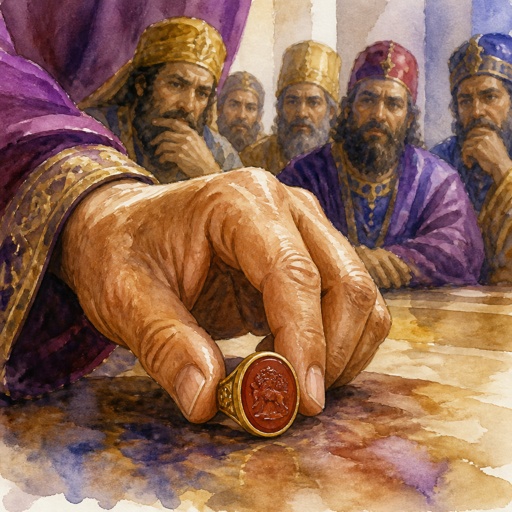
Esther 3:10 focus on ring

Esther 3:10 - "And the king took his ring from his hand, and gave it unto Haman the son of Hammedatha the Agagite, the Jews' enemy."

Esther 4:10 - "¶ Again Esther spake unto Hatach, and gave him commandment unto Mordecai;"

Esther 2:10 - "Esther had not shewed her people nor her kindred: for Mordecai had charged her that she should not shew it."

Esther 5:3 - "Then said the king unto her, What wilt thou, queen Esther? and what is thy request? it shall be even given thee to the half of the kingdom."

"¶ Again Esther spake unto Hatach, and gave him commandment unto Mordecai;" - Esther 4:10

Esther 10:1 - "And the king Ahasuerus laid a tribute upon the land, and upon the isles of the sea."

Esther 3:3 - "Then the king's servants, which were in the king's gate, said unto Mordecai, Why transgressest thou the king's commandment?"
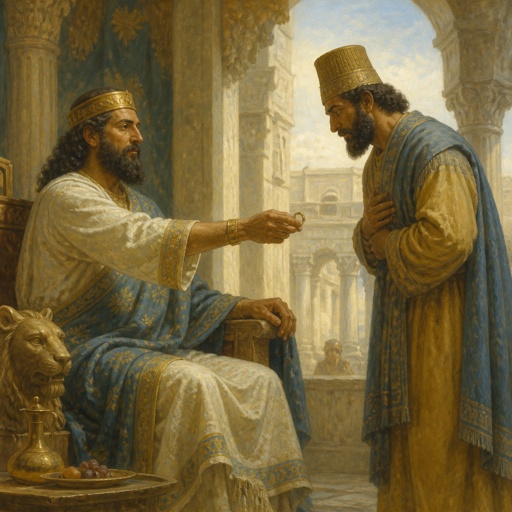
"And the king took his ring from his hand, and gave it unto Haman the son of Hammedatha the Agagite, the Jews' enemy." - Esther 3:10

Esther 8:3 - "¶ And Esther spake yet again before the king, and fell down at his feet, and besought him with tears to put away the mischief of Haman the Agagite, and his device that he had devised against the Jews."

Esther 9:10 - "The ten sons of Haman the son of Hammedatha, the enemy of the Jews, slew they; but on the spoil laid they not their hand."

Esther 7:3 - "Then Esther the queen answered and said, If I have found favour in thy sight, O king, and if it please the king, let my life be given me at my petition, and my people at my request:"

Esther 7:10 - "So they hanged Haman on the gallows that he had prepared for Mordecai. Then was the king's wrath pacified."

Esther 3:5 - "And when Haman saw that Mordecai bowed not, nor did him reverence, then was Haman full of wrath."

"Esther had not shewed her people nor her kindred: for Mordecai had charged her that she should not shew it." - Esther 2:10

Esther 5:10 - "Nevertheless Haman refrained himself: and when he came home, he sent and called for his friends, and Zeresh his wife."

Esther 8:10 - "And he wrote in the king Ahasuerus' name, and sealed it with the king's ring, and sent letters by posts on horseback, and riders on mules, camels, and young dromedaries:"

Esther 9:3 - "And all the rulers of the provinces, and the lieutenants, and the deputies, and officers of the king, helped the Jews; because the fear of Mordecai fell upon them."

Esther 3:14 - "The copy of the writing for a commandment to be given in every province was published unto all people, that they should be ready against that day."

Esther 3:11 - "And the king said unto Haman, The silver is given to thee, the people also, to do with them as it seemeth good to thee."

Esther 10:2 - "And all the acts of his power and of his might, and the declaration of the greatness of Mordecai, whereunto the king advanced him, are they not written in the book of the chronicles of the kings of Media and Persia?"

"So they hanged Haman on the gallows that he had prepared for Mordecai. Then was the king's wrath pacified." - Esther 7:10
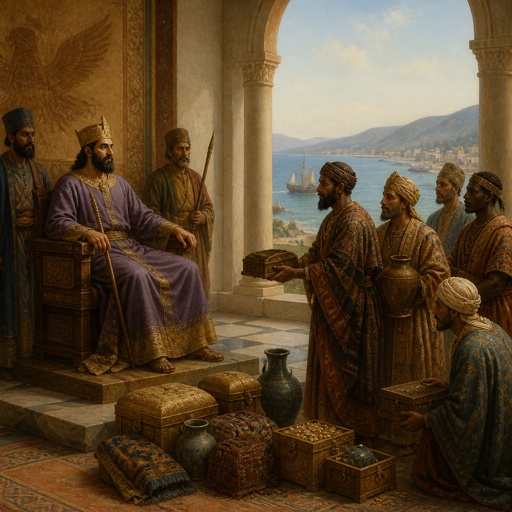
"And the king Ahasuerus laid a tribute upon the land, and upon the isles of the sea." - Esther 10:1
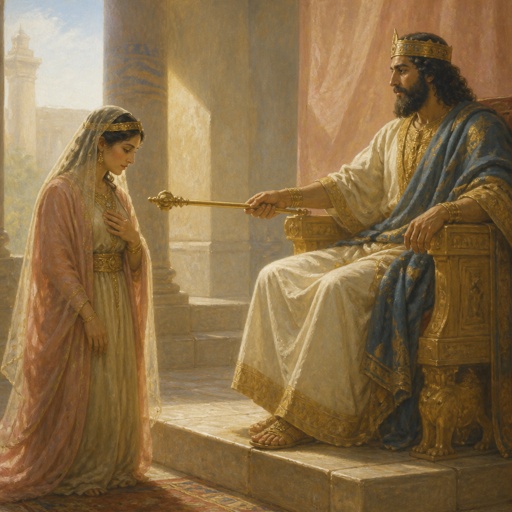
"Then said the king unto her, What wilt thou, queen Esther? and what is thy request? it shall be even given thee to the half of the kingdom." - Esther 5:3

Esther 3:15 - "The posts went out, being hastened by the king's commandment, and the decree was given in Shushan the palace. And the king and Haman sat down to drink; but the city Shushan was perplexed."

Esther 6:3 - "And the king said, What honour and dignity hath been done to Mordecai for this? Then said the king's servants that ministered unto him, There is nothing done for him."

Esther 3:1 - "After these things did king Ahasuerus promote Haman the son of Hammedatha the Agagite, and advanced him, and set his seat above all the princes that were with him."

Esther 4:3 - "And in every province, whithersoever the king's commandment and his decree came, there was great mourning among the Jews, and fasting, and weeping, and wailing; and many lay in sackcloth and ashes."