God's Sovereignty in Times of Injustice
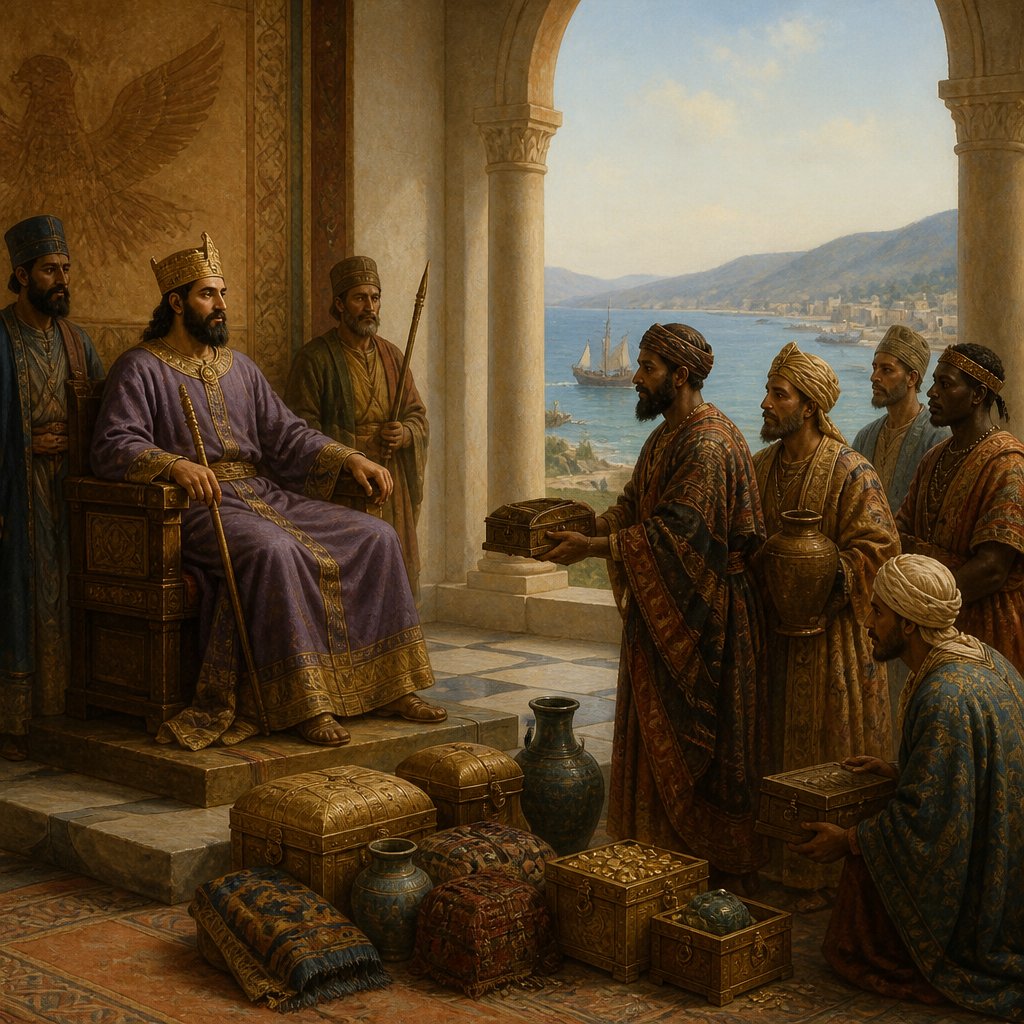
"And the king Ahasuerus laid a tribute upon the land, and upon the isles of the sea." - Esther 10:1
**Devotional on Esther 10:1**
**Text:** "And the king Ahasuerus laid a tribute upon the land, and upon the isles of the sea."
The story of Esther is a profound narrative of courage, faith, and divine providence. It unfolds during a tumultuous time for the Jewish people, showcasing how God’s hand works through human affairs, wisdom, and sometimes the harshness of earthly rule. In Esther 10:1, we find a brief statement that holds more significance than may initially appear. The king, Ahasuerus, imposes a tribute across his vast empire, indicating not just his authority but also the harsh realities faced by his subjects.
At first glance, this verse may seem like a mere historical footnote, yet it invites us to ponder the wider implications of governance and justice. The tribute imposed by Ahasuerus symbolizes the weight and burden of oppression that often accompanies human leadership devoid of divine wisdom. It serves as a stark reminder that authority can result in inequity, as some are heavily taxed while others flourish in Babylonian luxury.
Yet, we must ask ourselves, where is God in this scenario? Why is He not intervening to protect His people from the king's proclamations? The book of Esther reveals a critical lesson about the divine plan that works silently behind the scenes. Just as God was not mentioned explicitly throughout the book, His presence is felt in the deliverance of the Jewish people who were facing annihilation. The king's tribute, while oppressive, laid the groundwork for the eventual rejoicing when the plot against the Jews was foiled, and justice prevailed.
In our own lives, we often encounter moments that seem bleak, just like the imposition of this tribute. It may be the heavy burdens of societal expectations, family dynamics, or financial pressures that weigh down upon us, leading us to question where God is in our struggles. However, Esther’s story teaches us that God remains sovereign, weaving our hardships into His master plan, often in ways we cannot foresee.
Consider the tribulations that you may face today. Are they like the unjust laws that Ahasuerus laid upon his subjects? In these moments, it’s important to recognize God’s ability to use even the most trying circumstances for His glory. Just as Mordecai stated to Esther, "...and who knoweth whether thou art come to the kingdom for such a time as this?" (Esther 4:14) — perhaps your struggle is precisely what God is using to mold you into the vessel He desires.
Furthermore, Ahasuerus’s actions remind us that God can work even through imperfect leaders to accomplish His purposes. Though we may face taxation—both metaphorical and literal—the God we serve is a liberator. In the end, Esther became the instrument of salvation for her people. In your life, what seemingly small act of obedience could spark a transformation? What position might God be placing you in to effect vital changes?
That leads us to reflect on the call to pray for those in authority (1 Timothy 2:1-3). Ahasuerus represents the type of king who does not always govern justly or wisely. Our response, then, should be to establish a steady rhythm of prayer for leaders, seeking God’s intervention in the hearts of those who govern. In doing so, we can foster a climate where God’s righteous attributes reign supreme, allowing justice and mercy to break forth in our communities and nations.
Ultimately, Esther 10:1 invites us to look beyond the surface of daily tribulations and recognize that God's hand is at work, even in oppressive regimes or systemic injustices. Trust in His sovereignty today, for He is writing a story far grander than our comprehension, and even a king’s tribute cannot thwart His divine plan of redemption.
Want to reflect more on Esther 10:1?
Continue your spiritual journey with Bible Chat — an AI-powered tool for exploring God's Word through conversation. Ask questions, discover connections, and deepen your understanding.
Get Our Apps


Esther 10:1 Artwork

Esther 10:1 - "And the king Ahasuerus laid a tribute upon the land, and upon the isles of the sea."
"And the king Ahasuerus laid a tribute upon the land, and upon the isles of the sea." - Esther 10:1

Esther 4:10 - "¶ Again Esther spake unto Hatach, and gave him commandment unto Mordecai;"

Esther 2:10 - "Esther had not shewed her people nor her kindred: for Mordecai had charged her that she should not shew it."
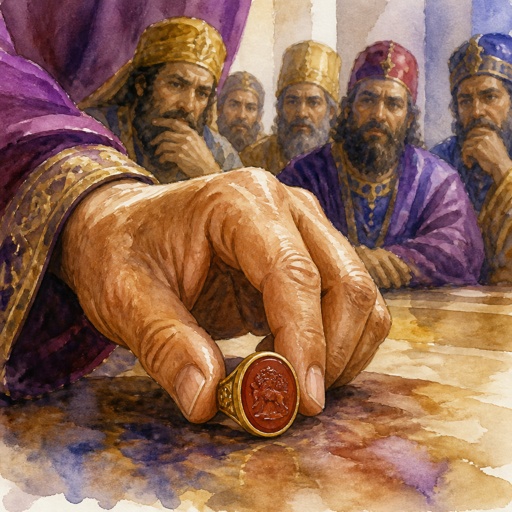
Esther 3:10 focus on ring

Esther 7:1 - "So the king and Haman came to banquet with Esther the queen."
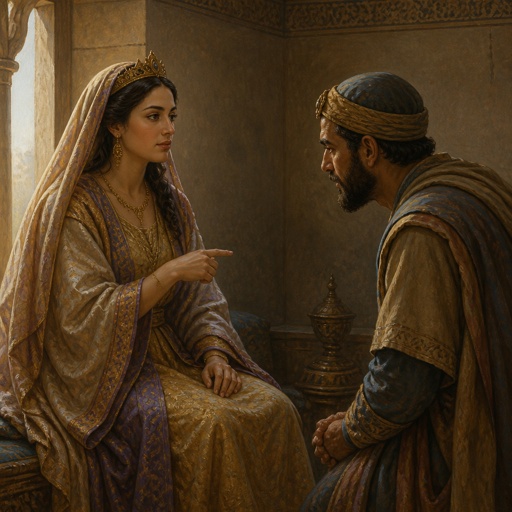
"¶ Again Esther spake unto Hatach, and gave him commandment unto Mordecai;" - Esther 4:10
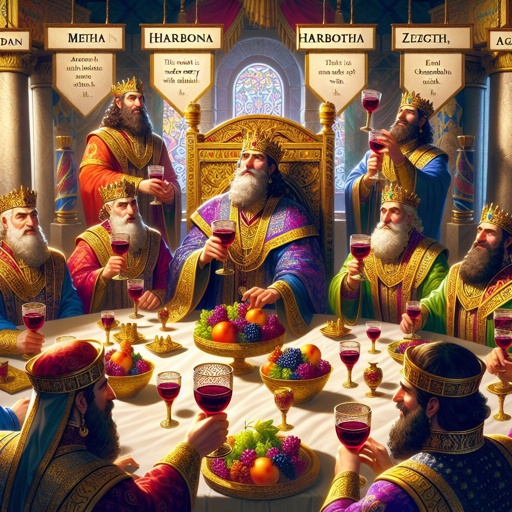
Esther 1:10 - "¶ On the seventh day, when the heart of the king was merry with wine, he commanded Mehuman, Biztha, Harbona, Bigtha, and Abagtha, Zethar, and Carcas, the seven chamberlains that served in the presence of Ahasuerus the king,"

Esther 1:17

Esther 8:1 - "On that day did the king Ahasuerus give the house of Haman the Jews' enemy unto Esther the queen. And Mordecai came before the king; for Esther had told what he was unto her."

Esther 9:10 - "The ten sons of Haman the son of Hammedatha, the enemy of the Jews, slew they; but on the spoil laid they not their hand."

Esther 1:6

Esther, the courageous queen

"So the king and Haman came to banquet with Esther the queen." - Esther 7:1

Esther 7:10 - "So they hanged Haman on the gallows that he had prepared for Mordecai. Then was the king's wrath pacified."

"Esther had not shewed her people nor her kindred: for Mordecai had charged her that she should not shew it." - Esther 2:10

Esther 5:10 - "Nevertheless Haman refrained himself: and when he came home, he sent and called for his friends, and Zeresh his wife."

Esther 3:10 - "And the king took his ring from his hand, and gave it unto Haman the son of Hammedatha the Agagite, the Jews' enemy."

Esther 8:10 - "And he wrote in the king Ahasuerus' name, and sealed it with the king's ring, and sent letters by posts on horseback, and riders on mules, camels, and young dromedaries:"

Esther 10:2 - "And all the acts of his power and of his might, and the declaration of the greatness of Mordecai, whereunto the king advanced him, are they not written in the book of the chronicles of the kings of Media and Persia?"
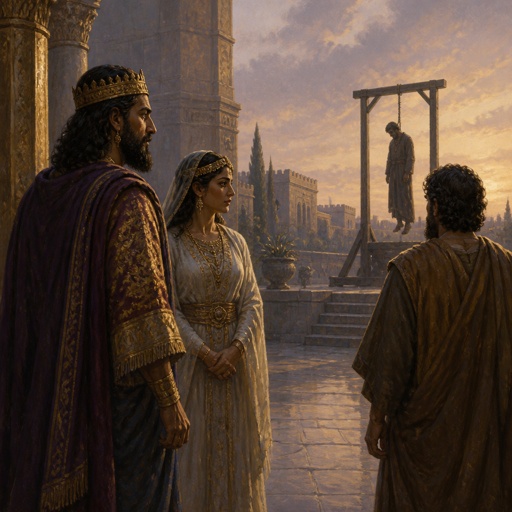
"So they hanged Haman on the gallows that he had prepared for Mordecai. Then was the king's wrath pacified." - Esther 7:10

Esther 1:21 - "And the saying pleased the king and the princes; and the king did according to the word of Memucan:"

"On that day did the king Ahasuerus give the house of Haman the Jews' enemy unto Esther the queen. And Mordecai came before the king; for Esther had told what he was unto her." - Esther 8:1

Esther 5:1 - "Now it came to pass on the third day, that Esther put on her royal apparel, and stood in the inner court of the king's house, over against the king's house: and the king sat upon his royal throne in the royal house, over against the gate of the house."

Esther 10:3 - "For Mordecai the Jew was next unto king Ahasuerus, and great among the Jews, and accepted of the multitude of his brethren, seeking the wealth of his people, and speaking peace to all his seed."

Esther 1:2 - "That in those days, when the king Ahasuerus sat on the throne of his kingdom, which was in Shushan the palace,"

Esther 1:9 - "Also Vashti the queen made a feast for the women in the royal house which belonged to king Ahasuerus."

Esther 1:1 - "Now it came to pass in the days of Ahasuerus, (this is Ahasuerus which reigned, from India even unto Ethiopia, over an hundred and seven and twenty provinces:)"

Esther 6:1 - "On that night could not the king sleep, and he commanded to bring the book of records of the chronicles; and they were read before the king."
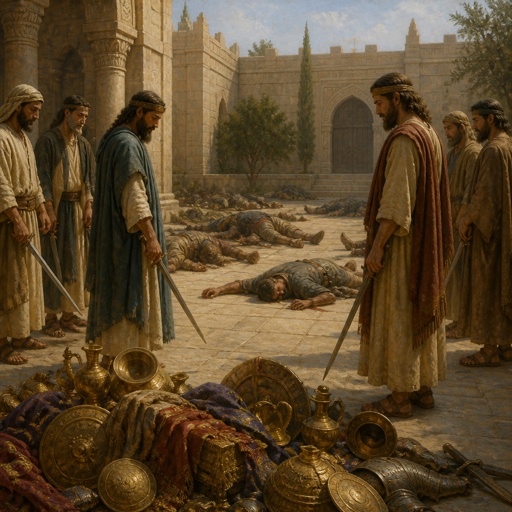
"The ten sons of Haman the son of Hammedatha, the enemy of the Jews, slew they; but on the spoil laid they not their hand." - Esther 9:10