The Equality of Life's Finality
"All things come alike to all: there is one event to the righteous, and to the wicked; to the good and to the clean, and to the unclean; to him that sacrificeth, and to him that sacrificeth not: as is the good, so is the sinner; and he that sweareth, as he that feareth an oath." - Ecclesiastes 9:2
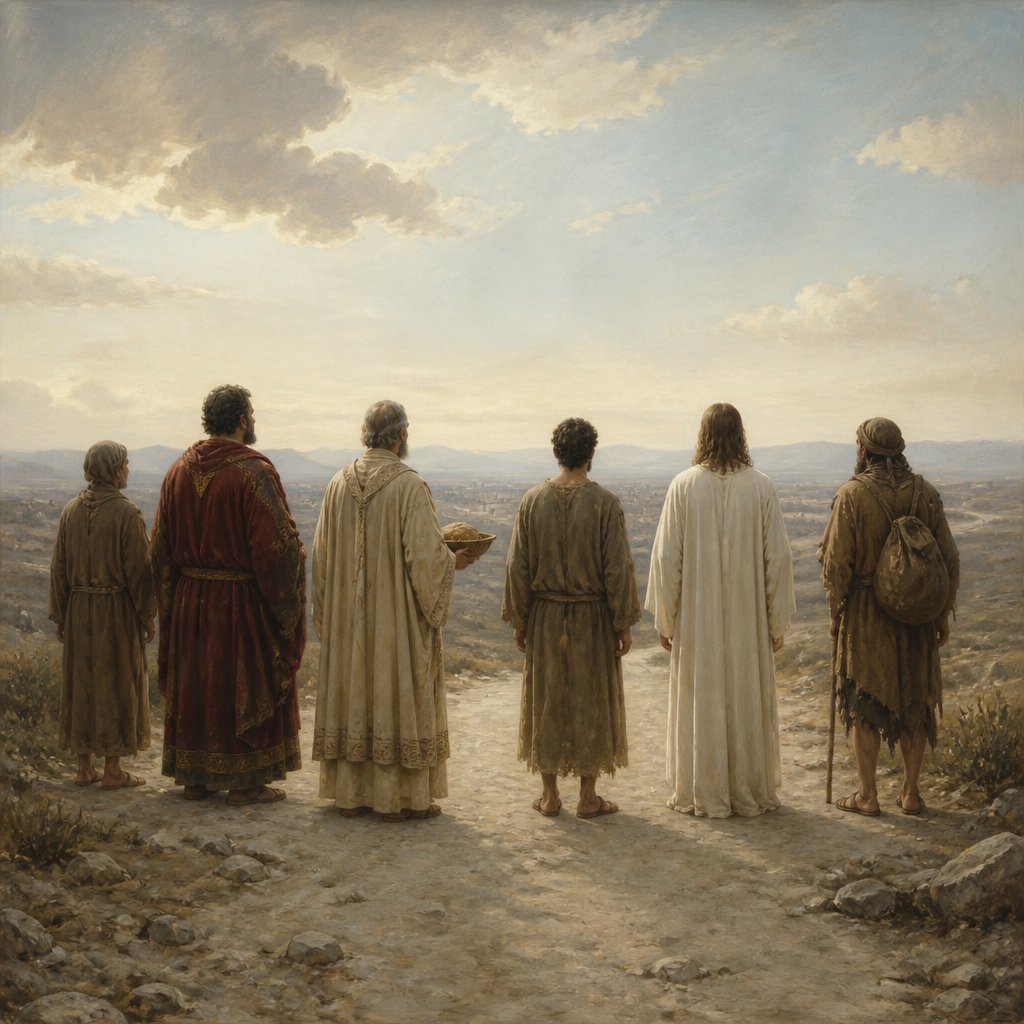
In Ecclesiastes 9:2, the Preacher confronts one of life’s greatest mysteries: the inevitability of death and the common fate that awaits all humanity. He states, "All things come alike to all: there is one event to the righteous, and to the wicked; to the good and to the clean, and to the unclean; to him that sacrificeth, and to him that sacrificeth not: as is the good, so is the sinner; and he that sweareth, as he that feareth an oath."
This verse emphasizes the ultimate equality before death, a dominating theme in Ecclesiastes. Regardless of our status, moral standing, or choices made in life, we are all destined to face the finality that death brings. It is vital to ponder the weight of this truth: that the distinctions we make between ourselves and others concerning righteousness, purity, and sacrifice dissolve in the presence of death.
The Preacher’s words invite us into a space of introspection and humility. Life’s seeming fairness, where both the righteous and the wicked meet their end, challenges the superficial notions of justice we often cling to. We tend to categorize individuals based on riches, moral behavior, or piety, believing that these factors will shield us from the eventual decay that all mortals experience. Yet, the Preacher disrupts this comforting breakdown, illuminating that ultimate judgment does not concern earthly status but rather the fate we all share.
This idea has profound implications. For the righteous, their faith and adherence to God’s commands are not safeguards against adversity or death; instead, they offer the promise of eternal life beyond what this earthly existence can provide. It reminds them that their righteous acts are not merely attempts to escape eternal doom but expressions of love and obedience to a Creator who desires a personal relationship with His creation. The inevitable event unites them with the wicked not in fate, but through the shared human experience—a call to pursue meaning amidst the reality of transience.
For those categorized as wicked or unclean, the verse is both sobering and liberating. It prompts a reflection on their life choices and the purpose behind their actions. If the end is the same, why not seek what is good? The shared destiny becomes an invitation to reconsider our paths, shedding the unclean to strive for righteousness rather than resigning oneself to despair. Every breath provides an opportunity to reconcile with their Creator, as grace extends to all who turn toward Him.
Additionally, the Preacher juxtaposes the sacrifices made by individuals. Those who offer sacrifices—be they physical or spiritual—and those who do not are ultimately brought to the same conclusion. Sacrifice is essential in the life of faith, but it is not the act of sacrificing that guarantees a place in God’s favor; rather, it is an authentic heart striving for communion with Him. We are urged to examine whether our sacrifices are mere rituals or heartfelt responses to God’s love and grace. The concern is not the magnitude of our deeds but the posture of our hearts towards God.
This perspective can also bring a certain weight to our daily lives. Knowing that our existence is temporary and that righteousness and wickedness share the same end should motivate us to live purposefully. Each day holds potential to grow closer to God and to touch lives positively. It encourages us to let go of petty grievances and focus on what lasts beyond the grave: love, faith, and the legacy we leave behind.
In conclusion, Ecclesiastes 9:2 provides a profound truth that binds humanity: the inevitable finality of life's event. It challenges us to find meaning not just in the fears rooted in this certainty but in the legacy of faith we choose to cultivate. Let us live today as a response to this understanding, striving to embody righteousness while uplifting others, knowing that in the face of death, it is love and grace that reign eternal.
Want to reflect more on Ecclesiastes 9:2?
Continue your spiritual journey with Bible Chat — an AI-powered tool for exploring God's Word through conversation. Ask questions, discover connections, and deepen your understanding.
Get Our Apps


Ecclesiastes 9:2 Artwork

Ecclesiastes 9:2 - "All things come alike to all: there is one event to the righteous, and to the wicked; to the good and to the clean, and to the unclean; to him that sacrificeth, and to him that sacrificeth not: as is the good, so is the sinner; and he that sweareth, as he that feareth an oath."
"All things come alike to all: there is one event to the righteous, and to the wicked; to the good and to the clean, and to the unclean; to him that sacrificeth, and to him that sacrificeth not: as is the good, so is the sinner; and he that sweareth, as he that feareth an oath." - Ecclesiastes 9:2

Ecclesiastes 2:9 - "So I was great, and increased more than all that were before me in Jerusalem: also my wisdom remained with me."

Ecclesiastes 3:9 - "What profit hath he that worketh in that wherein he laboureth?"

Ecclesiastes 7:9 - "Be not hasty in thy spirit to be angry: for anger resteth in the bosom of fools."

Ecclesiastes 5:9 - "¶ Moreover the profit of the earth is for all: the king himself is served by the field."

Ecclesiastes 6:9 - "¶ Better is the sight of the eyes than the wandering of the desire: this is also vanity and vexation of spirit."

Ecclesiastes 4:9 - "¶ Two are better than one; because they have a good reward for their labour."

Ecclesiastes 9:4 - "¶ For to him that is joined to all the living there is hope: for a living dog is better than a dead lion."

Ecclesiastes 9:8 - "Let thy garments be always white; and let thy head lack no ointment."

Ecclesiastes 9:18 - "Wisdom is better than weapons of war: but one sinner destroyeth much good."

Ecclesiastes 2:2 - "I said of laughter, It is mad: and of mirth, What doeth it?"

Ecclesiastes 9:13 - "¶ This wisdom have I seen also under the sun, and it seemed great unto me:"

ecclesiastes 12:2-6

Ecclesiastes 10:9 - "Whoso removeth stones shall be hurt therewith; and he that cleaveth wood shall be endangered thereby."

Ecclesiastes 9:17 - "The words of wise men are heard in quiet more than the cry of him that ruleth among fools."

Ecclesiastes 1:9 - "The thing that hath been, it is that which shall be; and that which is done is that which shall be done: and there is no new thing under the sun."

Ecclesiastes 9:14 - "There was a little city, and few men within it; and there came a great king against it, and besieged it, and built great bulwarks against it:"

Ecclesiastes 9:16 - "Then said I, Wisdom is better than strength: nevertheless the poor man's wisdom is despised, and his words are not heard."

"So I was great, and increased more than all that were before me in Jerusalem: also my wisdom remained with me." - Ecclesiastes 2:9

Ecclesiastes 1:2 - "Vanity of vanities, saith the Preacher, vanity of vanities; all is vanity."

Ecclesiastes 9:15 - "Now there was found in it a poor wise man, and he by his wisdom delivered the city; yet no man remembered that same poor man."

Ecclesiastes 9:5 - "For the living know that they shall die: but the dead know not any thing, neither have they any more a reward; for the memory of them is forgotten."

"Be not hasty in thy spirit to be angry: for anger resteth in the bosom of fools." - Ecclesiastes 7:9

Ecclesiastes 2:13 - "Then I saw that wisdom excelleth folly, as far as light excelleth darkness."

Ecclesiastes 8:2 - "I counsel thee to keep the king's commandment, and that in regard of the oath of God."

Ecclesiastes 9:6 - "Also their love, and their hatred, and their envy, is now perished; neither have they any more a portion for ever in any thing that is done under the sun."

Ecclesiastes 9:7 - "¶ Go thy way, eat thy bread with joy, and drink thy wine with a merry heart; for God now accepteth thy works."

Ecclesiastes 9:10 - "Whatsoever thy hand findeth to do, do it with thy might; for there is no work, nor device, nor knowledge, nor wisdom, in the grave, whither thou goest."

"What profit hath he that worketh in that wherein he laboureth?" - Ecclesiastes 3:9