The Fallacy of Human Authority: Understanding Ecclesiastes 8:9
"All this have I seen, and applied my heart unto every work that is done under the sun: there is a time wherein one man ruleth over another to his own hurt." - Ecclesiastes 8:9
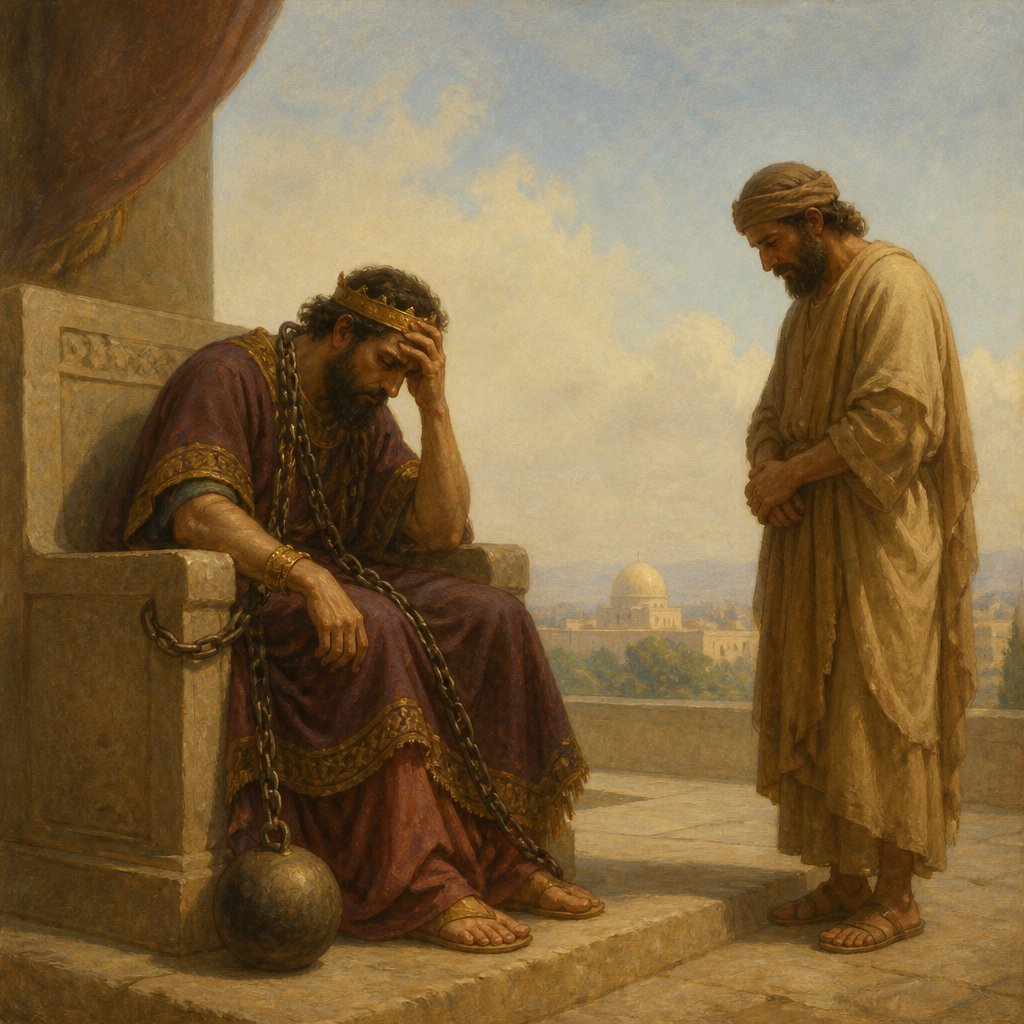
In the grand tapestry of life, few things are as intricate and perplexing as the nature of power and authority. Ecclesiastes 8:9 invites us to ponder this profound truth: "All this have I seen, and applied my heart unto every work that is done under the sun: there is a time wherein one man ruleth over another to his own hurt." Here, the Preacher, often interpreted as Solomon, offers us a glimpse into the complexities of human governance and dominion.
The verse begins with the centered insight of experience: "All this have I seen..." Solomon urges us to take heed of the observable realities of life. There is wisdom in observation and reflection. The world is filled with multitudes of human interactions—loyalty, betrayal, love, hatred, ambition, and despair. In every corner of society, whether in the valleys or the peaks of power, certainty evades finite minds, particularly where authority is concerned.
As Solomon reflects on this, we are invited to apply our hearts—our understanding and contemplation—to the myriad of works under the heavens. The phrase "under the sun" masterfully underscores the contrast between heavenly wisdom and earthly follies. Man often is ruled by transient and misguided motivations, and in such governance, the weight of consequence is often an oppressive burden borne by both the ruler and the ruled.
The second half of the verse reveals a striking truth: "there is a time wherein one man ruleth over another to his own hurt." This speaks of a time, or perhaps a condition inherent in human nature, where the exercise of power can lead not only to the subjugation of others but also to self-destruction for the ruler. Such is the irony of human authority—a reality we observe repeatedly throughout history. Tyrants often rise through the allure of power only to fall victim to their own machinations. They preside over kingdoms built on fear or greed, and in their quest for self-gain, they lose their own humanity.
The juxtaposition of ruling over another and suffering one's own hurt reminds us that authority, especially when wielded selfishly, can create an environment where both the leader and the followers are adversely affected. Consider the rulers of old or even modern leaders who have caused chaos and suffering, resulting not just in the ruin of nations but in the profound personal regret felt in the solitude of their power.
This biblical point extends beyond mere political contexts; it resonates in our daily interactions—our families, workplaces, and communities. There is a call for humility in leadership and a recognition that how one governs, whether in the office of authority or in personal relationships, has repercussions.
As Christians, we are reminded of the servant-leader model set forth by Jesus Christ. In Mark 10:42-45, Jesus teaches that true greatness is found in serving others rather than seeking to dominate them. The servant-leader does not rule for personal gain but selflessly puts the needs of others first, echoing Philippians 2:3, which instructs us to "do nothing through strife or vainglory; but in lowliness of mind let each esteem other better than themselves."
In this light, let us reflect upon our own authority, whether in our homes or workplaces. Do we govern with love and intention, or do we rule out of self-interest? Are we mindful of the hurt that our decisions may impose upon others and ourselves? This verse from Ecclesiastes serves as a heartfelt reminder of our responsibilities to one another as we navigate the power dynamics that permeate our everyday lives.
In conclusion, Ecclesiastes 8:9 calls us to embrace humility and contemplate the nature of leadership and authority. Let us apply our hearts to wisdom and recognize that there is sacredness in serving others selflessly. In doing so, we fulfill our divine purpose, allowing God's love to shine through us, demonstrating that true power lies not in ruling over others but in uplifting and supporting them.
Want to reflect more on Ecclesiastes 8:9?
Continue your spiritual journey with Bible Chat — an AI-powered tool for exploring God's Word through conversation. Ask questions, discover connections, and deepen your understanding.
Get Our Apps


Ecclesiastes 8:9 Artwork

Ecclesiastes 8:9 - "All this have I seen, and applied my heart unto every work that is done under the sun: there is a time wherein one man ruleth over another to his own hurt."
"All this have I seen, and applied my heart unto every work that is done under the sun: there is a time wherein one man ruleth over another to his own hurt." - Ecclesiastes 8:9

Ecclesiastes 9:8 - "Let thy garments be always white; and let thy head lack no ointment."

"Let thy garments be always white; and let thy head lack no ointment." - Ecclesiastes 9:8

ecclesiastes 12:1-8

ecclesiastes 12:1-8

ecclesiastes 12:1-8

ecclesiastes 12:1-8

Ecclesiastes 3:7-8

ecclesiastes 12:1-8

Ecclesiastes 12:8 - "¶ Vanity of vanities, saith the preacher; all is vanity."

Ecclesiastes 3:9 - "What profit hath he that worketh in that wherein he laboureth?"

Ecclesiastes 7:9 - "Be not hasty in thy spirit to be angry: for anger resteth in the bosom of fools."

Ecclesiastes 3:8 - "A time to love, and a time to hate; a time of war, and a time of peace."

Ecclesiastes 8:2 - "I counsel thee to keep the king's commandment, and that in regard of the oath of God."

Ecclesiastes 5:9 - "¶ Moreover the profit of the earth is for all: the king himself is served by the field."

Ecclesiastes 6:9 - "¶ Better is the sight of the eyes than the wandering of the desire: this is also vanity and vexation of spirit."

Ecclesiastes 8:7 - "For he knoweth not that which shall be: for who can tell him when it shall be?"

Ecclesiastes 4:9 - "¶ Two are better than one; because they have a good reward for their labour."

Ecclesiastes 9:4 - "¶ For to him that is joined to all the living there is hope: for a living dog is better than a dead lion."

Ecclesiastes 8:6 - "¶ Because to every purpose there is time and judgment, therefore the misery of man is great upon him."

Ecclesiastes 9:18 - "Wisdom is better than weapons of war: but one sinner destroyeth much good."

Ecclesiastes 8:4 - "Where the word of a king is, there is power: and who may say unto him, What doest thou?"

Ecclesiastes 7:8 - "Better is the end of a thing than the beginning thereof: and the patient in spirit is better than the proud in spirit."

Ecclesiastes 9:13 - "¶ This wisdom have I seen also under the sun, and it seemed great unto me:"

Ecclesiastes 10:9 - "Whoso removeth stones shall be hurt therewith; and he that cleaveth wood shall be endangered thereby."

Ecclesiastes 9:17 - "The words of wise men are heard in quiet more than the cry of him that ruleth among fools."

Ecclesiastes 10:8 - "He that diggeth a pit shall fall into it; and whoso breaketh an hedge, a serpent shall bite him."

Ecclesiastes 8:8 - "There is no man that hath power over the spirit to retain the spirit; neither hath he power in the day of death: and there is no discharge in that war; neither shall wickedness deliver those that are given to it."

Ecclesiastes 1:9 - "The thing that hath been, it is that which shall be; and that which is done is that which shall be done: and there is no new thing under the sun."