The Burden of Wealth: A Reflection on Ecclesiastes 5:13
"There is a sore evil which I have seen under the sun, namely, riches kept for the owners thereof to their hurt." - Ecclesiastes 5:13
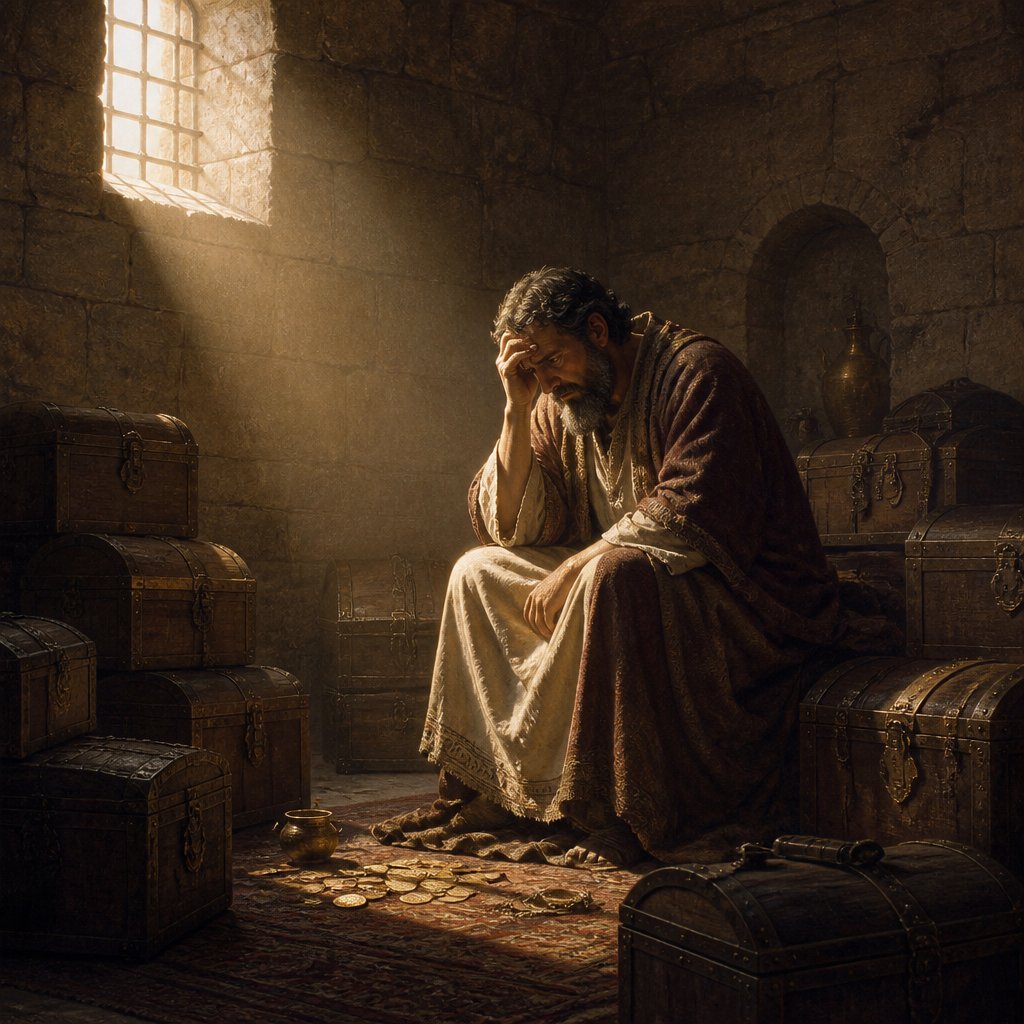
As we delve into the book of Ecclesiastes, we encounter the profound wisdom of Solomon, who, through his experiences, illustrates the often perplexing nature of life's pursuits and the intrinsic value—or lack thereof—of material wealth. One poignant verse that stands out is Ecclesiastes 5:13 (KJV): "There is a sore evil which I have seen under the sun, namely, riches kept for the owners thereof to their hurt."
At first glance, this declaration may seem counterintuitive. In a society that often equates wealth with success, comfort, and security, Solomon’s words challenge our perceptions and provoke deeper introspection. What is this "sore evil" that he observes? Why would riches, which are generally sought after and cherished, become a source of harm?
To understand Solomon’s perspective, we must acknowledge the context in which he wrote. As the king of Israel, he possessed immeasurable wealth and unparalleled wisdom. Yet, after years of observing the world and experiencing the highs and lows of life, Solomon concludes that wealth, when hoarded or mismanaged, becomes a heavy burden rather than a blessing.
The phrase "riches kept for the owners thereof" implies a retention of wealth that is not utilized for good or shared with others. In Jeremiah 17:11, it is stated, "As the partridge sitteth on eggs, and hatcheth them not; so he that getteth riches, and not by right, shall leave them in the midst of his days, and at his end shall be a fool." Here we find a parallel warning: accumulating riches without purpose can lead to ruin. When we cling to our wealth tightly, fearing its loss, we may overlook the opportunities to use it for greater good in the world around us.
Moreover, Solomon elucidates an essential truth: the psychological weight of wealth can lead to anxiety, greed, and an insatiable desire for more. The more we acquire, the more we feel compelled to protect and maintain our possessions, leading to a life dominated by fear and obsession rather than enjoyment and gratitude. The betrayal of wealth is that it can generate a false sense of security, which can ultimately lead to disappointment. When riches are our focus, we risk placing our identities in transient things, rather than in our relationships with God and those around us.
Consider the tension we create for ourselves as we navigate our relationship with money. We desire comfort and stability—who doesn't want to provide for their families and ensure their well-being? Yet, Solomon warns us that when wealth becomes our primary goal, we inadvertently invite distress into our lives. The very riches we cling to may become the chains that bind us.
Now, this does not mean that we should renounce all wealth or shun prosperity. Rather, it is an invitation to observe our motivations and stewardship of what we have. Wealth, when held lightly, can cultivate generosity, provision, and support for those in need. It can become a means to bring about justice and bring glory to God. Paul reminds us in 1 Timothy 6:10 (KJV), For the love of money is the root of all evil.
If we find ourselves entangled in the pursuit of riches, let us heed Solomon’s caution. Let us remember that wealth is a tool, not a treasure worth loving more than our Creator. In doing so, we can transform riches from a potential sore evil into an avenue for blessing, sharing our blessings and helping others.
As we reflect on Ecclesiastes 5:13, may we examine our hearts and ask: Are we keeping our riches for our own hurt? Or are we cultivating them to bless others and honor God? In the end, true wealth lies not in accumulation but in generosity; there, we find the freedom to live fully under the sun.
Want to reflect more on Ecclesiastes 5:13?
Continue your spiritual journey with Bible Chat — an AI-powered tool for exploring God's Word through conversation. Ask questions, discover connections, and deepen your understanding.
Get Our Apps


Ecclesiastes 5:13 Artwork

Ecclesiastes 5:13 - "There is a sore evil which I have seen under the sun, namely, riches kept for the owners thereof to their hurt."
"There is a sore evil which I have seen under the sun, namely, riches kept for the owners thereof to their hurt." - Ecclesiastes 5:13

Ecclesiastes 5:5 - "Better is it that thou shouldest not vow, than that thou shouldest vow and not pay."

Ecclesiastes 2:13 - "Then I saw that wisdom excelleth folly, as far as light excelleth darkness."

Ecclesiastes 5:9 - "¶ Moreover the profit of the earth is for all: the king himself is served by the field."

Ecclesiastes 4:5 - "The fool foldeth his hands together, and eateth his own flesh."

Ecclesiastes 10:13 - "The beginning of the words of his mouth is foolishness: and the end of his talk is mischievous madness."

Ecclesiastes 7:5 - "It is better to hear the rebuke of the wise, than for a man to hear the song of fools."

Ecclesiastes 5:7 - "For in the multitude of dreams and many words there are also divers vanities: but fear thou God."

Ecclesiastes 4:13 - "¶ Better is a poor and a wise child than an old and foolish king, who will no more be admonished."

Ecclesiastes 9:13 - "¶ This wisdom have I seen also under the sun, and it seemed great unto me:"

Ecclesiastes 7:13 - "Consider the work of God: for who can make that straight, which he hath made crooked?"

Ecclesiastes 5:3 - "For a dream cometh through the multitude of business; and a fool's voice is known by multitude of words."

Ecclesiastes 3:13 - "And also that every man should eat and drink, and enjoy the good of all his labour, it is the gift of God."

Ecclesiastes 5:14 - "But those riches perish by evil travail: and he begetteth a son, and there is nothing in his hand."

Ecclesiastes 10:5 - "There is an evil which I have seen under the sun, as an error which proceedeth from the ruler:"

Ecclesiastes 2:5 - "I made me gardens and orchards, and I planted trees in them of all kind of fruits:"

Ecclesiastes 12:13 - "Let us hear the conclusion of the whole matter: Fear God, and keep his commandments: for this is the whole duty of man."

"Better is it that thou shouldest not vow, than that thou shouldest vow and not pay." - Ecclesiastes 5:5

Ecclesiastes 1:5 - "The sun also ariseth, and the sun goeth down, and hasteth to his place where he arose."

Ecclesiastes 5:10 - "He that loveth silver shall not be satisfied with silver; nor he that loveth abundance with increase: this is also vanity."

Ecclesiastes 5:11 - "When goods increase, they are increased that eat them: and what good is there to the owners thereof, saving the beholding of them with their eyes?"

Ecclesiastes 5:17 - "All his days also he eateth in darkness, and he hath much sorrow and wrath with his sickness."

Ecclesiastes 8:5 - "Whoso keepeth the commandment shall feel no evil thing: and a wise man's heart discerneth both time and judgment."

Ecclesiastes 3:5 - "A time to cast away stones, and a time to gather stones together; a time to embrace, and a time to refrain from embracing;"

Ecclesiastes 5:20 - "For he shall not much remember the days of his life; because God answereth him in the joy of his heart."

Ecclesiastes 8:13 - "But it shall not be well with the wicked, neither shall he prolong his days, which are as a shadow; because he feareth not before God."

Ecclesiastes 6:5 - "Moreover he hath not seen the sun, nor known any thing: this hath more rest than the other."

Ecclesiastes 5:12 - "The sleep of a labouring man is sweet, whether he eat little or much: but the abundance of the rich will not suffer him to sleep."

Ecclesiastes 9:5 - "For the living know that they shall die: but the dead know not any thing, neither have they any more a reward; for the memory of them is forgotten."