The Solitary Pursuit: A Reflection on Ecclesiastes 4:8
"There is one alone, and there is not a second; yea, he hath neither child nor brother: yet is there no end of all his labour; neither is his eye satisfied with riches; neither saith he, For whom do I labour, and bereave my soul of good? This is also vanity, yea, it is a sore travail." - Ecclesiastes 4:8
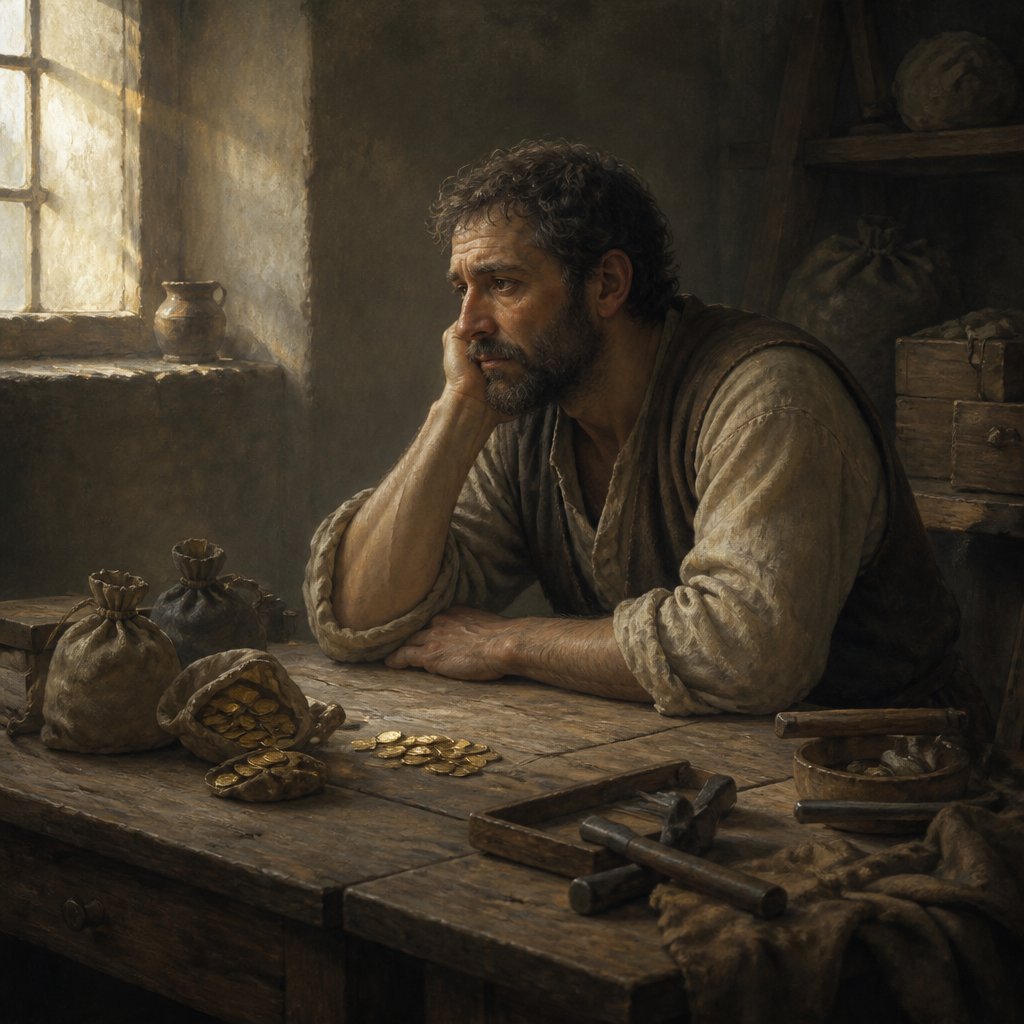
As we delve into the depths of Ecclesiastes 4:8, we encounter the stark portrait of a solitary existence: "There is one alone, and there is not a second; yea, he hath neither child nor brother: yet is there no end of all his labour; neither is his eye satisfied with riches; neither saith he, For whom do I labour, and bereave my soul of good? This is also vanity, yea, it is a sore travail."
The author of Ecclesiastes, traditionally attributed to King Solomon, bears witness to the futility and hollowness of a life lived apart from meaningful relationships. At first glance, this verse encapsulates the agony of isolation—both physically as in having no family to care for, and emotionally as in the absence of companionship. The solitary figure, devoid of kinship and fellowship, works tirelessly, yet all his exertions seem to amount to nothing.
In a world that places immense value on wealth and achievement, we can easily become entrapped in the cycle of relentless ambition. Solomon paints a vivid picture of a man consumed with labor, yet devoid of purpose. "There is no end to all his labour; neither is his eye satisfied with riches." In our pursuit for more—be it for possessions, status, or control—we can become like this solitary individual. We pile up success and accolades, often failing to pause and consider the true significance of our toils. It leads us to ask: for whom do we labor? In sacrificing relationships for our ambitions, we risk bereaving our souls of true good.
This passage teaches us that the richness of life is not found in financial prosperity or personal achievements but in connections with others. Human beings are not designed for solitude. From the very beginning, God established the principle of companionship when He said, "It is not good that the man should be alone" (Genesis 2:18). Relationships provide purpose and a reason to labor, transforming our efforts into a legacy that impacts not only our lives but the lives of those around us.
We notice that the man in Ecclesiastes is not just alone but also seemingly content in his solitary lifestyle, yet this lack of relational fulfillment leads him to a life devoid of joy. "Neither saith he, For whom do I labour, and bereave my soul of good?" There lies the heart of his vanity—a lack of higher purpose in his toil. In the pursuit of wealth, he has missed the fundamental truth: that we are called to contribute to the greater good, to uplift and support those around us, nurturing connections that can provide lasting joy.
In our daily routines, let us remember the essence of this message. We are invited not only to work but to reflect on why we work. Do our labor and ambitions ultimately serve ourselves, or do they serve the larger community—a neighbor, a friend, a family member? The solitary man in this verse reminds us of the necessity of considering our motivations and intentions. Instead of forging ahead blindly into endless work, let's shift our focus to those around us—acknowledging their presence and recognizing the spiritual and emotional richness they bring to our lives.
In conclusion, the mirror that Ecclesiastes 4:8 holds reflectively offers a sobering reminder of the dangers of isolation and self-centered ambition. In a world so connected yet often so lonely, may we strive to cultivate genuine relationships that bring fulfillment and purpose to our lives. As we labor, let us be aware of the community that surrounds us, sharing our burdens and joys, for therein lies the beauty and solace of life. Let us live not only for ourselves but for one another, embodying the truth that it is indeed better to share our journey than to walk alone.
Want to reflect more on Ecclesiastes 4:8?
Continue your spiritual journey with Bible Chat — an AI-powered tool for exploring God's Word through conversation. Ask questions, discover connections, and deepen your understanding.
Get Our Apps


Ecclesiastes 4:8 Artwork

Ecclesiastes 4:8 - "There is one alone, and there is not a second; yea, he hath neither child nor brother: yet is there no end of all his labour; neither is his eye satisfied with riches; neither saith he, For whom do I labour, and bereave my soul of good? This is also vanity, yea, it is a sore travail."

Ecclesiastes 4:8-10 - "There is one alone, and there is not a second; yea, he hath neither child nor brother: yet is there no end of all his labour; neither is his eye satisfied with riches; neither saith he, For whom do I labour, and bereave my soul of good? This is also vanity, yea, it is a sore travail. Two are better than one; because they have a good reward for their labour. For if they fall, the one will lift up his fellow: but woe to him that is alone when he falleth; for he hath not another to help him up."
"There is one alone, and there is not a second; yea, he hath neither child nor brother: yet is there no end of all his labour; neither is his eye satisfied with riches; neither saith he, For whom do I labour, and bereave my soul of good? This is also vanity, yea, it is a sore travail." - Ecclesiastes 4:8
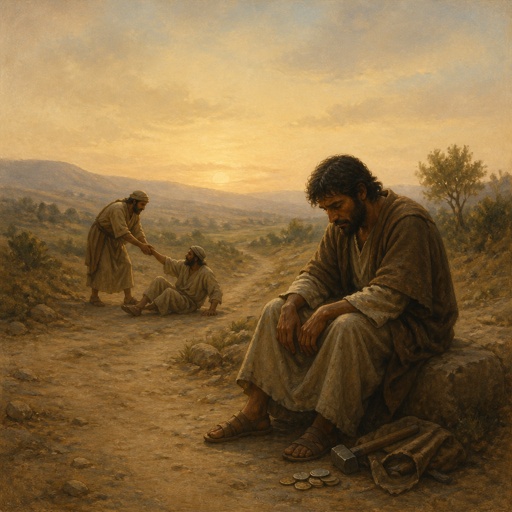
"There is one alone, and there is not a second; yea, he hath neither child nor brother: yet is there no end of all his labour; neither is his eye satisfied with riches; neither saith he, For whom do I labour, and bereave my soul of good? This is also vanity, yea, it is a sore travail. Two are better than one; because they have a good reward for their labour. For if they fall, the one will lift up his fellow: but woe to him that is alone when he falleth; for he hath not another to help him up." - Ecclesiastes 4:8-10

Ecclesiastes 8:4 - "Where the word of a king is, there is power: and who may say unto him, What doest thou?"

ecclesiastes 12:1-8

"Where the word of a king is, there is power: and who may say unto him, What doest thou?" - Ecclesiastes 8:4

ecclesiastes 12:1-8

ecclesiastes 12:1-8

ecclesiastes 12:1-8

Ecclesiastes 3:7-8

ecclesiastes 12:1-8

Ecclesiastes 12:8 - "¶ Vanity of vanities, saith the preacher; all is vanity."

Ecclesiastes 3:8 - "A time to love, and a time to hate; a time of war, and a time of peace."

Ecclesiastes 8:2 - "I counsel thee to keep the king's commandment, and that in regard of the oath of God."

Ecclesiastes 4:7 - "Then I returned, and I saw vanity under the sun."

Ecclesiastes 8:7 - "For he knoweth not that which shall be: for who can tell him when it shall be?"

Ecclesiastes 3:4 - "A time to weep, and a time to laugh; a time to mourn, and a time to dance;"

Ecclesiastes 8:6 - "¶ Because to every purpose there is time and judgment, therefore the misery of man is great upon him."

Ecclesiastes 4:4 - "¶ Again, I considered all travail, and every right work, that for this a man is envied of his neighbour. This is also vanity and vexation of spirit."

Ecclesiastes 7:4 - "The heart of the wise is in the house of mourning; but the heart of fools is in the house of mirth."

Ecclesiastes 9:8 - "Let thy garments be always white; and let thy head lack no ointment."

Ecclesiastes 4:5 - "The fool foldeth his hands together, and eateth his own flesh."

Ecclesiastes 7:8 - "Better is the end of a thing than the beginning thereof: and the patient in spirit is better than the proud in spirit."

Ecclesiastes 4:9 - "¶ Two are better than one; because they have a good reward for their labour."

Ecclesiastes 6:4 - "For he cometh in with vanity, and departeth in darkness, and his name shall be covered with darkness."

Ecclesiastes 1:4 - "One generation passeth away, and another generation cometh: but the earth abideth for ever."

Ecclesiastes 10:8 - "He that diggeth a pit shall fall into it; and whoso breaketh an hedge, a serpent shall bite him."

"1 There is a time for everything, and a season for every activity under the heavens: 2 a time to be born and a time to die, a time to plant and a time to uproot, 3 a time to kill and a time to heal, a time to tear down and a time to build, 4 a time to weep and a time to laugh, a time to mourn and a time to dance, 5 a time to scatter stones and a time to gather them, a time to embrace and a time to refrain from embracing, 6 a time to search and a time to give up, a time to keep and a time to throw away, 7 a time to tear and a time to mend, a time to be silent and a time to speak, 8 a time to love and a time to hate, a time for war and a time for peace." - Ecclesiastes 3:1-8

Ecclesiastes 4:6 - "Better is an handful with quietness, than both the hands full with travail and vexation of spirit."