The Unseen Gift: Embracing the Value of Innocence
"Yea, better is he than both they, which hath not yet been, who hath not seen the evil work that is done under the sun." - Ecclesiastes 4:3
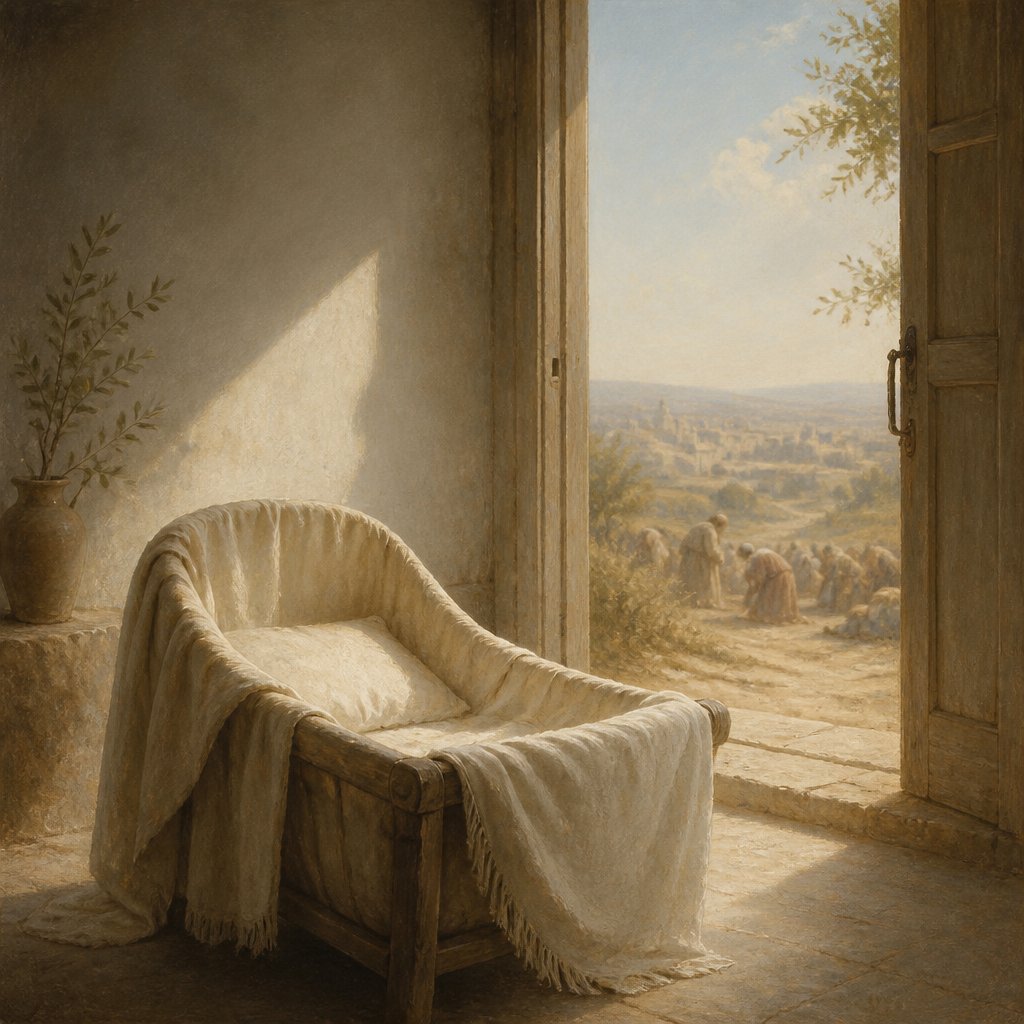
In Ecclesiastes 4:3, we read, "Yea, better is he than both they, which hath not yet been, who hath not seen the evil work that is done under the sun." This poignant verse from the wise man Solomon grips our attention and compels us to reflect on profound themes of existence, evil, and the relative state of being.
As we delve into this verse, we first encounter the notion of comparison. Solomon presents us with a paradox: better is the one who has never been born than those who have experienced the harsh realities of life. This stance may initially seem bleak, but it underscores a critical facet of human experience—the interplay between knowledge and innocence. The innocent soul untouched by the burdens of sin and suffering possesses a purity that those who have been exposed to the world's darkness can hardly reclaim.
In contemplating this verse, we ponder why Solomon ascribes such worth to the one who hasn't seen the evil under the sun. The key lies in understanding how knowledge can taint innocence. From the moment we open our eyes and perceive the world around us, we are bombarded by a tapestry woven with joy and sorrow, love and hate, hope and despair. It is impossible to exist in this fallen world without encountering its shadows.
God has created us with the capacity to experience love, joy, and peace, yet, as we navigate through life, we also come face to face with injustice, betrayal, and heartache. Each experience shapes our character and understanding of the world. The verse reminds us of the toll that this experience can take. When we witness the evil that permeates society—the pain, the suffering, the corruption—we understand what was lost in the garden of Eden. It was our spiritual innocence and freedom from sin's grasp.
However, is this perspective solely pessimistic? In acknowledging the darkness, we gain an appreciation for the light. The trials we endure, while challenging, build resilience and deepen our dependence on God. Viewing life through an eternal lens shifts our focus. Yes, we are aware of the evil under the sun, but we also recognize that God's grace can transform even the darkest of situations into opportunities for growth.
Within our human context, the idea of being better off not having been born challenges us to cherish the sanctity of life. Life is a delicate gift presented to us by the Creator, full of potential and purpose. Even amidst suffering, our existence matters. We are here to make an impact, to reflect God's love, and to engage with one another in meaningful ways. The calling of every believer is to highlight the goodness inherent in the world, even when harsh realities overshadow it.
Moreover, as we navigate our lives, we need to remember that there is a calling to seek justice in the face of evil and to shine light where darkness prevails. The very agony we witness around us can be a catalyst for a deeper faith, urging us to act and respond. God places us in communities, urging us to protect the innocent, serve the needy, and push back against the brokenness entrenched in humanity.
Let us inspire one another to transcend the burdens of this world. Though Solomon reflects on the value of innocence, his insights ought to spur us to strive for a life filled with purpose, hope, and light. Though we may have witnessed evil, we do not lose our ability to respond with compassion and love. We may not have chosen our birth, but we can choose how we engage with the world.
In the end, Ecclesiastes 4:3 serves as a reminder that while knowledge of evil is inevitable, it is how we respond to it that shapes our legacy. The virtuous will focus on the good, seeking every opportunity to draw closer to God and reflect His glory. Let us celebrate our existence, strive to understand suffering, and work diligently toward a future where light overcomes darkness.
Want to reflect more on Ecclesiastes 4:3?
Continue your spiritual journey with Bible Chat — an AI-powered tool for exploring God's Word through conversation. Ask questions, discover connections, and deepen your understanding.
Get Our Apps


Ecclesiastes 4:3 Artwork

Ecclesiastes 4:3 - "Yea, better is he than both they, which hath not yet been, who hath not seen the evil work that is done under the sun."
"Yea, better is he than both they, which hath not yet been, who hath not seen the evil work that is done under the sun." - Ecclesiastes 4:3

Ecclesiastes 3:4 - "A time to weep, and a time to laugh; a time to mourn, and a time to dance;"

"A time to weep, and a time to laugh; a time to mourn, and a time to dance;" - Ecclesiastes 3:4

Ecclesiastes 3:1

Ecclesiastes 3:3 - "A time to kill, and a time to heal; a time to break down, and a time to build up;"

Ecclesiastes 3:7-8

Ecclesiastes 3:1 – "There is a time for everything, and a season for every activity under the heavens."

Ecclesiastes 4:7 - "Then I returned, and I saw vanity under the sun."

Ecclesiastes 3:9 - "What profit hath he that worketh in that wherein he laboureth?"

Ecclesiastes 3:1 - "To every thing there is a season, and a time to every purpose under the heaven:"

Ecclesiastes 3:8 - "A time to love, and a time to hate; a time of war, and a time of peace."

Ecclesiastes 4:4 - "¶ Again, I considered all travail, and every right work, that for this a man is envied of his neighbour. This is also vanity and vexation of spirit."

Ecclesiastes 3:6 - "A time to get, and a time to lose; a time to keep, and a time to cast away;"

Ecclesiastes 7:3 - "Sorrow is better than laughter: for by the sadness of the countenance the heart is made better."

Ecclesiastes 7:4 - "The heart of the wise is in the house of mourning; but the heart of fools is in the house of mirth."

Ecclesiastes 4:5 - "The fool foldeth his hands together, and eateth his own flesh."

Ecclesiastes 4:9 - "¶ Two are better than one; because they have a good reward for their labour."

Ecclesiastes 6:4 - "For he cometh in with vanity, and departeth in darkness, and his name shall be covered with darkness."

Ecclesiastes 1:4 - "One generation passeth away, and another generation cometh: but the earth abideth for ever."

Ecclesiastes 3:7 - "A time to rend, and a time to sew; a time to keep silence, and a time to speak;"

Ecclesiastes 3:1-4 - "To everything there is a season, and a time to every purpose under the heaven: A time to be born, and a time to die; a time to plant, and a time to pluck up that which is planted; A time to kill, and a time to heal; a time to break down, and a time to build up; A time to weep, and a time to laugh; a time to mourn, and a time to dance."

Ecclesiastes 3:21 - "Who knoweth the spirit of man that goeth upward, and the spirit of the beast that goeth downward to the earth?"

Ecclesiastes 3:2 - "A time to be born, and a time to die; a time to plant, and a time to pluck up that which is planted;"

Ecclesiastes 3:16 - "¶ And moreover I saw under the sun the place of judgment, that wickedness was there; and the place of righteousness, that iniquity was there."

Ecclesiastes 3:20 - "All go unto one place; all are of the dust, and all turn to dust again."

Ecclesiastes 4:6 - "Better is an handful with quietness, than both the hands full with travail and vexation of spirit."

Ecclesiastes 11:4 - "He that observeth the wind shall not sow; and he that regardeth the clouds shall not reap."

Ecclesiastes 9:4 - "¶ For to him that is joined to all the living there is hope: for a living dog is better than a dead lion."

Ecclesiastes 3:12 - "I know that there is no good in them, but for a man to rejoice, and to do good in his life."