Wisdom Over Wealth: A Reflection on Ecclesiastes 4:13
"¶ Better is a poor and a wise child than an old and foolish king, who will no more be admonished." - Ecclesiastes 4:13
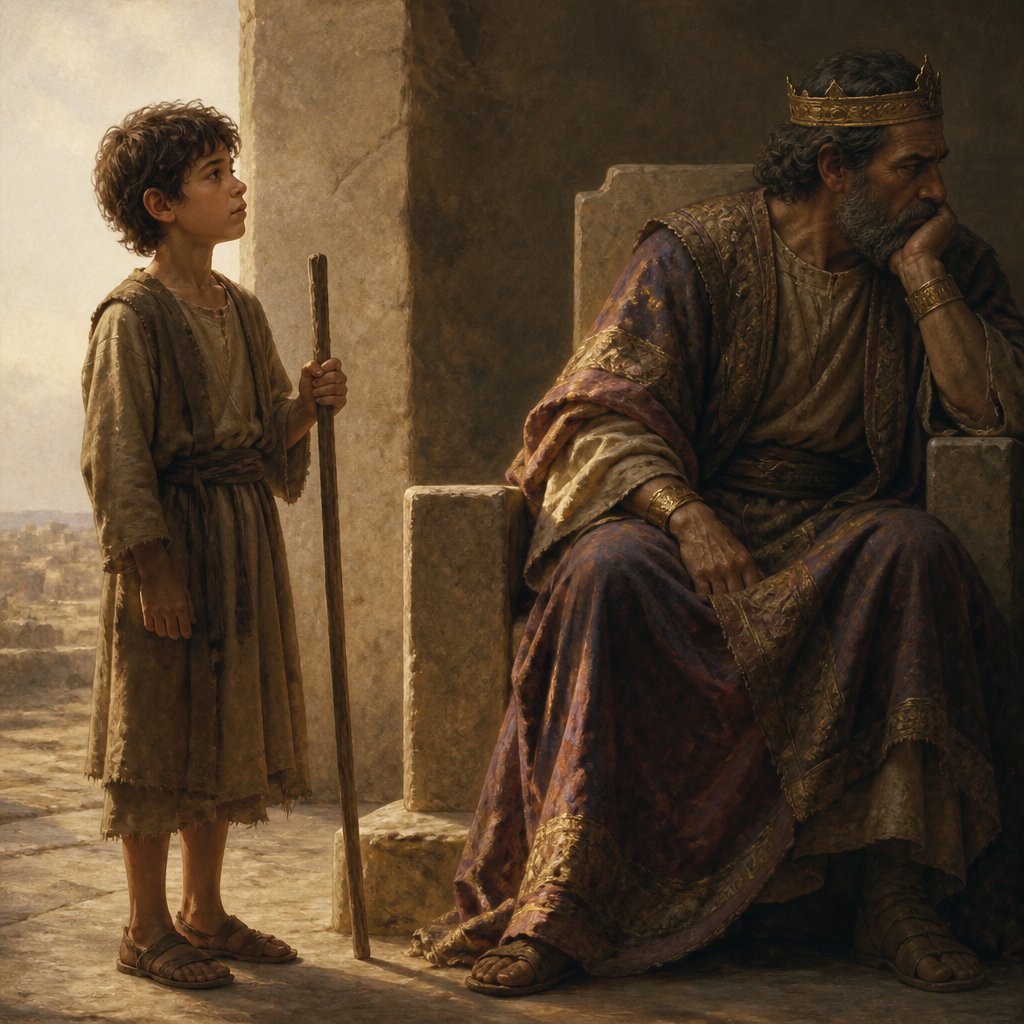
In its exploration of life’s intricacies, the Book of Ecclesiastes delivers profound insights that challenge conventional wisdom. Our focal verse, Ecclesiastes 4:13 (KJV), states, “Better is a poor and a wise child than an old and foolish king, who will no more be admonished.” This stark comparison not only reflects the value of wisdom over wealth but also provokes deep introspection on the nature of authority and the true indicators of a fulfilling life.
At first glance, the juxtaposition of a “poor and wise child” against an “old and foolish king” might seem perplexing. Aren’t kings, by virtue of their position, presumed to possess wisdom? The answer lies in the acknowledgment that authority and wisdom do not always go hand in hand. Here, the child represents purity, openness to learning, and humility—qualities often overshadowed by a lifetime of experience that may lead to complacency in the adult or leader.
This verse teaches us that wisdom is not measured by the years we accumulate or the titles we hold, but by our openness to learning and growing. The characteristics of the wise child—adaptability, humility, the willingness to understand different perspectives—make him truly rich in knowledge despite lacking material wealth. In contrast, the “old and foolish king,” hardened by his status and perhaps weighed down by his pride, becomes unable to receive correction or guidance. He embodies a heart resistant to change, which is dangerous for any leader.
In our own lives, how often do we encounter individuals who believe their experience equates to wisdom? It is easy to fall into the trap of thinking that age guarantees insight. Yet, unmet expectations of wisdom from those in authority often surface when we witness their misguided decisions, stubbornness, and a refusal to consider the counsel of others. This shows that wisdom is an active pursuit, not merely a passive state acquired through age. We must constantly seek understanding, embracing the knowledge our environment—and even those younger than ourselves—has to offer.
Moreover, let’s reflect on the implications of wisdom in our own spiritual journeys. The Scriptures encourage us to seek wisdom above all things. James 1:5 reminds us, “If any of you lack wisdom, let him ask of God, that giveth to all men liberally, and upbraideth not; and it shall be given him.” Here lies a powerful truth: wisdom is a gift that can be requested and developed. When we take a position of humility before God, acknowledging that we do not have all the answers, we open ourselves to His instruction. The wise child exemplifies this humility, while the king's declared independence only results in foolishness.
Furthermore, this verse poses a reflection on our values. In society, we often equate success with wealth and status. However, God flips this perception on its head through the wisdom shared in Ecclesiastes. He calls us to reassess what we truly value—are we pursuing knowledge, humility, and the righteousness of God, or are we blindly chasing materialism and positions of power? The wise child represents a kingdom of heaven mindset, seeking the blessings of wisdom rather than those of the world.
As we meditate on Ecclesiastes 4:13, let us strive to embody the attributes of the wise child. May we remain open to admonition and guidance, and may we approach our lives with the hunger to grow in understanding. Let us also pray for leaders—those in positions of authority in our lives and communities—that they may be open and receptive to wisdom. In striving for wisdom, we build a foundation that will help illuminate our paths. Ultimately, as we seek wisdom, we deepen our relationship with the Lord, who alone is the source of all knowledge and understanding. Thus, let us remember: it is better to be poor and wise than to be wealthy and foolish.
Want to reflect more on Ecclesiastes 4:13?
Continue your spiritual journey with Bible Chat — an AI-powered tool for exploring God's Word through conversation. Ask questions, discover connections, and deepen your understanding.
Get Our Apps


Ecclesiastes 4:13 Artwork

Ecclesiastes 4:13 - "¶ Better is a poor and a wise child than an old and foolish king, who will no more be admonished."
"¶ Better is a poor and a wise child than an old and foolish king, who will no more be admonished." - Ecclesiastes 4:13

Ecclesiastes 2:13 - "Then I saw that wisdom excelleth folly, as far as light excelleth darkness."

Ecclesiastes 4:7 - "Then I returned, and I saw vanity under the sun."

Ecclesiastes 10:13 - "The beginning of the words of his mouth is foolishness: and the end of his talk is mischievous madness."

Ecclesiastes 3:4 - "A time to weep, and a time to laugh; a time to mourn, and a time to dance;"

Ecclesiastes 9:13 - "¶ This wisdom have I seen also under the sun, and it seemed great unto me:"

Ecclesiastes 7:13 - "Consider the work of God: for who can make that straight, which he hath made crooked?"

Ecclesiastes 4:4 - "¶ Again, I considered all travail, and every right work, that for this a man is envied of his neighbour. This is also vanity and vexation of spirit."

Ecclesiastes 7:4 - "The heart of the wise is in the house of mourning; but the heart of fools is in the house of mirth."

Ecclesiastes 4:5 - "The fool foldeth his hands together, and eateth his own flesh."

Ecclesiastes 3:13 - "And also that every man should eat and drink, and enjoy the good of all his labour, it is the gift of God."

Ecclesiastes 4:9 - "¶ Two are better than one; because they have a good reward for their labour."

Ecclesiastes 6:4 - "For he cometh in with vanity, and departeth in darkness, and his name shall be covered with darkness."

Ecclesiastes 1:4 - "One generation passeth away, and another generation cometh: but the earth abideth for ever."

Ecclesiastes 5:13 - "There is a sore evil which I have seen under the sun, namely, riches kept for the owners thereof to their hurt."

Ecclesiastes 12:13 - "Let us hear the conclusion of the whole matter: Fear God, and keep his commandments: for this is the whole duty of man."

Ecclesiastes 4:6 - "Better is an handful with quietness, than both the hands full with travail and vexation of spirit."

Ecclesiastes 11:4 - "He that observeth the wind shall not sow; and he that regardeth the clouds shall not reap."

Ecclesiastes 9:4 - "¶ For to him that is joined to all the living there is hope: for a living dog is better than a dead lion."

Ecclesiastes 4:11 - "Again, if two lie together, then they have heat: but how can one be warm alone?"

Ecclesiastes 8:4 - "Where the word of a king is, there is power: and who may say unto him, What doest thou?"

Ecclesiastes 4:12 - "And if one prevail against him, two shall withstand him; and a threefold cord is not quickly broken."

Ecclesiastes 8:13 - "But it shall not be well with the wicked, neither shall he prolong his days, which are as a shadow; because he feareth not before God."

Ecclesiastes 2:4 - "I made me great works; I builded me houses; I planted me vineyards:"

Ecclesiastes 4:14 - "For out of prison he cometh to reign; whereas also he that is born in his kingdom becometh poor."

Ecclesiastes 4:2 - "Wherefore I praised the dead which are already dead more than the living which are yet alive."

Ecclesiastes 10:4 - "If the spirit of the ruler rise up against thee, leave not thy place; for yielding pacifieth great offences."

Ecclesiastes 4:15 - "I considered all the living which walk under the sun, with the second child that shall stand up in his stead."

Ecclesiastes 4:3 - "Yea, better is he than both they, which hath not yet been, who hath not seen the evil work that is done under the sun."