The Pursuit of Meaning: Reflecting on Ecclesiastes 2:7
"I got me servants and maidens, and had servants born in my house; also I had great possessions of great and small cattle above all that were in Jerusalem before me:" - Ecclesiastes 2:7
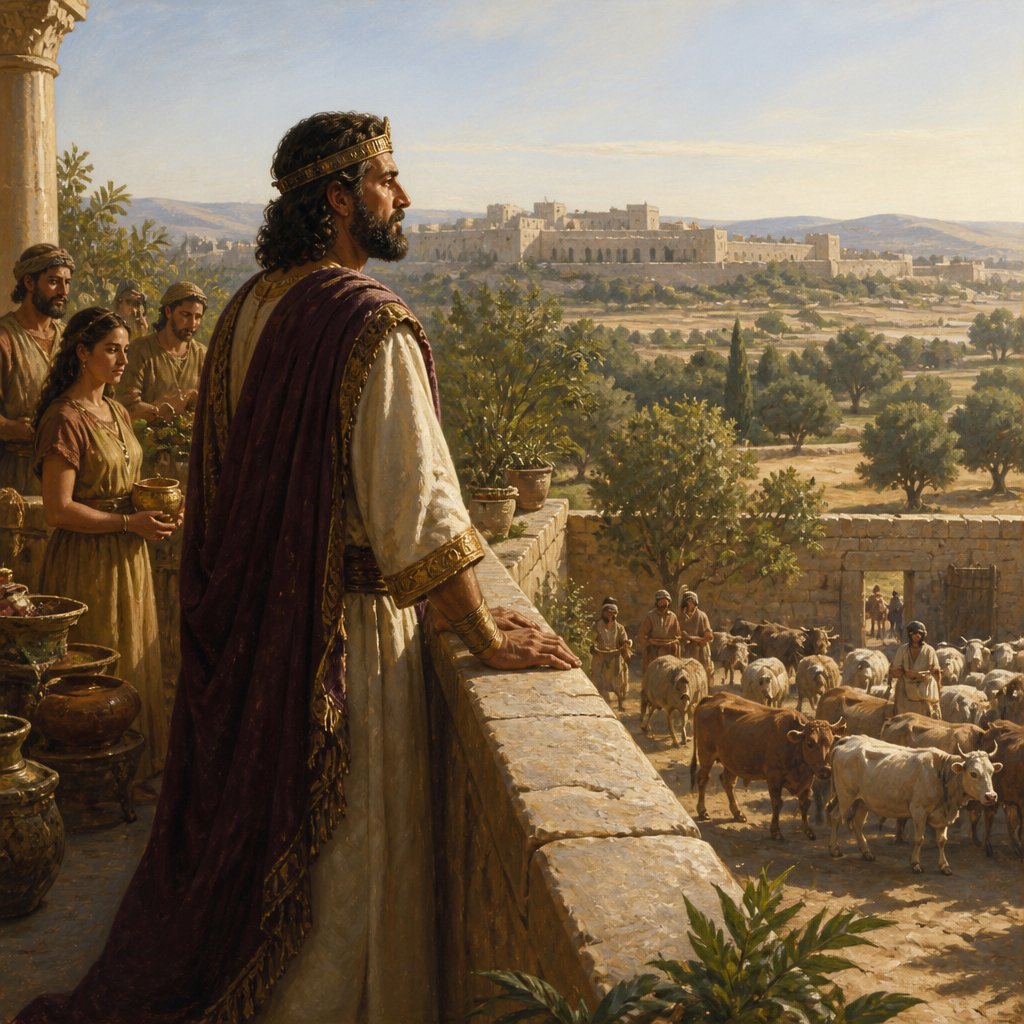
In the book of Ecclesiastes, the preacher delves deep into the human experience, testing the limits of ambition, pleasure, and the quest for meaning. Solomon, often identified as the author, had been granted wisdom unparalleled, wealth beyond measure, and a reign that surpassed all before him. Yet, upon reflecting on his life, he proclaims a resounding truth about the futility of earthly pursuits.
Ecclesiastes 2:7 states, "I got me servants and maidens, and had servants born in my house; also I had great possessions of great and small cattle above all that were in Jerusalem before me." (KJV). This verse vividly illustrates Solomon's incredible wealth and status. From this perspective, it is easy to envy him. For many of us, the accumulation of possessions, status, and servants symbolizes the pinnacle of success. Yet Solomon’s inquiry into the lasting worth of these achievements unveils a deeper spiritual truth.
Solomon speaks of his servants and maidens—the caretakers and laborers within his household, seemingly a display of grandeur. This line bears witness to how much he has acquired; his wisdom led him to amass wealth that not only met his needs but overflowed into extravagance. But what Solomon shows us through this verse is more than just a list of great possessions; he reveals the emptiness accompanying the relentless pursuit of affluence.
In our modern lives, it is easy to find ourselves striving for similar markers of success—perhaps not necessarily in the form of cattle and servants, but in social status, promotions, and various forms of riches. We live in a society that equates worth with what one possesses and can display. Solomon, however, navigates through this illusion by reflecting on the transient nature of such achievements. He protests against the deceptive comfort found in material wealth, culminating in a thoughtful examination of purpose.
While it is not wrong to enjoy the fruits of our labor, Solomon’s reflections challenge us to question our motivations. Are we pursuing wealth for fulfillment, or are we anchored in our relationship with God? Are we driven by envy of what others have, or by a desire to serve and glorify our Creator? Solomon’s song of lament over life’s vanity echoes through time, calling to mind Jesus’ teachings on treasures in heaven.
Jesus reminds us in Matthew 6:19-21, "Lay not up for yourselves treasures upon earth, where moth and rust doth corrupt, and where thieves break through and steal: But lay up for yourselves treasures in heaven, where neither moth nor rust doth corrupt, and where thieves do not break through nor steal: For where your treasure is, there will your heart be also."
To invest in riches that cannot be taken from us gives our lives substantial meaning. The challenge lies in discernment—recognizing what truly fulfills our souls. As Solomon compels us to confront the temporary nature of life and its pleasures through his literary wisdom in Ecclesiastes, we are invited to lay aside vain pursuits and seek after that which endures: genuine love, service, and spiritual fulfillment.
When we see material accumulation as a means to shape our identities, we miss the essence of who we are—the beloved children of the Most High God. Living authentically means understanding that our worth transcends earthly possessions and accolades. God’s call to us is to invest our lives in relationships, compassion, and love, which draw us nearer to Him and to the hearts of others.
As you ponder Ecclesiastes 2:7 today, reflect prayerfully on where you place your value. What pursuits have taken precedence in your life? How can you realign your heart with God’s everlasting truth? Allow Him to guide you on a path that leads to genuine fulfillment, revealing the eternal treasures that await those who seek Him above all else.
Want to reflect more on Ecclesiastes 2:7?
Continue your spiritual journey with Bible Chat — an AI-powered tool for exploring God's Word through conversation. Ask questions, discover connections, and deepen your understanding.
Get Our Apps


Ecclesiastes 2:7 Artwork
Ecclesiastes 2:7 - "I got me servants and maidens, and had servants born in my house; also I had great possessions of great and small cattle above all that were in Jerusalem before me:"
"I got me servants and maidens, and had servants born in my house; also I had great possessions of great and small cattle above all that were in Jerusalem before me:" - Ecclesiastes 2:7

Ecclesiastes 7:2 - "¶ It is better to go to the house of mourning, than to go to the house of feasting: for that is the end of all men; and the living will lay it to his heart."

Ecclesiastes 7:7 - "¶ Surely oppression maketh a wise man mad; and a gift destroyeth the heart."

Ecclesiastes 3:7-8

Ecclesiastes 7:11 - "¶ Wisdom is good with an inheritance: and by it there is profit to them that see the sun."

Ecclesiastes 4:7 - "Then I returned, and I saw vanity under the sun."

Ecclesiastes 7:9 - "Be not hasty in thy spirit to be angry: for anger resteth in the bosom of fools."

Ecclesiastes 6:7 - "All the labour of man is for his mouth, and yet the appetite is not filled."

Ecclesiastes 7:20 - "For there is not a just man upon earth, that doeth good, and sinneth not."

Ecclesiastes 7:3 - "Sorrow is better than laughter: for by the sadness of the countenance the heart is made better."

Ecclesiastes 11:7 - "¶ Truly the light is sweet, and a pleasant thing it is for the eyes to behold the sun:"

Ecclesiastes 7:4 - "The heart of the wise is in the house of mourning; but the heart of fools is in the house of mirth."

Ecclesiastes 8:7 - "For he knoweth not that which shall be: for who can tell him when it shall be?"

Ecclesiastes 5:7 - "For in the multitude of dreams and many words there are also divers vanities: but fear thou God."

Ecclesiastes 7:19 - "Wisdom strengtheneth the wise more than ten mighty men which are in the city."

Ecclesiastes 3:7 - "A time to rend, and a time to sew; a time to keep silence, and a time to speak;"

Ecclesiastes 7:24 - "That which is far off, and exceeding deep, who can find it out?"

Ecclesiastes 7:6 - "For as the crackling of thorns under a pot, so is the laughter of the fool: this also is vanity."

Ecclesiastes 7:5 - "It is better to hear the rebuke of the wise, than for a man to hear the song of fools."

Ecclesiastes 12:7 - "Then shall the dust return to the earth as it was: and the spirit shall return unto God who gave it."

Ecclesiastes 2:2 - "I said of laughter, It is mad: and of mirth, What doeth it?"

ecclesiastes 12:2-6

Ecclesiastes 7:23 - "¶ All this have I proved by wisdom: I said, I will be wise; but it was far from me."

Ecclesiastes 7:13 - "Consider the work of God: for who can make that straight, which he hath made crooked?"

Ecclesiastes 7:8 - "Better is the end of a thing than the beginning thereof: and the patient in spirit is better than the proud in spirit."

Ecclesiastes 7:1 - "A good name is better than precious ointment; and the day of death than the day of one's birth."

Ecclesiastes 10:7 - "I have seen servants upon horses, and princes walking as servants upon the earth."

Ecclesiastes 7:12 - "For wisdom is a defence, and money is a defence: but the excellency of knowledge is, that wisdom giveth life to them that have it."

"¶ Surely oppression maketh a wise man mad; and a gift destroyeth the heart." - Ecclesiastes 7:7