The Quest for True Wisdom: Understanding Life's Pursuits
"¶ And I turned myself to behold wisdom, and madness, and folly: for what can the man do that cometh after the king? even that which hath been already done." - Ecclesiastes 2:12
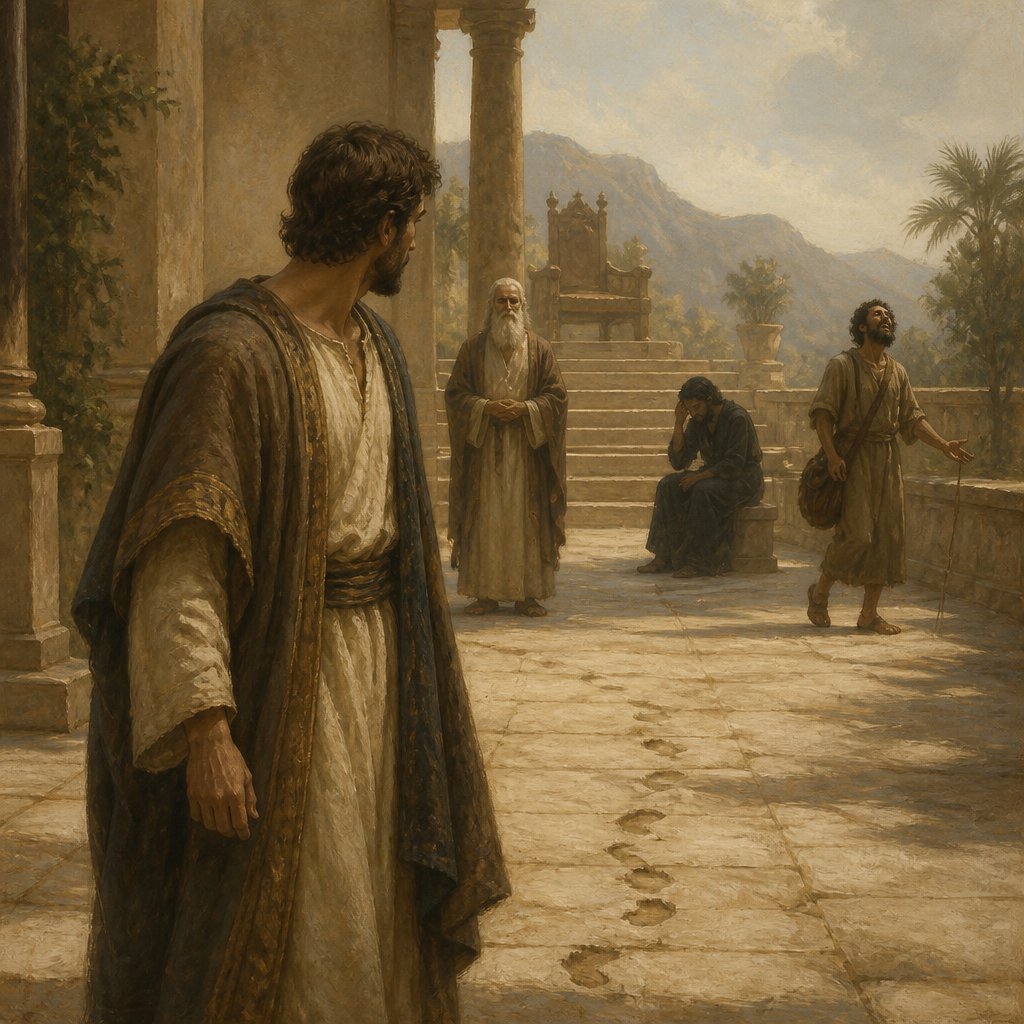
Ecclesiastes 2:12 states, "And I turned myself to behold wisdom, and madness, and folly: for what can the man do that cometh after the king? even that which hath been already done." In this profound verse, Solomon, considered the wisest man in biblical history, reflects on an existential journey that many of us embark upon throughout our lives. This verse encapsulates the struggle between pursuit and contentment, between depth and superficiality, and above all, the search for wisdom.
As we delve into Solomon's sentiments, we find a ruler who had everything—wealth, influence, knowledge, and experience. He dedicated himself to exploring the extent of wisdom, contrasting it with the chaos of folly and madness. His observations echo in our hearts; they compel us to ponder not just on the nature of wisdom but also on the significance of our pursuits. Why did Solomon seek to understand human behavior and its various manifestations?
In contextualizing this verse, we recognize that wisdom is often seen as the ultimate goal of human endeavor. Yet, Solomon contrasts wisdom with madness and folly, suggesting that neither wisdom alone nor the pursuit of insanity and foolishness can provide the answers to life's profound questions. This juxtaposition leads to a deeper philosophical inquiry: what truly defines a successful life? As we contemplate that question, we can feel the weight of Solomon’s conclusion that no new endeavor can surpass what has already been achieved. This is a sobering realization for those of us continually striving for uniqueness and unprecedented accomplishments.
There is a philosophical essence in this passage; it alludes to cyclicality in human experience. In our modern world, we strive to establish our identities in relation to the successes of those who came before us, often in a flurry of activities and achievements. We chase new trends, ideas, and innovations, attempting to leave our mark on history. However, as Solomon points out, though we may uncover new interpretations and applications, the essence of human experience remains unchanged. As the sun rises and sets, so too do the pursuits of mankind.
But where does this lead us? The answer lies in our understanding of what it means to embrace wisdom. Wisdom transcends knowledge; it requires discernment. Solomon teaches that wisdom is a pathway illuminated by divine insight and a willingness to heed life's lessons through experiences of both triumph and defeat. While folly might promise temporary satisfaction or amusement, wisdom anchors us to the truth. It encourages thoughtful reflection on our choices and their consequences, enabling us to see beyond our immediate desires.
In light of this, if we are to choose a path, let it be a journey fueled by wisdom rather than folly. What are the practical implications of this? It means asking ourselves the right questions: Why are we pursuing what we pursue? Are our ambitions rooted in a desire to serve and uplift others, or do they stem from personal vanity and comparison with those around us? It means learning from the past and from others' lives—seeing the outcomes of both wise and foolish choices to guide our decisions.
As we conclude this reflection, let us remember that our lives, like Solomon’s, are part of a grander narrative. Each of us has a role to play with our unique talents and gifts, and it’s wise to utilize those in a way that reflects purposeful living. Rather than striving to outdo those who preceded us, let us seek to understand the timeless wisdom that comes from our Creator, learning from the past, and applying those insights to our present. In doing so, we may find that true wisdom not only prevails but also leads to a life that resonates with peace, fulfillment, and true purpose in God's eyes.
Want to reflect more on Ecclesiastes 2:12?
Continue your spiritual journey with Bible Chat — an AI-powered tool for exploring God's Word through conversation. Ask questions, discover connections, and deepen your understanding.
Get Our Apps


Ecclesiastes 2:12 Artwork

Ecclesiastes 2:12 - "¶ And I turned myself to behold wisdom, and madness, and folly: for what can the man do that cometh after the king? even that which hath been already done."
"¶ And I turned myself to behold wisdom, and madness, and folly: for what can the man do that cometh after the king? even that which hath been already done." - Ecclesiastes 2:12

ecclesiastes 12:2-6

"While the sun, or the light, or the moon, or the stars, be not darkened, nor the clouds return after the rain:" - Ecclesiastes 12:2

Ecclesiastes 12:2 - "While the sun, or the light, or the moon, or the stars, be not darkened, nor the clouds return after the rain:"

ecclesiastes 12:1

ecclesiastes 12:1

ecclesiastes 12:1

ecclesiastes 12:1-8

ecclesiastes 12:1-8

ecclesiastes 12:1-8

ecclesiastes 12:1-8

ecclesiastes 12:1-8

Ecclesiastes 1:12 - "¶ I the Preacher was king over Israel in Jerusalem."

Ecclesiastes 12:8 - "¶ Vanity of vanities, saith the preacher; all is vanity."

Ecclesiastes 12:12 - "And further, by these, my son, be admonished: of making many books there is no end; and much study is a weariness of the flesh."

"While the sun, or the light, or the moon, or the stars, be not darkened, nor the clouds return after the rain:" - Ecclesiastes 12:2

Ecclesiastes 12:7 - "Then shall the dust return to the earth as it was: and the spirit shall return unto God who gave it."

Ecclesiastes 10:12 - "The words of a wise man's mouth are gracious; but the lips of a fool will swallow up himself."

Ecclesiastes 3:12 - "I know that there is no good in them, but for a man to rejoice, and to do good in his life."

Ecclesiastes 12:10 - "The preacher sought to find out acceptable words: and that which was written was upright, even words of truth."

Ecclesiastes 12:11 - "The words of the wise are as goads, and as nails fastened by the masters of assemblies, which are given from one shepherd."

Ecclesiastes 4:12 - "And if one prevail against him, two shall withstand him; and a threefold cord is not quickly broken."

Ecclesiastes 7:12 - "For wisdom is a defence, and money is a defence: but the excellency of knowledge is, that wisdom giveth life to them that have it."

Ecclesiastes 2:2 - "I said of laughter, It is mad: and of mirth, What doeth it?"

Ecclesiastes 12:13 - "Let us hear the conclusion of the whole matter: Fear God, and keep his commandments: for this is the whole duty of man."

Ecclesiastes 12:6 - "Or ever the silver cord be loosed, or the golden bowl be broken, or the pitcher be broken at the fountain, or the wheel broken at the cistern."

Ecclesiastes 12:14 - "For God shall bring every work into judgment, with every secret thing, whether it be good, or whether it be evil."

"¶ Vanity of vanities, saith the preacher; all is vanity." - Ecclesiastes 12:8

"¶ I the Preacher was king over Israel in Jerusalem." - Ecclesiastes 1:12