The Dangers of Our Choices: A Reflection on Ecclesiastes 10:8
"He that diggeth a pit shall fall into it; and whoso breaketh an hedge, a serpent shall bite him." - Ecclesiastes 10:8
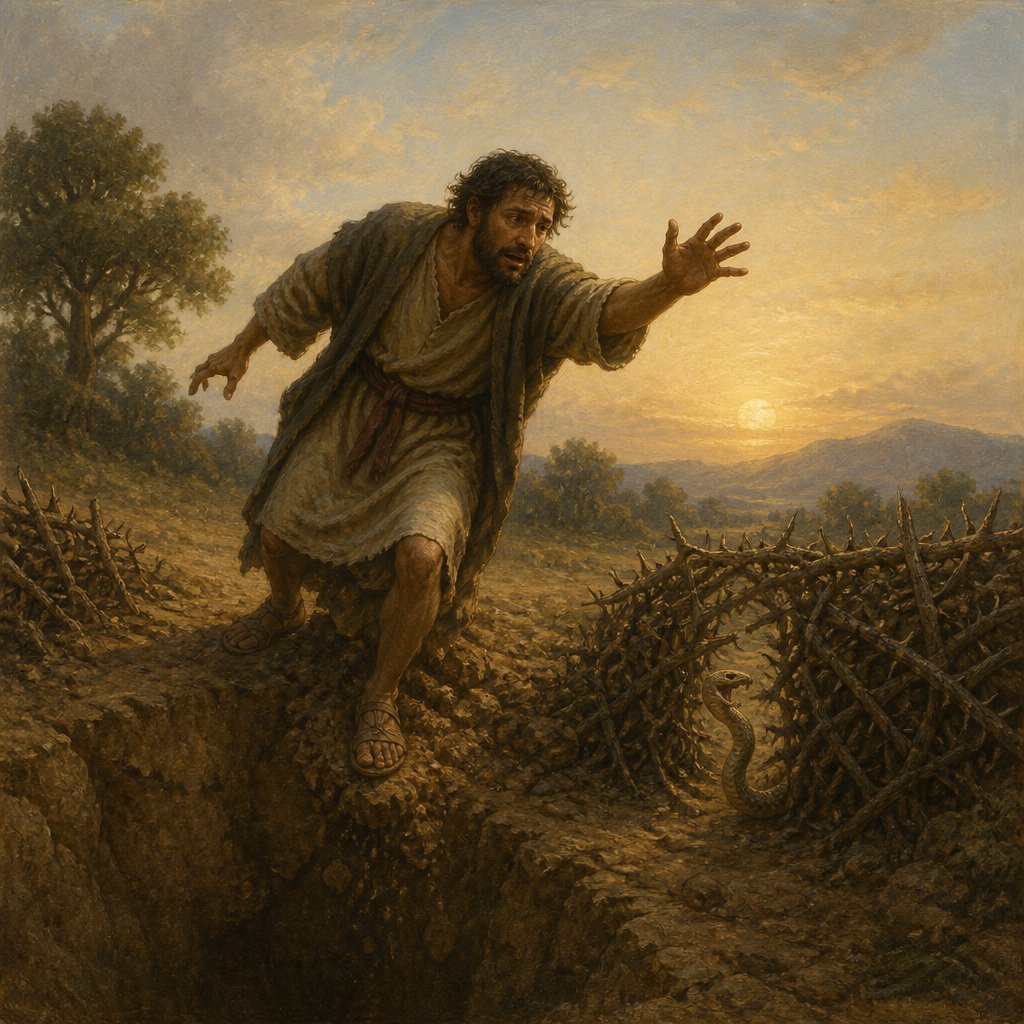
The verse Ecclesiastes 10:8 reminds us profoundly about the consequences of our actions: "He that diggeth a pit shall fall into it; and whoso breaketh an hedge, a serpent shall bite him." This observation encapsulates the biblical wisdom that directs our lives toward a path of righteousness and cautious living. It serves as a sobering reminder of the repercussions that often stem from our decisions and intentions.
In the Book of Ecclesiastes, the author, traditionally understood to be Solomon, reflects on the meaning of life and the complex interplay of wisdom, folly, and the unpredictability of existence. In the tenth chapter, Solomon draws attention to a fundamental principle: the danger of sowing discord or engaging in malevolent actions, which often leads to self-inflicted harm.
When we read, "He that diggeth a pit shall fall into it," we are confronted with the image of someone who prepares an intentional trap, likely with the intention of ensnaring another. However, the wisdom in this phrase encapsulates a deeper truth: the very actions we take against others may ultimately return to us. This is not merely a matter of karma; rather, it underscores a spiritual law, echoed throughout scriptures, regarding reaping what we sow (Galatians 6:7).
In our own lives, we may find numerous parallels to this principle. Consider the relationships we foster and the gossip we may indulge in. When we speak ill of others or act with ill intent, we are often enveloped in a web of negativity that, before long, ensnares us. A thoughtless word cast about in jest may return as sharp criticism when we find ourselves subject to similar scrutiny. The energy we project acts like a boomerang, spiraling back into our lives, sometimes with even greater intensity.
Moreover, the second part of this verse, "and whoso breaketh an hedge, a serpent shall bite him," emphasizes the need for protective barriers in our lives. Our hedges represent wisdom, boundaries, and self-control. When we break down these safeguards—whether through reckless living, engaging in sinful behaviors, or abandoning the teachings of scripture—we expose ourselves to danger. The serpent, often a biblical symbol for evil or temptation, embodies the lurking threats that arise when we let our guard down. The passage awakens a sense of caution, encouraging us to uphold the moral and spiritual walls that defend us against life's perils.
As we navigate our daily lives, we must heed the warnings embedded in these few lines. It calls us to recognize our responsibility for our choices and their potential repercussions. Are we acting wisely in our dealings, or are we setting traps that may lead to our downfall? Are we maintaining safeguards that will protect not only ourselves but also those around us?
This reflection should prompt a period of prayerful introspection. We can ask the Holy Spirit to reveal any areas in our lives where we may be digging pits for ourselves or breaking down crucial hedges of protection. Through earnest prayer, we invite God to guide our hearts towards wisdom and discernment. Remember, God desires for us to live in freedom and joy, far from the entanglements of sin that lead to our harm and distress.
Ultimately, Ecclesiastes 10:8 speaks not just to the consequences of our choices but also to the heart of God’s desire for us—to pursue lives rooted in righteousness, where wisdom reigns and our actions are aligned with His truth. By choosing to walk in His ways, we are assured protection, peace, and the avoidance of the pitfalls that our own hands may fashion.
Want to reflect more on Ecclesiastes 10:8?
Continue your spiritual journey with Bible Chat — an AI-powered tool for exploring God's Word through conversation. Ask questions, discover connections, and deepen your understanding.
Get Our Apps


Ecclesiastes 10:8 Artwork

Ecclesiastes 10:8 - "He that diggeth a pit shall fall into it; and whoso breaketh an hedge, a serpent shall bite him."
"He that diggeth a pit shall fall into it; and whoso breaketh an hedge, a serpent shall bite him." - Ecclesiastes 10:8

Ecclesiastes 8:10 - "And so I saw the wicked buried, who had come and gone from the place of the holy, and they were forgotten in the city where they had so done: this is also vanity."

ecclesiastes 12:1-8

ecclesiastes 12:1-8

ecclesiastes 12:1-8

ecclesiastes 12:1-8

Ecclesiastes 3:7-8

ecclesiastes 12:1-8

Ecclesiastes 12:8 - "¶ Vanity of vanities, saith the preacher; all is vanity."

Ecclesiastes 10:10 - "If the iron be blunt, and he do not whet the edge, then must he put to more strength: but wisdom is profitable to direct."

Ecclesiastes 3:8 - "A time to love, and a time to hate; a time of war, and a time of peace."

Ecclesiastes 10:6 - "Folly is set in great dignity, and the rich sit in low place."

Ecclesiastes 10:11 - "Surely the serpent will bite without enchantment; and a babbler is no better."

Ecclesiastes 8:2 - "I counsel thee to keep the king's commandment, and that in regard of the oath of God."

Ecclesiastes 8:7 - "For he knoweth not that which shall be: for who can tell him when it shall be?"

Ecclesiastes 10:18 - "¶ By much slothfulness the building decayeth; and through idleness of the hands the house droppeth through."

Ecclesiastes 10:19 - "¶ A feast is made for laughter, and wine maketh merry: but money answereth all things."

Ecclesiastes 8:6 - "¶ Because to every purpose there is time and judgment, therefore the misery of man is great upon him."

Ecclesiastes 10:12 - "The words of a wise man's mouth are gracious; but the lips of a fool will swallow up himself."

Ecclesiastes 10:13 - "The beginning of the words of his mouth is foolishness: and the end of his talk is mischievous madness."

Ecclesiastes 10:2 - "A wise man's heart is at his right hand; but a fool's heart at his left."

Ecclesiastes 9:8 - "Let thy garments be always white; and let thy head lack no ointment."

Ecclesiastes 8:4 - "Where the word of a king is, there is power: and who may say unto him, What doest thou?"

Ecclesiastes 7:8 - "Better is the end of a thing than the beginning thereof: and the patient in spirit is better than the proud in spirit."

Ecclesiastes 10:5 - "There is an evil which I have seen under the sun, as an error which proceedeth from the ruler:"

Ecclesiastes 12:10 - "The preacher sought to find out acceptable words: and that which was written was upright, even words of truth."

Ecclesiastes 10:15 - "The labour of the foolish wearieth every one of them, because he knoweth not how to go to the city."

Ecclesiastes 10:7 - "I have seen servants upon horses, and princes walking as servants upon the earth."

Ecclesiastes 3:10 - "I have seen the travail, which God hath given to the sons of men to be exercised in it."