Understanding God’s Sovereignty: A Heart Check from Deuteronomy 9:4
"Speak not thou in thine heart, after that the LORD thy God hath cast them out from before thee, saying, For my righteousness the LORD hath brought me in to possess this land: but for the wickedness of these nations the LORD doth drive them out from before thee." - Deuteronomy 9:4
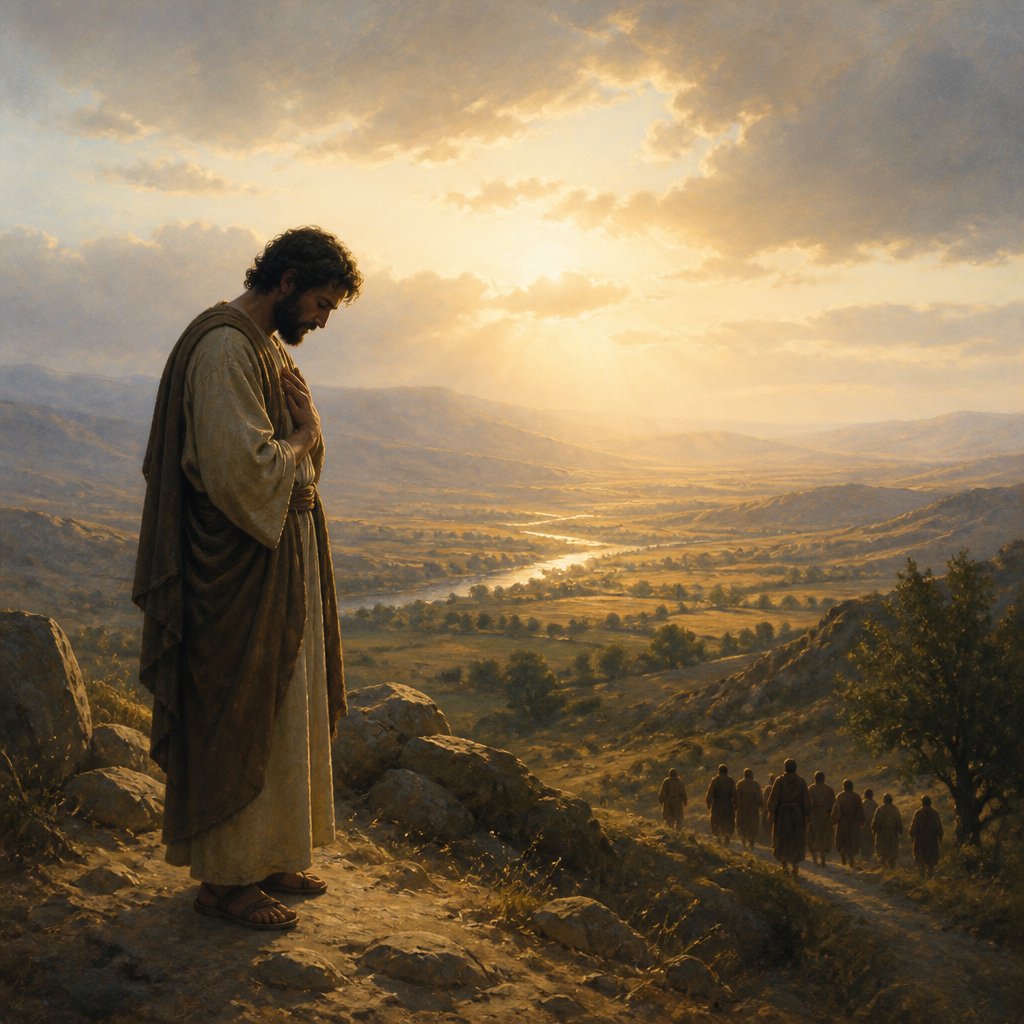
In Deuteronomy 9:4, the Lord delivers a powerful reminder to the Israelites as they prepare to enter the Promised Land: "Speak not thou in thine heart, after that the LORD thy God hath cast them out from before thee, saying, For my righteousness the LORD hath brought me in to possess this land: but for the wickedness of these nations the LORD doth drive them out from before thee."
This verse stands as a sobering admonition, reflecting the incredible nature of God’s sovereignty and the potential pitfalls in our own hearts. We delve into the context and significance of this scripture to uncover not only historical truths but also contemporary applications for our faith journeys.
The Israelites were on the brink of inheriting a land promised to them by God, a land flowing with milk and honey. However, as they approached their conquest, God warned them of the arrogance that might rise within their hearts. He urged them not to attribute their forthcoming success to their own righteousness. Instead of boasting about their merit, they were to recognize that the expulsion of the nations occupying the land stemmed from God’s divine judgment against those nations for their wickedness.
This insight prompts a crucial reflection: how often do we attribute our successes to our own efforts or righteousness? It is so easy to slip into a mindset where we believe that our achievements are a product of our goodness, diligence, or skills, rather than acknowledging that everything we have, every blessing that comes our way, is ultimately a result of God’s grace. The scripture gently nudges us to check our hearts and evaluate the roots of our confidence and pride.
Moreover, Deuteronomy 9:4 addresses the issue of comparison. As the Israelites observed the nations in possession of the land, they might have mistakenly cast aspersions on those nations, highlighting their wickedness without considering their own history. Such thoughts can breed a spirit of superiority or entitlement among believers, leading to a false sense of security about one's standing with God. It invites us to analyze where we see ourselves compared to others. Are we quick to judge their shortcomings while dismissing our faults?
God's warning calls us to humility. It reminds us that all have sinned and fall short of the glory of God (Romans 3:23). The Israelites were not inheriting the land due to their exclusion from transgression; rather, it was God's righteous judgment against those nations that made way for them. This is a humbling realization that calls us to gratitude. Every day we walk in faith, every way we experience His goodness, we must acknowledge that it is by His mercy and grace that we stand where we are.
This verse also serves to teach about God’s justice. In Ancient Near Eastern society, the prevailing thought might have been to equate possession of land with favor. God countered that notion here, indicating that the Israelites were to possess the land not because of their righteousness but due to the divine justice meted out to those who had transgressed against Him. His holiness required a response to wickedness, and while His people were instruments of that response, it was crucial that they remained aware of their own accountability.
As we meditate on Deuteronomy 9:4, let us cultivate a spirit of humility, reflecting on our blessings as marks of grace rather than merit. Let this passage not only remind us of who God is—just, merciful, and sovereign—but also challenge us to guard our hearts against arrogance or complacency. In all things, let us remember to attribute our successes and inheritances in life to God's unfailing love and purpose rather than our own worthiness.
Want to reflect more on Deuteronomy 9:4?
Continue your spiritual journey with Bible Chat — an AI-powered tool for exploring God's Word through conversation. Ask questions, discover connections, and deepen your understanding.
Get Our Apps


Deuteronomy 9:4 Artwork
Deuteronomy 9:4 - "Speak not thou in thine heart, after that the LORD thy God hath cast them out from before thee, saying, For my righteousness the LORD hath brought me in to possess this land: but for the wickedness of these nations the LORD doth drive them out from before thee."
"Speak not thou in thine heart, after that the LORD thy God hath cast them out from before thee, saying, For my righteousness the LORD hath brought me in to possess this land: but for the wickedness of these nations the LORD doth drive them out from before thee." - Deuteronomy 9:4

Deuteronomy 4:9 - "Only take heed to thyself, and keep thy soul diligently, lest thou forget the things which thine eyes have seen, and lest they depart from thy heart all the days of thy life: but teach them thy sons, and thy sons' sons;"

Deuteronomy 26:4-10

Deuteronomy 26:4-10

Deuteronomy 4:4 - "But ye that did cleave unto the LORD your God are alive every one of you this day."

Deuteronomy 32:9 - "For the LORD'S portion is his people; Jacob is the lot of his inheritance."

Deuteronomy 3:9 - "(Which Hermon the Sidonians call Sirion; and the Amorites call it Shenir;)"

Deuteronomy 9:22 - "And at Taberah, and at Massah, and at Kibroth-hattaavah, ye provoked the LORD to wrath."

Deuteronomy 34:1-4 – Moses views the Promised Land from Mount Nebo.

Deuteronomy 34:1-4 – Moses views the Promised Land from Mount Nebo.

Deuteronomy 34:1-4 – Moses views the Promised Land from Mount Nebo.

Deuteronomy 6:9 - "And thou shalt write them upon the posts of thy house, and on thy gates."

Deuteronomy 4:44 - "¶ And this is the law which Moses set before the children of Israel:"

Deuteronomy 12:4 - "Ye shall not do so unto the LORD your God."

Deuteronomy 33:4 - "Moses commanded us a law, even the inheritance of the congregation of Jacob."

Deuteronomy 34:1-4 – Moses views the Promised Land from Mount Nebo.

Deuteronomy 34:1-4 – Moses views the Promised Land from Mount Nebo.

Deuteronomy 6:4 - "Hear, O Israel: The LORD our God is one LORD:"

Deuteronomy 9:24 - "Ye have been rebellious against the LORD from the day that I knew you."

Deuteronomy 12:9 - "For ye are not as yet come to the rest and to the inheritance, which the LORD your God giveth you."

Deuteronomy 4:24 - "For the LORD thy God is a consuming fire, even a jealous God."

Deuteronomy 34:1-4 – Moses views the Promised Land from Mount Nebo.

Deuteronomy 34:1-4 – Moses views the Promised Land from Mount Nebo.

Deuteronomy 4:41 - "¶ Then Moses severed three cities on this side Jordan toward the sunrising;"

Deuteronomy 14:4 - "These are the beasts which ye shall eat: the ox, the sheep, and the goat,"

Deuteronomy 25:4 - "¶ Thou shalt not muzzle the ox when he treadeth out the corn."

Deuteronomy 14:9 - "¶ These ye shall eat of all that are in the waters: all that have fins and scales shall ye eat:"

Deuteronomy 29:9 - "Keep therefore the words of this covenant, and do them, that ye may prosper in all that ye do."

Deuteronomy 5:4 - "The LORD talked with you face to face in the mount out of the midst of the fire,"