Righteous Destruction: The Call to Purge Idolatry
"But thus shall ye deal with them; ye shall destroy their altars, and break down their images, and cut down their groves, and burn their graven images with fire." - Deuteronomy 7:5
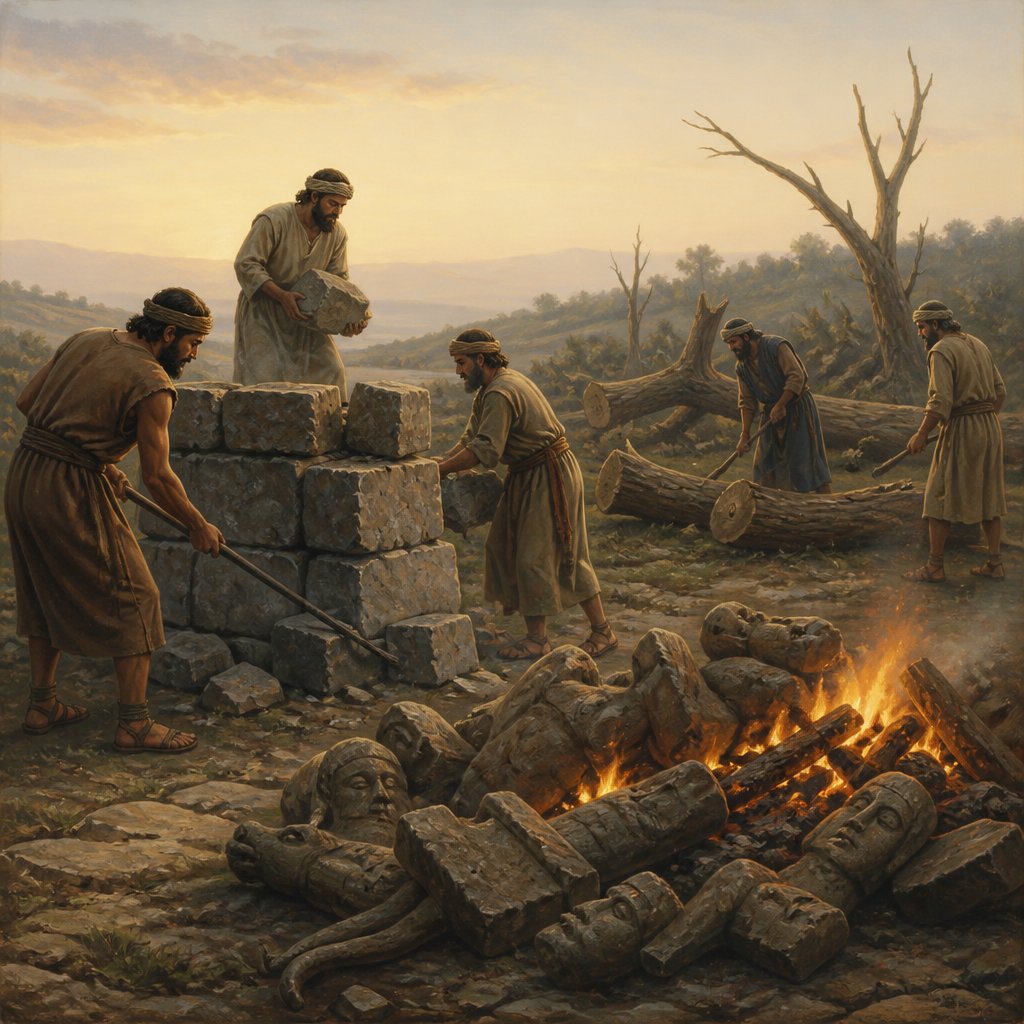
Deuteronomy 7:5 (KJV) reads: "But thus shall ye deal with them; ye shall destroy their altars, and break down their images, and cut down their groves, and burn their graven images with fire." This command, given by God through Moses to the Israelites before they entered the Promised Land, reveals profound truths about holiness, purity, and the serious nature of idolatry.
At first glance, this passage demands a level of destruction that might seem harsh or even brutal. However, we must remember the context of this directive. The Israelites were about to enter a land filled with nations that practiced various forms of idolatry and worshipped false gods. Such practices were a direct affront to the holiness and sovereignty of YHWH, the one true God. Therefore, God knew that if His people were to remain faithful and avoid the spiritual snare of idolatry, they needed to wholeheartedly cleanse their environment of anything that could draw them away from Him.
This commandment concerning physical images and altars can serve as a metaphor for our spiritual lives, guiding us on how to deal with the ‘altars’ of idolatry in our own hearts and lives. Idolatry, in today's context, may not always manifest as wooden statues or carved images, but rather as anything that takes precedence in our hearts over God. This could be materialism, relationships, ambition, or self-reliance.
1. **Destroying Our Altars**: The first part of this command is to destroy their altars. In our application, this means we must assess what we have built altars to in our lives. What do we sacrifice our time, money, and energy for? What are the things that we prioritize above our relationship with God? Just as the Israelites were urged to physically destroy false altars, we are called to actively dismantle anything in our lives that distracts us from honoring God.
2. **Breaking Down Our Images**: Second, we must break down our images. The images we cling to may not be physical statues but idealized perceptions of success, happiness, or fulfillment that are not rooted in Christ. These images can distort our reality, causing us to pursue fleeting pleasures instead of eternal joys. In breaking down these images, we allow God’s truth to redefine our identities and aspirations.
3. **Cutting Down Our Groves**: Groves in ancient times were places of pagan worship, often hidden among trees—intimacy with sin that was disguised by beauty. For us, the groves can represent secret sins or habits we indulge in, believing they are harmless. However, God calls us to cut down these areas that may be masked as innocent but are in fact detrimental to our spiritual growth. This might involve accountability in relationships, stepping away from toxic environments, or even making drastic lifestyle changes that honor God.
4. **Burning Graven Images with Fire**: Finally, the burning of graven images symbolizes complete and utter destruction of idol worship. To burn what we have clung to is to acknowledge that these things deserve no place in our hearts. It is an act of surrender, a tangible sign of our commitment to God. It challenges us to take intrusive steps in our lives—making radical shifts toward a life that honors God above all else.
As we meditate on Deuteronomy 7:5, let us not only reflect on the historical context of the Israelite's struggle against idolatry but also examine our own lives. What altars have we allowed to be constructed in our hearts? What images do we elevate to positions that belong solely to God? We must be willing to lay down everything that stands in the way of our relationship with the Father. We must become vigilant in our faith, pursuing holiness and purity, ardently destroying those things that distract us from true worship.
In doing so, we embrace a life of fervent devotion, obedience, and love toward God—a life where He is sovereign, and we are continuously drawn closer to the heart of our Creator. Let us heed His call, cleansing our lives of every form of idolatry, so He may reign in dominion over our hearts.
Want to reflect more on Deuteronomy 7:5?
Continue your spiritual journey with Bible Chat — an AI-powered tool for exploring God's Word through conversation. Ask questions, discover connections, and deepen your understanding.
Get Our Apps


Deuteronomy 7:5 Artwork

Deuteronomy 7:5 - "But thus shall ye deal with them; ye shall destroy their altars, and break down their images, and cut down their groves, and burn their graven images with fire."
"But thus shall ye deal with them; ye shall destroy their altars, and break down their images, and cut down their groves, and burn their graven images with fire." - Deuteronomy 7:5

Deuteronomy 5:7 - "Thou shalt have none other gods before me."
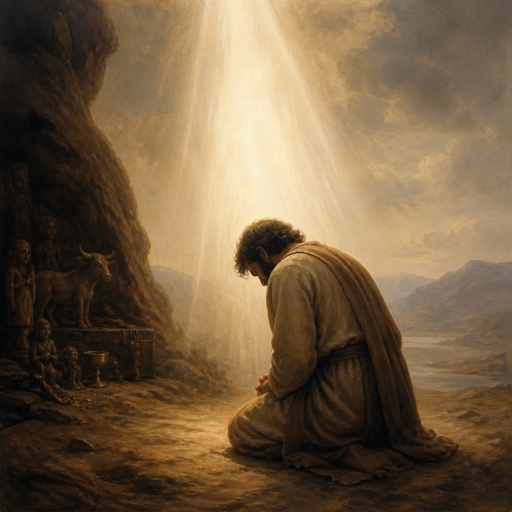
"Thou shalt have none other gods before me." - Deuteronomy 5:7

Deuteronomy 5:17 - "Thou shalt not kill."

Deuteronomy 34:5-6

Deuteronomy 5:19 - "Neither shalt thou steal."

Deuteronomy 5:18 - "Neither shalt thou commit adultery."

Deuteronomy 28:5 - "Blessed shall be thy basket and thy store."

Deuteronomy 5:2 - "The LORD our God made a covenant with us in Horeb."

Deuteronomy 5:30 - "Go say to them, Get you into your tents again."

Deuteronomy 3:7 - "But all the cattle, and the spoil of the cities, we took for a prey to ourselves."

"Thou shalt not kill." - Deuteronomy 5:17

Deuteronomy 5:13 - "Six days thou shalt labour, and do all thy work:"

Deuteronomy 1:5 - "On this side Jordan, in the land of Moab, began Moses to declare this law, saying,"

Deuteronomy 5:5 - "(I stood between the LORD and you at that time, to shew you the word of the LORD: for ye were afraid by reason of the fire, and went not up into the mount;) saying,"

Deuteronomy 5:20 - "Neither shalt thou bear false witness against thy neighbour."

Deuteronomy 5:4 - "The LORD talked with you face to face in the mount out of the midst of the fire,"

Deuteronomy 32:5 - "They have corrupted themselves, their spot is not the spot of his children: they are a perverse and crooked generation."

Deuteronomy 14:5 - "The hart, and the roebuck, and the fallow deer, and the wild goat, and the pygarg, and the wild ox, and the chamois."

Deuteronomy 5:10 - "And shewing mercy unto thousands of them that love me and keep my commandments."

Deuteronomy 5:12 - "Keep the sabbath day to sanctify it, as the LORD thy God hath commanded thee."

Deuteronomy 11:5 - "And what he did unto you in the wilderness, until ye came into this place;"

Deuteronomy 34:5 - "¶ So Moses the servant of the LORD died there in the land of Moab, according to the word of the LORD."

"Neither shalt thou steal." - Deuteronomy 5:19

Deuteronomy 19:7 - "Wherefore I command thee, saying, Thou shalt separate three cities for thee."

Deuteronomy 33:5 - "And he was king in Jeshurun, when the heads of the people and the tribes of Israel were gathered together."

Deuteronomy 10:7 - "From thence they journeyed unto Gudgodah; and from Gudgodah to Jotbath, a land of rivers of waters."

Deuteronomy 11:7 - "But your eyes have seen all the great acts of the LORD which he did."

"Neither shalt thou commit adultery." - Deuteronomy 5:18