Remembering for Generations: A Call to Diligence
"Only take heed to thyself, and keep thy soul diligently, lest thou forget the things which thine eyes have seen, and lest they depart from thy heart all the days of thy life: but teach them thy sons, and thy sons' sons;" - Deuteronomy 4:9
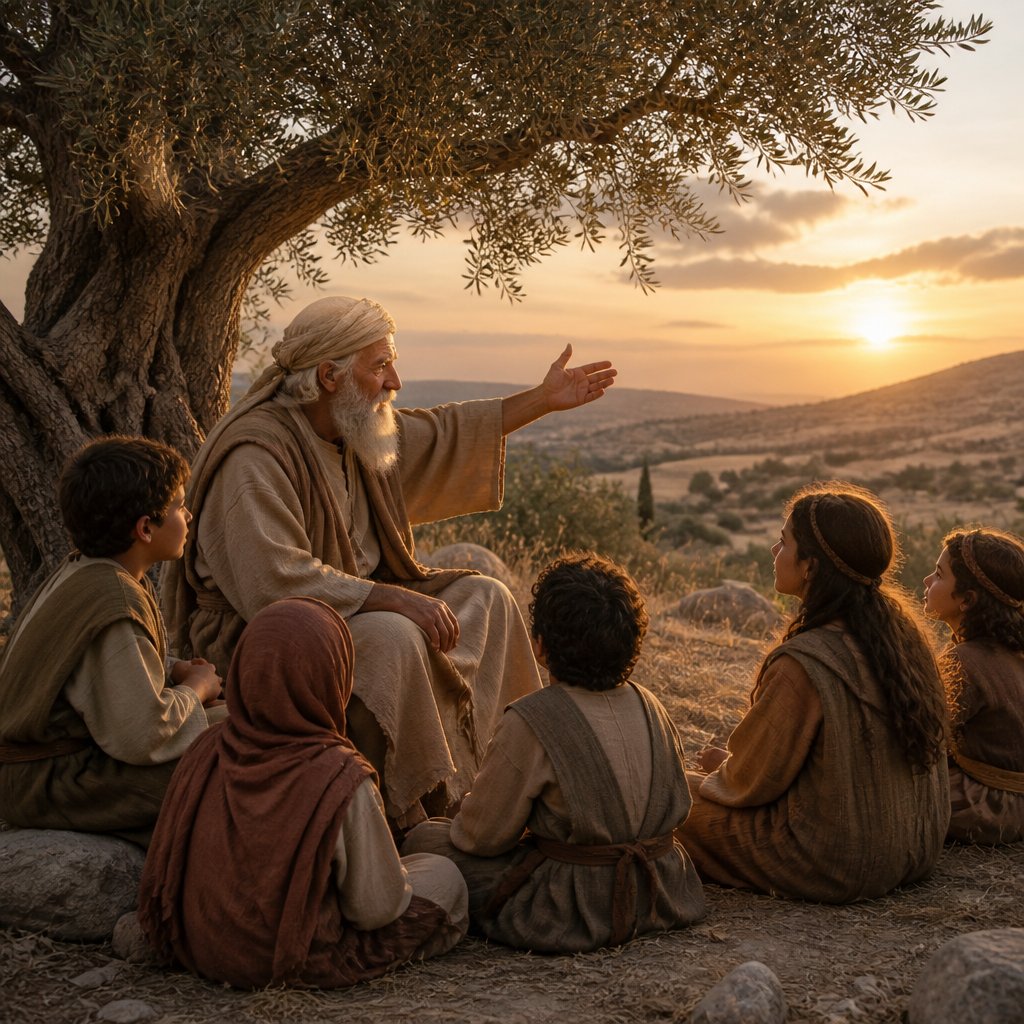
Deuteronomy 4:9 in the King James Version states, "Only take heed to thyself, and keep thy soul diligently, lest thou forget the things which thine eyes have seen, and lest they depart from thy heart all the days of thy life: but teach them thy sons, and thy sons' sons;" This verse is not just a command, but a profound reminder of the wavering human tendency to forget and the vital necessity of remembrance in our spiritual walk.
Moses spoke these words to the Israelites as they prepared to enter the Promised Land. They were on the verge of experiencing God's promises in tangible ways—new lands, fresh beginnings, and divine blessings. Yet amidst the excitement, Moses cautioned them to be vigilant. The phrase "take heed to thyself" emphasizes self-awareness and self-discipline. This is an invitation to prioritize personal spirituality and the well-being of one's soul.
What does it mean to keep our souls diligently? Diligence implies a sustained effort, a consistent guarding of our spiritual integrity. In a world abundant with distractions, it is all too easy to let our spiritual practices slip. We can go through the motions of faith—attending services, reading scripture—while internally we drift away from the essence of our relationship with God. Keeping our souls diligently requires us to be active participants in our spiritual lives, engaging with Scripture, prayer, and community consistently.
Moses further warns of a grave danger: forgetting the things which thine eyes have seen. The Israelites had experienced God’s might, His mighty works, and miraculous provisions, from the plagues of Egypt to the parting of the Red Sea. Yet, memory is fragile. It is common for moments of divine intervention to fade into the backdrop of daily life if not actively remembered. We must ask ourselves, what moments of faithfulness has God shown me? How can I bring those memories to the forefront of my consciousness?
To forget these divine interventions can lead to spiritual complacency, which is why the second part of the verse is equally compelling: "teach them thy sons, and thy sons' sons." This is not merely an instruction to teach but a call to perpetuate the legacy of faith within our families. We MUST pass our knowledge, experiences, and understanding of God to the coming generations. The responsibility of faith should not solely rest on the shoulders of our pastors or church leaders but on each of us to instill a deep and abiding faith within our children and grandchildren. This act of remembrance is not only for ourselves but for the future generation. We must remember God’s faithfulness so that our children and grandchildren can also anchor their faith in these truths.
Furthermore, teaching must be intentional. The question becomes—how do we teach? It is through sharing stories, creating family traditions, and instilling principles that reflect our faith. Perhaps it involves gathering around the dinner table to discuss life’s challenges and how faith plays a role in navigating them. Sharing testimonies of God’s faithfulness is crucial; these narratives build a rich tapestry of God's history in our lives, creating touchpoints for our children to build their faith.
Moreover, when we keep our souls and remember God's wonders, it stands as a testament of His faithfulness to our children. It encourages them to trust and lean upon Him as we did. Our vigilance and diligence serve as a living narrative that instills hope in the hearts of our loved ones—hope that they, too, can engage with the living God.
In conclusion, Deuteronomy 4:9 serves as both a personal exhortation and a communal mandate. As we endeavor to know God more deeply ourselves and recount His deeds faithfully, we sow seeds of faith that can endure through generations. Let us then heed this calling—to guard our souls, to remember, and to teach—to ensure that the story of God's unwavering love and faithfulness continues to resonate, echoing across time and hearts.
Want to reflect more on Deuteronomy 4:9?
Continue your spiritual journey with Bible Chat — an AI-powered tool for exploring God's Word through conversation. Ask questions, discover connections, and deepen your understanding.
Get Our Apps


Deuteronomy 4:9 Artwork

Deuteronomy 4:9 - "Only take heed to thyself, and keep thy soul diligently, lest thou forget the things which thine eyes have seen, and lest they depart from thy heart all the days of thy life: but teach them thy sons, and thy sons' sons;"
"Only take heed to thyself, and keep thy soul diligently, lest thou forget the things which thine eyes have seen, and lest they depart from thy heart all the days of thy life: but teach them thy sons, and thy sons' sons;" - Deuteronomy 4:9
Deuteronomy 9:4 - "Speak not thou in thine heart, after that the LORD thy God hath cast them out from before thee, saying, For my righteousness the LORD hath brought me in to possess this land: but for the wickedness of these nations the LORD doth drive them out from before thee."

Deuteronomy 26:4-10

Deuteronomy 26:4-10

Deuteronomy 4:4 - "But ye that did cleave unto the LORD your God are alive every one of you this day."

Deuteronomy 32:9 - "For the LORD'S portion is his people; Jacob is the lot of his inheritance."

Deuteronomy 3:9 - "(Which Hermon the Sidonians call Sirion; and the Amorites call it Shenir;)"

Deuteronomy 9:22 - "And at Taberah, and at Massah, and at Kibroth-hattaavah, ye provoked the LORD to wrath."

Deuteronomy 34:1-4 – Moses views the Promised Land from Mount Nebo.

Deuteronomy 34:1-4 – Moses views the Promised Land from Mount Nebo.

Deuteronomy 34:1-4 – Moses views the Promised Land from Mount Nebo.

Deuteronomy 6:9 - "And thou shalt write them upon the posts of thy house, and on thy gates."

Deuteronomy 4:44 - "¶ And this is the law which Moses set before the children of Israel:"

Deuteronomy 33:4 - "Moses commanded us a law, even the inheritance of the congregation of Jacob."

Deuteronomy 12:4 - "Ye shall not do so unto the LORD your God."

Deuteronomy 34:1-4 – Moses views the Promised Land from Mount Nebo.

Deuteronomy 6:4 - "Hear, O Israel: The LORD our God is one LORD:"

Deuteronomy 34:1-4 – Moses views the Promised Land from Mount Nebo.

Deuteronomy 9:24 - "Ye have been rebellious against the LORD from the day that I knew you."

Deuteronomy 12:9 - "For ye are not as yet come to the rest and to the inheritance, which the LORD your God giveth you."

Deuteronomy 4:24 - "For the LORD thy God is a consuming fire, even a jealous God."

Deuteronomy 34:1-4 – Moses views the Promised Land from Mount Nebo.

Deuteronomy 34:1-4 – Moses views the Promised Land from Mount Nebo.

Deuteronomy 4:41 - "¶ Then Moses severed three cities on this side Jordan toward the sunrising;"

Deuteronomy 14:4 - "These are the beasts which ye shall eat: the ox, the sheep, and the goat,"

Deuteronomy 25:4 - "¶ Thou shalt not muzzle the ox when he treadeth out the corn."

Deuteronomy 14:9 - "¶ These ye shall eat of all that are in the waters: all that have fins and scales shall ye eat:"

Deuteronomy 29:9 - "Keep therefore the words of this covenant, and do them, that ye may prosper in all that ye do."

Deuteronomy 5:4 - "The LORD talked with you face to face in the mount out of the midst of the fire,"