The Journey Through the Promised Land: Embracing God’s Provisions
"The plain also, and Jordan, and the coast thereof, from Chinnereth even unto the sea of the plain, even the salt sea, under Ashdoth-pisgah eastward." - Deuteronomy 3:17
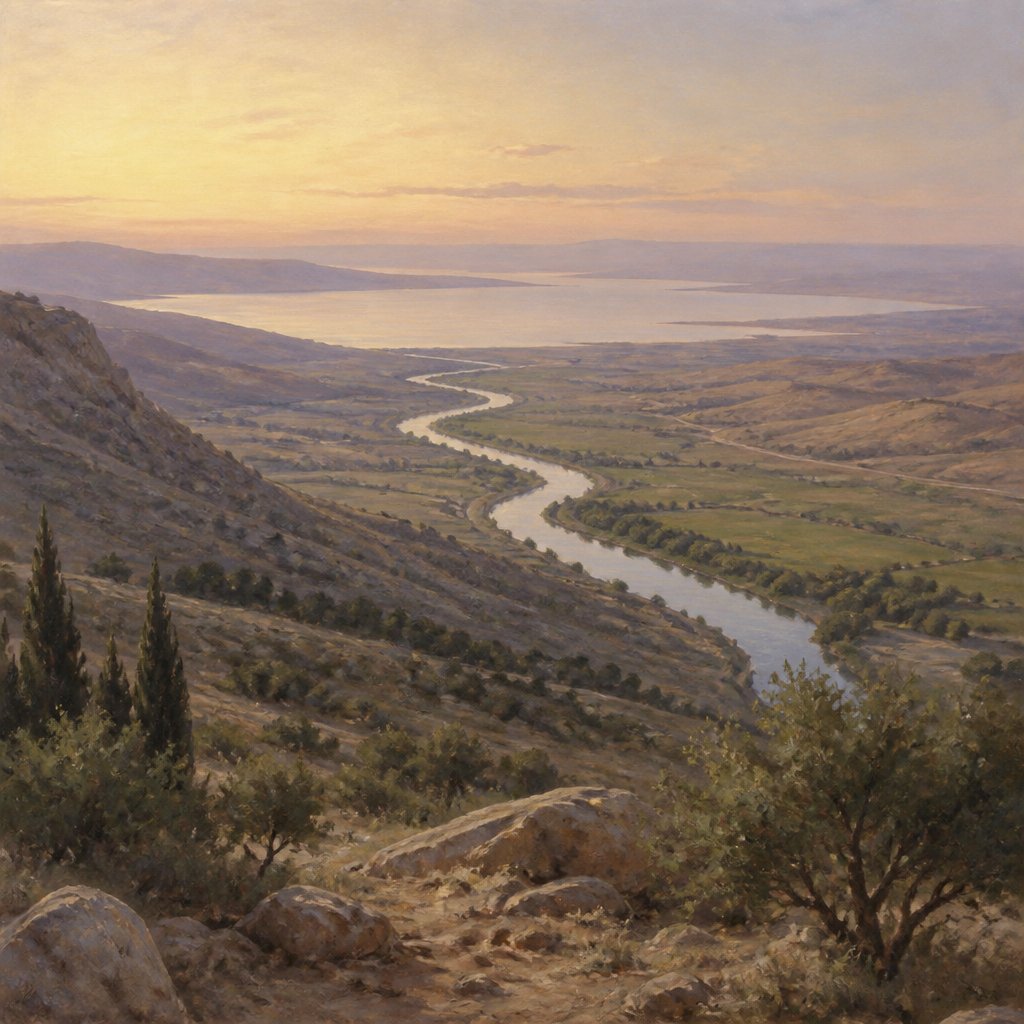
As we navigate the winding paths of our spiritual journey, it is essential to ground ourselves in the promises of God and the landscapes of His covenant. Deuteronomy 3:17 reads, "The plain also, and Jordan, and the coast thereof, from Chinnereth even unto the sea of the plain, even the salt sea, under Ashdoth-pisgah eastward." This verse is not merely geographical; it invites us to explore the spiritual significance of these locations and to reflect on God’s abundant provisions in our lives.
To truly appreciate this scripture, we must delve into the historical backdrop. The Israelites, having wandered for decades in the wilderness, were finally on the brink of entering the Promised Land. The mention of specific locations—the plain, the Jordan River, and the Sea of Chinnereth (the Sea of Galilee)—paints a vivid picture of the land that had been promised to them. They had journeyed through hardship, doubt, and despair, yet here before them were the tangible beginnings of a newly promised future. Each place named in this passage is a testament to God’s faithfulness and provision.
The "plain," or the fertile land, symbolizes abundance and sustenance, reflecting God’s desire to provide for His people. In our lives, the plains represent those moments when we experience God’s blessings flowing freely — when our needs are met, our burdens are lifted, and we feel His presence surrounding us in the mundane. These 'plains' serve as reminders that God not only leads us through our challenges but also delights in lavishing us with His goodness when we’re faithful and steadfast.
The "Jordan" River carries with it significant symbolism. It reflects the transition from a season of wandering into a new chapter of promise. For the Israelites, crossing the Jordan was not just a geographical act; it was also a spiritual crossing into the fulfillment of God’s promises. Similarly, our spiritual journeys often require us to step out in faith into uncharted waters. The Jordan teaches us that crossing into new territory may require courage and trust in God.
The mention of the "salt sea" (or the Dead Sea) introduces another layer of significance. Unlike the lively waters of the Sea of Galilee, the salt sea is a reminder of what happens when life becomes stagnant; it becomes toxic and unproductive. In our walks with God, it is vital that we do not allow ourselves to get caught in cycles of stagnation, but instead, we should seek spiritual renewal and refreshment through prayer, scripture, and fellowship. God is always beckoning us towards the life-giving waters of His presence.
"Under Ashdoth-pisgah eastward” denotes a vantage point, a high place from which one can gaze upon the land. This points us towards critical moments in our lives when perspective is necessary. Ashdoth-pisgah can serve as our reminder to seek elevation in our spiritual outlook. When struggles arise, it is easy to become mired in our situation, but God calls us to rise above, to see beyond the immediate challenges, and to trust in His overarching plan. This elevated view can help us gain clarity and keep us aligned with God’s purposes.
As we reflect on Deuteronomy 3:17, let us consider the plains, the rivers, and the seas—each aspect intertwined with the very roadmap of our faith and journey towards God’s promise. Just like the Israelites, we are called to remember God’s provisions and faithfulness in our lives. We are reminded that He has brought us this far, and He will carry us into all that is ahead.
May we be encouraged to embrace our spiritual landscapes, understand the significance of each stage of our journey, and continually lean on God’s abundant grace as we move forward. Let it be said of us, like the Israelites, that we not only crossed the Jordan of our challenges but entered into the land filled with God’s blessings.
Want to reflect more on Deuteronomy 3:17?
Continue your spiritual journey with Bible Chat — an AI-powered tool for exploring God's Word through conversation. Ask questions, discover connections, and deepen your understanding.
Get Our Apps


Deuteronomy 3:17 Artwork
Deuteronomy 3:17 - "The plain also, and Jordan, and the coast thereof, from Chinnereth even unto the sea of the plain, even the salt sea, under Ashdoth-pisgah eastward."
"The plain also, and Jordan, and the coast thereof, from Chinnereth even unto the sea of the plain, even the salt sea, under Ashdoth-pisgah eastward." - Deuteronomy 3:17

Deuteronomy 17:3 - "And hath gone and served other gods, and worshipped them, either the sun, or moon, or any of the host of heaven, which I have not commanded;"

Deuteronomy 5:17 - "Thou shalt not kill."

Deuteronomy 14:17 - "And the pelican, and the gier eagle, and the cormorant,"

Deuteronomy 2:17 - "That the LORD spake unto me, saying,"

Deuteronomy 28:17 - "Cursed shall be thy basket and thy store."

"Thou shalt not kill." - Deuteronomy 5:17

Deuteronomy 23:17 - "¶ There shall be no whore of the daughters of Israel, nor a sodomite of the sons of Israel."

Deuteronomy 17:13 - "And all the people shall hear, and fear, and do no more presumptuously."

Deuteronomy 17:17 - "Neither shall he multiply wives to himself, that his heart turn not away: neither shall he greatly multiply to himself silver and gold."
"And hath gone and served other gods, and worshipped them, either the sun, or moon, or any of the host of heaven, which I have not commanded;" - Deuteronomy 17:3

Deuteronomy 4:17 - "The likeness of any beast that is on the earth, the likeness of any winged fowl that flieth in the air,"

"And the pelican, and the gier eagle, and the cormorant," - Deuteronomy 14:17

Deuteronomy 18:17 - "And the LORD said unto me, They have well spoken that which they have spoken."

Deuteronomy 27:17 - "Cursed be he that removeth his neighbour's landmark. And all the people shall say, Amen."

Deuteronomy 3:15 - "And I gave Gilead unto Machir."

Deuteronomy 3:23 - "And I besought the LORD at that time, saying,"

Deuteronomy 24:17 - "¶ Thou shalt not pervert the judgment of the stranger, nor of the fatherless; nor take a widow's raiment to pledge:"

"That the LORD spake unto me, saying," - Deuteronomy 2:17

Deuteronomy 14:3 - "¶ Thou shalt not eat any abominable thing."

Deuteronomy 8:17 - "And thou say in thine heart, My power and the might of mine hand hath gotten me this wealth."

Deuteronomy 29:17 - "And ye have seen their abominations, and their idols, wood and stone, silver and gold, which were among them:)"

Deuteronomy 25:17 - "¶ Remember what Amalek did unto thee by the way, when ye were come forth out of Egypt;"

Deuteronomy 7:17 - "If thou shalt say in thine heart, These nations are more than I; how can I dispossess them?"

Deuteronomy 17:4 - "And it be told thee, and thou hast heard of it, and enquired diligently, and, behold, it be true, and the thing certain, that such abomination is wrought in Israel:"

"Cursed shall be thy basket and thy store." - Deuteronomy 28:17

Deuteronomy 3:29 - "So we abode in the valley over against Beth-peor."

Deuteronomy 3:7 - "But all the cattle, and the spoil of the cities, we took for a prey to ourselves."

Deuteronomy 28:3 - "Blessed shalt thou be in the city, and blessed shalt thou be in the field."