The Hidden Legacy: Reflections on Deuteronomy 34:6
"And he buried him in a valley in the land of Moab, over against Beth-peor: but no man knoweth of his sepulchre unto this day." - Deuteronomy 34:6
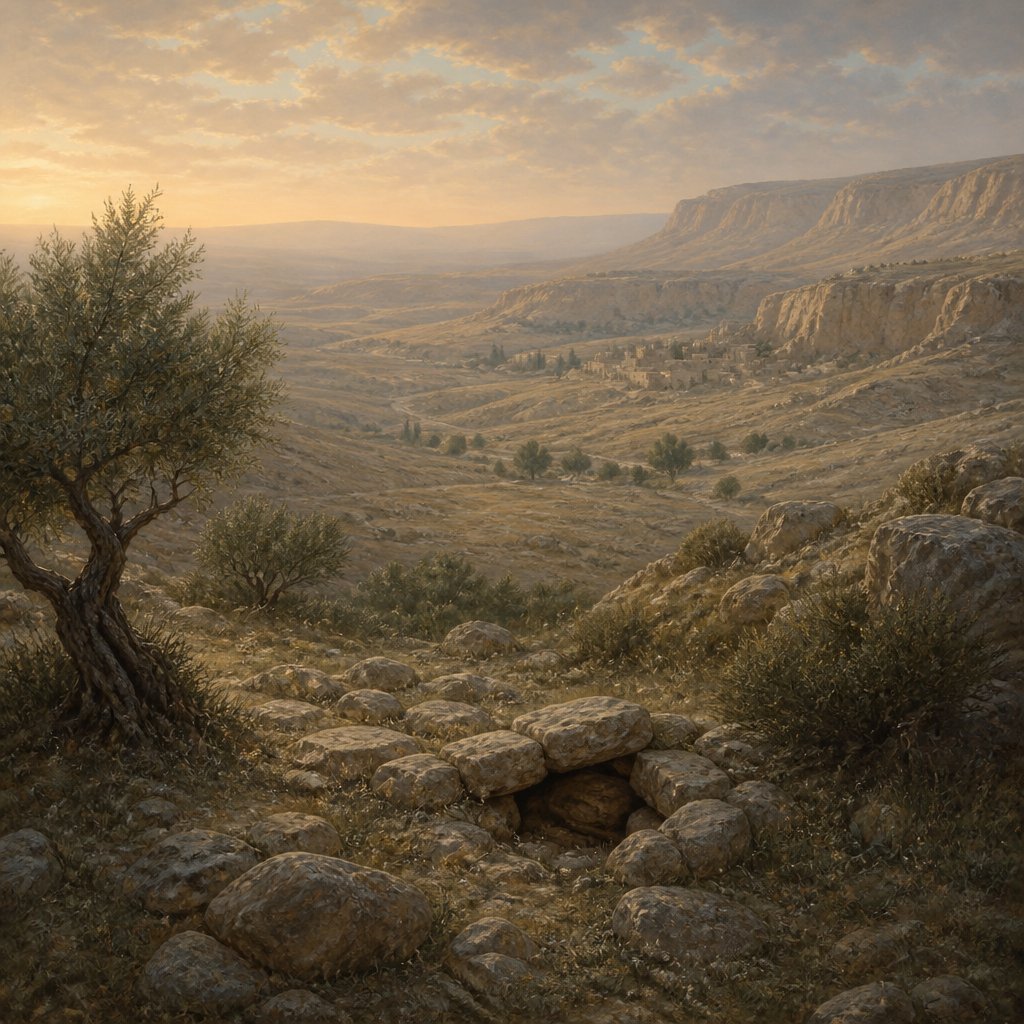
In Deuteronomy 34:6, we encounter the profound and poignant end of Moses' earthly journey: "And he buried him in a valley in the land of Moab, over against Beth-peor: but no man knoweth of his sepulchre unto this day." This verse not only encapsulates the death of one of the greatest leaders in biblical history but also invites us to reflect on themes of legacy, humility, and the mystery of God’s plans.
Moses was a man who knew intimacy with God like few others. He spoke to God face-to-face, as a friend with a friend (Exodus 33:11). Through him, the Israelites received the Law, and he led them through trials and tribulations for forty years in the wilderness. Yet, despite his monumental contributions, we learn that God Himself buried Moses and that his grave remained undisclosed. This powerful act signifies that Moses’ legacy was not to be tied to a physical location where people would come to venerate him. Instead, his legacy was meant to endure through the teachings, stories, and faith that he imparted to the people of Israel.
This raises a compelling consideration for our own lives. In a world where many seek recognition, status, and monuments to their achievements, God’s pattern appears to be quite the opposite. Often, our most profound contributions may go unnoticed or uncelebrated. Amidst this truth, can we embrace the idea that our worth is not found in accolades or public approbation, but rather in our relationship with God and our obedience to His will?
Moses’ burial also evokes the desires for simplicity and humility. In an age where fame is often the most coveted currency, God’s choice to keep Moses' grave a secret serves as a gentle reminder. It teaches us that personal achievements should not eclipse our devotion to God’s purpose. Moses' epitaph is the silent acknowledgment of a man who lived and died in service to the Most High, whose character and deeds outshine any stone or memorial.
As Christians, we are called to leave a legacy that glorifies God and reflects Christ's love. Like Moses, we may not always receive tribute or applause in this life, yet we have the assurance that God sees all that we do in His name. He knows the heart behind our actions and the motives guiding our service. The quiet work of love, compassion, and faithfulness is esteemed by God—even when it’s unnoticed by the world.
Moreover, the mystery surrounding the location of Moses’ sepulchre invites deeper reflection. It highlights God’s sovereignty in determining the course of our lives. Just as Moses’ death was a part of God’s divine plan, so is every aspect of our lives under His providence. While we cannot always grasp why things unfold as they do, we are invited to trust in God’s perfect plan.
This verse serves as a bridge to deeper understanding: we must endeavor to live faithfully, with the realization that our journey is not merely about achieving great things for God, but about being molded in His image, serving others in love, and resting in the knowledge that His purposes will ultimately prevail. Moses’ life illustrates the beauty of being a vessel for God’s work—a reminder that God's whispers might echo louder than the world's shouts.
In conclusion, as we meditate on Deuteronomy 34:6, let us remember that our lives are a gift, and every day presents an opportunity to honor God through our actions, however seemingly insignificant. Let us strive to leave a lasting mark not through material memorials but through a heart devoted to worship and service, letting our lives speak of His faithfulness until we meet Him face to face.
Want to reflect more on Deuteronomy 34:6?
Continue your spiritual journey with Bible Chat — an AI-powered tool for exploring God's Word through conversation. Ask questions, discover connections, and deepen your understanding.
Get Our Apps


Deuteronomy 34:6 Artwork

Deuteronomy 34:6 - "And he buried him in a valley in the land of Moab, over against Beth-peor: but no man knoweth of his sepulchre unto this day."
"And he buried him in a valley in the land of Moab, over against Beth-peor: but no man knoweth of his sepulchre unto this day." - Deuteronomy 34:6

Deuteronomy 34:5-6

Deuteronomy 34:1-4 – Moses views the Promised Land from Mount Nebo.

Deuteronomy 34:1-4 – Moses views the Promised Land from Mount Nebo.

Deuteronomy 34:1-4 – Moses views the Promised Land from Mount Nebo.

Deuteronomy 1:34 - "And the LORD heard the voice of your words, and was wroth, and sware, saying,"

Deuteronomy 34:1-4 – Moses views the Promised Land from Mount Nebo.

Deuteronomy 34:1-4 – Moses views the Promised Land from Mount Nebo.

Deuteronomy 34:3 - "And the south, and the plain of the valley of Jericho, the city of palm trees, unto Zoar."

Deuteronomy 34:1-4 – Moses views the Promised Land from Mount Nebo.

Deuteronomy 34:1-4 – Moses views the Promised Land from Mount Nebo.

Deuteronomy 32:34 - "Is not this laid up in store with me, and sealed up among my treasures?"

Deuteronomy 34:5 - "¶ So Moses the servant of the LORD died there in the land of Moab, according to the word of the LORD."

Matthew 6:34

Deuteronomy 34:10 - "¶ And there arose not a prophet since in Israel like unto Moses, whom the LORD knew face to face,"

Deuteronomy 34:2 - "And all Naphtali, and the land of Ephraim, and Manasseh, and all the land of Judah, unto the utmost sea,"

Deuteronomy 28:34 - "So that thou shalt be mad for the sight of thine eyes which thou shalt see."

Matthew 6:34

Matthew 6:34

Matthew 6:34

Matthew 6:34

Deuteronomy 34:12 - "And in all that mighty hand, and in all the great terror which Moses shewed in the sight of all Israel."

Deuteronomy 34:8 - "¶ And the children of Israel wept for Moses in the plains of Moab thirty days: so the days of weeping and mourning for Moses were ended."

Matthew 6:25 – 34

Deuteronomy 34:7 - "¶ And Moses was an hundred and twenty years old when he died: his eye was not dim, nor his natural force abated."

Deuteronomy 6:6 - "And these words, which I command thee this day, shall be in thine heart:"

Deuteronomy 34:11 - "In all the signs and the wonders, which the LORD sent him to do in the land of Egypt to Pharaoh, and to all his servants, and to all his land,"

Deuteronomy 2:34 - "And we took all his cities at that time, and utterly destroyed the men, and the women, and the little ones, of every city, we left none to remain:"

John 6:34 - "Then said they unto him, Lord, evermore give us this bread."