Justice and Redemption: Embracing God's Law
"And it shall be, if the wicked man be worthy to be beaten, that the judge shall cause him to lie down, and to be beaten before his face, according to his fault, by a certain number." - Deuteronomy 25:2
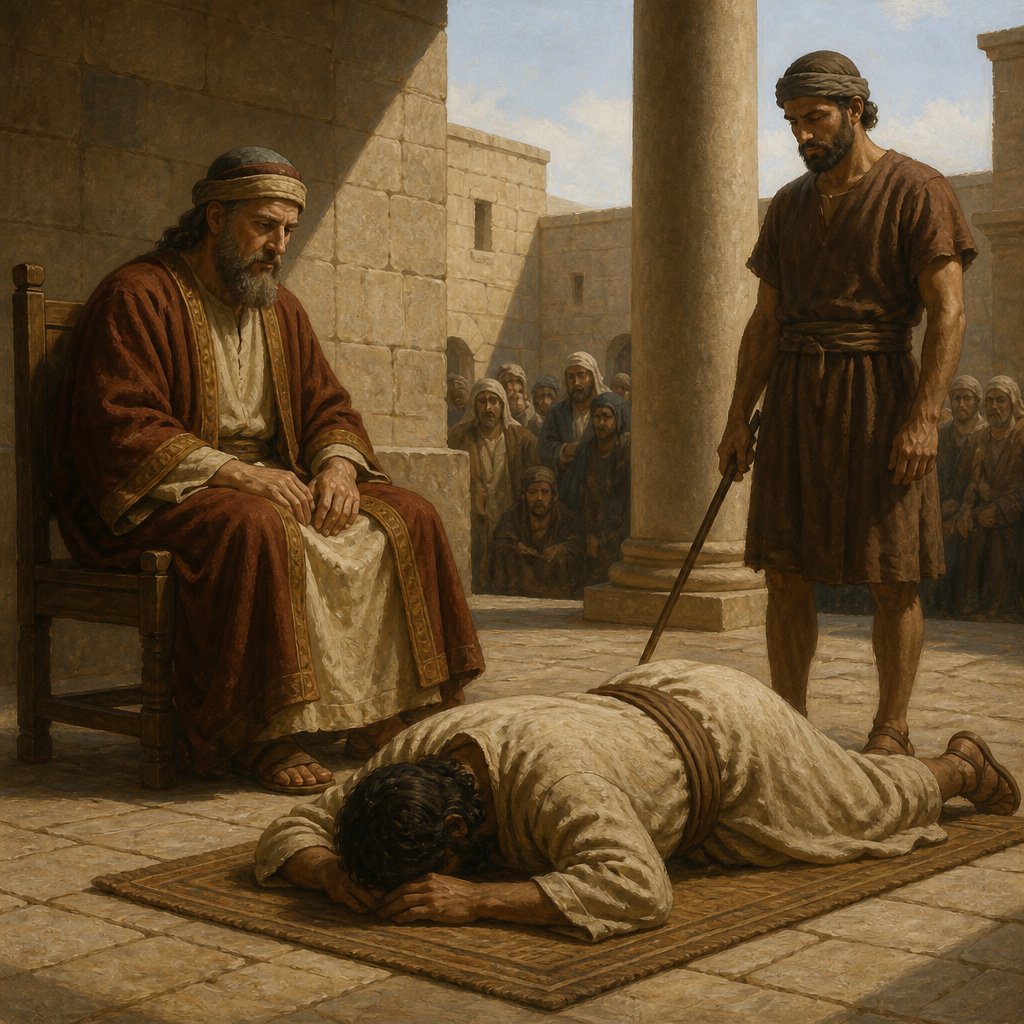
Deuteronomy 25:2 (KJV) reads: "And it shall be, if the wicked man be worthy to be beaten, that the judge shall cause him to lie down, and to be beaten before his face, according to his fault, by a certain number." This verse, at first glance, may seem harsh, seemingly interior to the compassionate nature of God that we often embrace. However, upon deeper analysis, it provides profound insights into God's approach to justice and redemption.
In ancient Israel, justice was not merely a societal construct but a divine mandate rooted deeply within the covenant between God and His people. The law presented in Deuteronomy reflects God's intent to maintain societal order and righteousness through clearly defined statutes. When we read about punishment, it is essential to consider the broader context of justice in the Bible, where the principle of retribution serves a greater purpose than mere payback.
The judge in this verse acts as an instrument of God's will—a protector of the covenant community. The idea of a worthy punishment underscores that, while the sinful and wicked are to be held accountable for their actions, this accountability is sparingly administered. The concept of being "worthy to be beaten" indicates a process where justice is measured. It is a critical reminder that every act of judgment is tailored according to the nature of the crime. God’s mercy is not disregarded in this system; rather, mercy is balanced with justice.
In our modern context, the call for justice often surfaces in discussions about fairness, diversity, and sociopolitical ethics. This verse echoes the call for a judicial system that is both fair and proportionate. It challenges us to seek systems in our own societies that reflect true justice—where wrongdoings are appropriately addressed, ensuring that the guilty face consequences while allowing room for grace and restoration. Justice should lead to healing and collective growth rather than be purely punitive.
There is also something inherently profound in how justice is enacted "before his face." The public nature of the punishment signifies the community's role in witnessing and understanding the implications of sin. It invites us to take collective responsibility for justice, recognizing that every action taken against sin is a communal reflection of our commitment to the values God has instilled in us.
Moreover, this principle speaks to the heart of personal and societal reform. In our own lives, we are often faced with sinful tendencies that warrant examination before God—the ultimate judge. Just as the wicked man is called to account for his actions, we, too, must be willing to confront our faults earnestly. Beating, in this context, can be seen as a metaphor for the trials and corrections we face when we stray from God’s intended path. In Hebrews 12:11, it is noted that "Now no chastening for the present seemeth to be joyous, but grievous: nevertheless, afterward it yieldeth the peaceable fruit of righteousness unto them which are exercised thereby." Chastisement, when viewed through this lens, becomes an invitation to deeper transformation.
In the broader narrative of scripture, we are reminded that even amid the harshness of judgment, God’s desire is for repentance and restoration. The purpose of punishment extends beyond mere retribution; instead, it is meant to guide the sinner back to the path of righteousness, shaping character and fostering deeper communion with the Divine.
In conclusion, as we meditate on Deuteronomy 25:2, let us acknowledge that justice and mercy are not mutually exclusive but beautifully entwined. This verse challenges us to ruminate on our relationship with injustice, both within ourselves and in our communities. It beckons us to pursue justice as an act of love, a commitment toward healing, and a return to grace. God, the ultimate judge, desires not just for us to be punished, but to be redeemed.
Want to reflect more on Deuteronomy 25:2?
Continue your spiritual journey with Bible Chat — an AI-powered tool for exploring God's Word through conversation. Ask questions, discover connections, and deepen your understanding.
Get Our Apps


Deuteronomy 25:2 Artwork
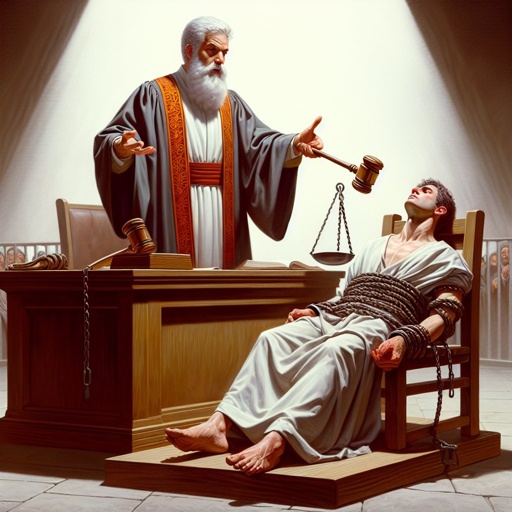
Deuteronomy 25:2 - "And it shall be, if the wicked man be worthy to be beaten, that the judge shall cause him to lie down, and to be beaten before his face, according to his fault, by a certain number."
"And it shall be, if the wicked man be worthy to be beaten, that the judge shall cause him to lie down, and to be beaten before his face, according to his fault, by a certain number." - Deuteronomy 25:2

Deuteronomy 2:25 - "This day will I begin to put the dread of thee and the fear of thee upon the nations that are under the whole heaven, who shall hear report of thee, and shall tremble, and be in anguish because of thee."

Deuteronomy 25:13 - "¶ Thou shalt not have in thy bag divers weights, a great and a small."

Deuteronomy 25:4 - "¶ Thou shalt not muzzle the ox when he treadeth out the corn."

Deuteronomy 31:25 - "That Moses commanded the Levites, which bare the ark of the covenant of the LORD, saying,"

Deuteronomy 25:14 - "Thou shalt not have in thine house divers measures, a great and a small."

Deuteronomy 33:25 - "Thy shoes shall be iron and brass; and as thy days, so shall thy strength be."

Deuteronomy 25:10 - "And his name shall be called in Israel, The house of him that hath his shoe loosed."

Deuteronomy 25:16 - "For all that do such things, and all that do unrighteously, are an abomination unto the LORD thy God."

Deuteronomy 27:25 - "Cursed be he that taketh reward to slay an innocent person. And all the people shall say, Amen."

Deuteronomy 25:17 - "¶ Remember what Amalek did unto thee by the way, when ye were come forth out of Egypt;"

Deuteronomy 3:25 - "I pray thee, let me go over, and see the good land that is beyond Jordan, that goodly mountain, and Lebanon."

Deuteronomy 25:1 - "If there be a controversy between men, and they come unto judgment, that the judges may judge them; then they shall justify the righteous, and condemn the wicked."

Deuteronomy 32:25 - "The sword without, and terror within, shall destroy both the young man and the virgin, the suckling also with the man of gray hairs."

Deuteronomy 25:8 - "Then the elders of his city shall call him, and speak unto him: and if he stand to it, and say, I like not to take her;"

Deuteronomy 22:25 - "¶ But if a man find a betrothed damsel in the field, and the man force her, and lie with her: then the man only that lay with her shall die:"

Deuteronomy 6:25 - "And it shall be our righteousness, if we observe to do all these commandments before the LORD our God, as he hath commanded us."

Deuteronomy 25:6 - "And it shall be, that the firstborn which she beareth shall succeed in the name of his brother which is dead, that his name be not put out of Israel."

Deuteronomy 2:2 - "And the LORD spake unto me, saying,"

Deuteronomy 12:25 - "Thou shalt not eat it; that it may go well with thee, and with thy children after thee, when thou shalt do that which is right in the sight of the LORD."

Deuteronomy 14:25 - "Then shalt thou turn it into money, and bind up the money in thine hand, and shalt go unto the place which the LORD thy God shall choose:"
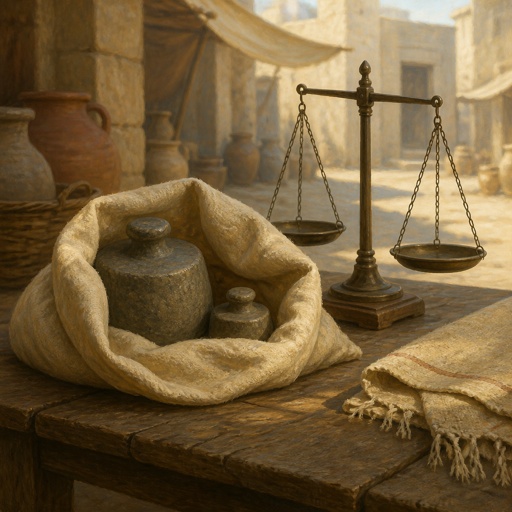
"¶ Thou shalt not have in thy bag divers weights, a great and a small." - Deuteronomy 25:13

"¶ Thou shalt not muzzle the ox when he treadeth out the corn." - Deuteronomy 25:4

"That Moses commanded the Levites, which bare the ark of the covenant of the LORD, saying," - Deuteronomy 31:25
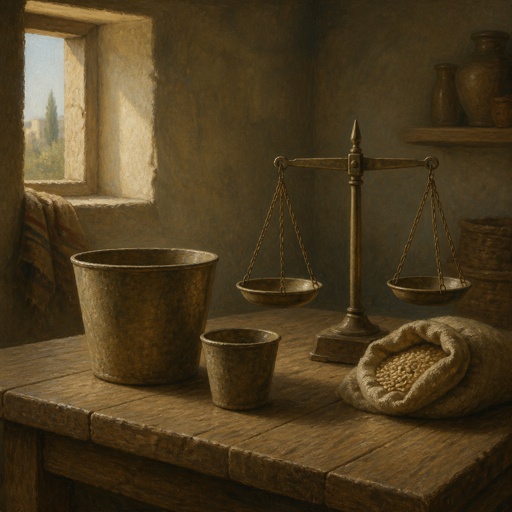
"Thou shalt not have in thine house divers measures, a great and a small." - Deuteronomy 25:14

Deuteronomy 5:25 - "Now therefore why should we die? for this great fire will consume us: if we hear the voice of the LORD our God any more, then we shall die."

Deuteronomy 25:18 - "How he met thee by the way, and smote the hindmost of thee, even all that were feeble behind thee, when thou wast faint and weary; and he feared not God."

Deuteronomy 23:25 - "When thou comest into the standing corn of thy neighbour, then thou mayest pluck the ears with thine hand; but thou shalt not move a sickle unto thy neighbour's standing corn."

Deuteronomy 9:25 - "Thus I fell down before the LORD forty days and forty nights, as I fell down at the first; because the LORD had said he would destroy you."