Respecting Boundaries: A Reflection on Deuteronomy 23:25
"When thou comest into the standing corn of thy neighbour, then thou mayest pluck the ears with thine hand; but thou shalt not move a sickle unto thy neighbour's standing corn." - Deuteronomy 23:25
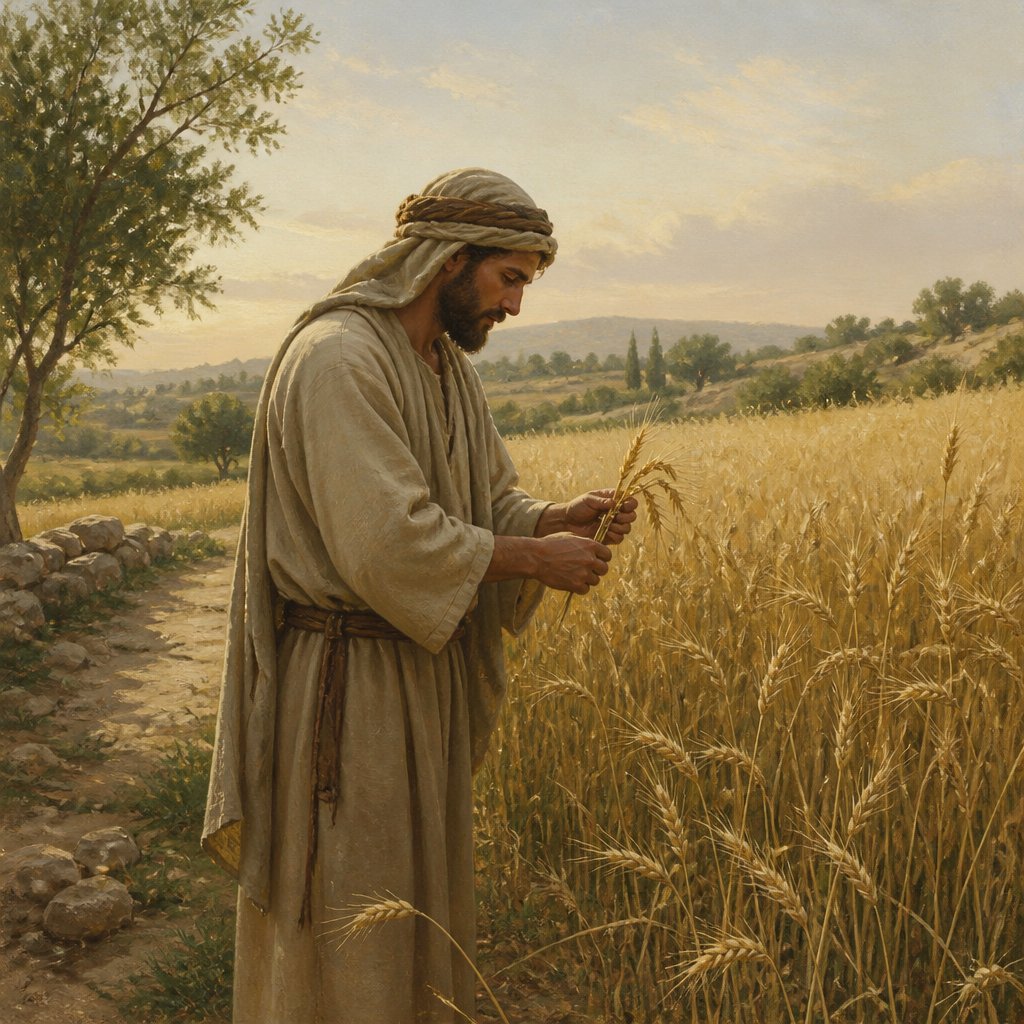
In Deuteronomy 23:25, we encounter a divine instruction that not only outlines a practical aspect of agricultural life in ancient Israel but also speaks to the broader themes of respect, boundaries, and relationships within a community. The verse states: "When thou comest into the standing corn of thy neighbour, then thou mayest pluck the ears with thine hand; but thou shalt not move a sickle unto thy neighbour's standing corn" (KJV). Here, we see a profound illustration of how God cares for both the well-being of our neighbors and the preservation of one's own integrity.
At first glance, this verse may seem merely a guideline for farmers, an ancient rule regarding the sharing of crops. However, as we dig deeper, we find that it encapsulates a critical principle of life: the balance between personal desires and mutual respect. The permission granted to pluck ears of corn by hand suggests an understanding that needs must be met and that acts of goodwill can surface even among neighbors. It acknowledges that sometimes we may find ourselves in need, and the provision from the fields of others can serve as a remedy for our lack.
Yet, immediately following this permission is a strong restriction: "but thou shalt not move a sickle unto thy neighbour's standing corn." This limitation provides insight into the concept of ownership and respect for what belongs to others. The sickle, a tool meant for harvest, symbolizes a more significant claim and intent; it denotes a commitment to gathering and taking possession of another's property. The use of the sickle is more than just a matter of harvesting; it represents an action that transforms a temporary necessity into an ownership claim that could lead to exploitation—something God clearly admonishes against.
In applying this principle today, we must ask ourselves how frequently we overstep boundaries in our dealings with one another. The modern parallels to this biblical advice are plentiful. Perhaps we find ourselves in situations where we might take advantage of someone’s generosity or kindness—taking a little more than is right, whether in time, resources, or emotional investment. Just as the sickle symbolizes a more possessive action, our actions can sometimes reflect an attitude that disregards others' rights or contributions.
This verse also nudges us to cultivate a conscience of moderation and gratitude. When we have needs, the appropriate response is to approach our neighbors openly, seeking to engage with respect rather than take without consent. Rather than assuming that we have a right to whatever we want, we are called to acknowledge the value of others' work and efforts, no matter how small. We must learn to recognize that every crop, every ounce of effort put into our community, deserves honor and respect.
Additionally, from a community perspective, this encouragement to mind our neighbors’ standing corn fosters relational harmony. It calls for a culture of mutual respect, where individuals acknowledge boundaries and seek to meet others' needs within set limits. This gentle framework fosters not only goodwill but protects communal integrity, allowing for richer, fairer interactions grounded in respect. It underlies the essence of loving our neighbors as ourselves, a commandment that weaves throughout Scripture.
In conclusion, Deuteronomy 23:25 invites us to reflect deeply on our interactions and relationships. As we navigate our daily lives, may we exercise wisdom by approaching our neighbors' resources with an attitude of respect and consideration. Let us cultivate a heart that prioritizes integrity and builds community. The harvest is plentiful, but the actions of our hands and the intentions of our hearts must always align with the principles of God's love and respect for others. May we bear this verse as a guiding principle in our lifelong journey of faith.
Want to reflect more on Deuteronomy 23:25?
Continue your spiritual journey with Bible Chat — an AI-powered tool for exploring God's Word through conversation. Ask questions, discover connections, and deepen your understanding.
Get Our Apps


Deuteronomy 23:25 Artwork

Deuteronomy 23:25 - "When thou comest into the standing corn of thy neighbour, then thou mayest pluck the ears with thine hand; but thou shalt not move a sickle unto thy neighbour's standing corn."
"When thou comest into the standing corn of thy neighbour, then thou mayest pluck the ears with thine hand; but thou shalt not move a sickle unto thy neighbour's standing corn." - Deuteronomy 23:25

Deuteronomy 11:23

Matthew 25:23

Matthew 25:23

Genesis 25-23

Deuteronomy 3:23 - "And I besought the LORD at that time, saying,"

Deuteronomy 25:13 - "¶ Thou shalt not have in thy bag divers weights, a great and a small."

Deuteronomy 25:4 - "¶ Thou shalt not muzzle the ox when he treadeth out the corn."

Deuteronomy 31:25 - "That Moses commanded the Levites, which bare the ark of the covenant of the LORD, saying,"

Deuteronomy 25:14 - "Thou shalt not have in thine house divers measures, a great and a small."

Acts 23:25 - "And he wrote a letter after this manner:"

Deuteronomy 23:22 - "But if thou shalt forbear to vow, it shall be no sin in thee."

2 Samuel 23:25 - "Shammah the Harodite, Elika the Harodite,"

Deuteronomy 23:8 - "The children that are begotten of them shall enter into the congregation of the LORD in their third generation."

Deuteronomy 23:17 - "¶ There shall be no whore of the daughters of Israel, nor a sodomite of the sons of Israel."

Deuteronomy 33:25 - "Thy shoes shall be iron and brass; and as thy days, so shall thy strength be."

Deuteronomy 25:10 - "And his name shall be called in Israel, The house of him that hath his shoe loosed."

Jeremiah 25:23 - "Dedan, and Tema, and Buz, and all that are in the utmost corners,"

Deuteronomy 25:16 - "For all that do such things, and all that do unrighteously, are an abomination unto the LORD thy God."

Deuteronomy 23:6 - "Thou shalt not seek their peace nor their prosperity all thy days for ever."

Deuteronomy 27:25 - "Cursed be he that taketh reward to slay an innocent person. And all the people shall say, Amen."

Deuteronomy 22:23 - "¶ If a damsel that is a virgin be betrothed unto an husband, and a man find her in the city, and lie with her;"

Deuteronomy 27:23 - "Cursed be he that lieth with his mother in law. And all the people shall say, Amen."

"And I besought the LORD at that time, saying," - Deuteronomy 3:23

Deuteronomy 28:23 - "And thy heaven that is over thy head shall be brass, and the earth that is under thee shall be iron."

Deuteronomy 15:23 - "Only thou shalt not eat the blood thereof; thou shalt pour it upon the ground as water."

Deuteronomy 1:23 - "And the saying pleased me well: and I took twelve men of you, one of a tribe:"

Deuteronomy 32:23 - "I will heap mischiefs upon them; I will spend mine arrows upon them."

Deuteronomy 25:17 - "¶ Remember what Amalek did unto thee by the way, when ye were come forth out of Egypt;"