Cleansing the Land: The Call to Justice and Righteousness
"So shalt thou put away the guilt of innocent blood from among you, when thou shalt do that which is right in the sight of the LORD." - Deuteronomy 21:9
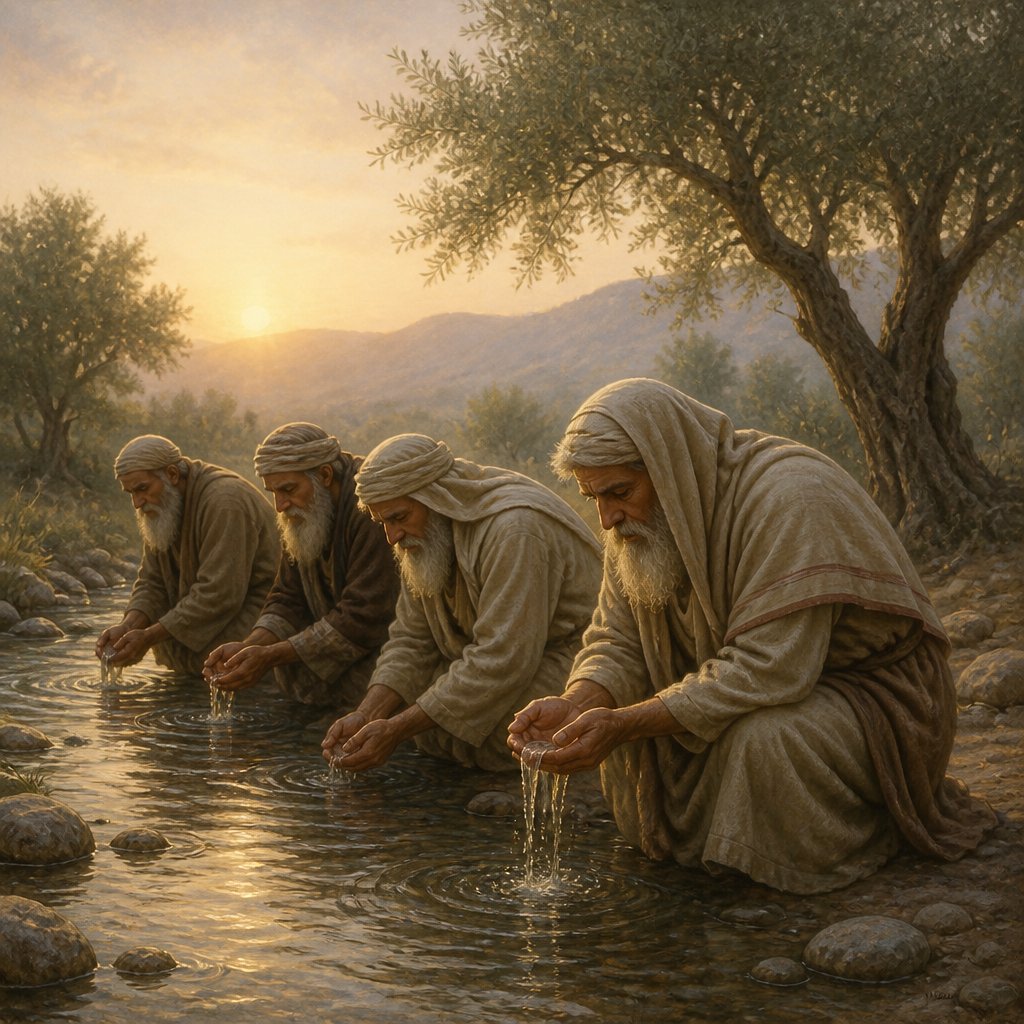
Deuteronomy 21:9 (KJV) states: "So shalt thou put away the guilt of innocent blood from among you, when thou shalt do that which is right in the sight of the LORD." This verse emerges from a broader context in which God is instructing the Israelites on how to maintain justice and righteousness within their community. It speaks powerfully to humans' intrinsic duty to uphold justice and care for the innocent, echoing a divine call that resonates as strongly today as it did in ancient Israel.
As we delve into this poignant scripture, we must first recognize the weight of innocent blood. Throughout biblical history, the shedding of innocent blood has been viewed with grave consequence. The life of one created in the image of God is sacred; the loss of such a life calls for accountability and action. In this context, God sets forth guidelines that not only emphasize the severity of murder but also speak to the broader implications of societal justice. The innocent blood shed within a community is not just an act against the individual but a stain upon the land itself, and it brings forth a cry for justice that cannot be ignored.
This leads us to the actionable command given in Deuteronomy 21:9. The text provides a solution: the community must act righteously in the sight of the Lord to cleanse itself of guilt. The phrase "when thou shalt do that which is right" suggests a deliberate and conscious effort by the people of Israel to right the wrongs that had been committed. God set a standard by which they were to live—one characterized by justice, integrity, and mercy. Choosing to do what is right signifies more than mere obedience; it beckons the people to embrace their role as stewards of God’s justice on Earth.
In our modern context, this verse reverberates with significant ethical implications. As believers, we are called not only to abstain from wrongdoing but to actively pursue what is just and right. This might mean advocating for the voiceless, standing against injustices such as violence against the innocent, and becoming involved in our communities in ways that honor God’s desire for righteousness.
Furthermore, we need to understand that putting away the guilt of innocent blood also involves a recognition of our collective responsibility. While individual actions matter, they are part of a larger tapestry of societal conduct. When injustices prevail, even the most righteous among us are called to examine their part in the greater narrative. Are we complicit through silence? Are we ignoring systemic issues that lead to suffering?
As we reflect upon Deuteronomy 21:9, we must also seek the heart of God through prayer and supplication, asking for His insight into areas where we can act righteously. God's justice is not blind; it sees the pain of the community, and as His followers, we ought to embody His compassion. It is important to remember that in doing so, we are not simply fulfilling a legalistic requirement; we are embodying the heart of God, who deeply cares for the plight of the innocent.
In conclusion, the directive to "put away the guilt of innocent blood" fundamentally charges us with the task of societal healing—both within our personal circles and in broader societal contexts. As we work towards justice and righteousness, may our hands and hearts be devoted to the work before us. May we lift the innocent in prayer, advocate for their rights, and decide to act—because in doing what is right in the sight of the LORD, we not only honor Him but also restore the sanctity of life within our communities. The cry of the innocent can indeed be silenced, but it calls every believer to rise in collective action, ensuring that justice flows like a river in the land. Amen.
Want to reflect more on Deuteronomy 21:9?
Continue your spiritual journey with Bible Chat — an AI-powered tool for exploring God's Word through conversation. Ask questions, discover connections, and deepen your understanding.
Get Our Apps


Deuteronomy 21:9 Artwork
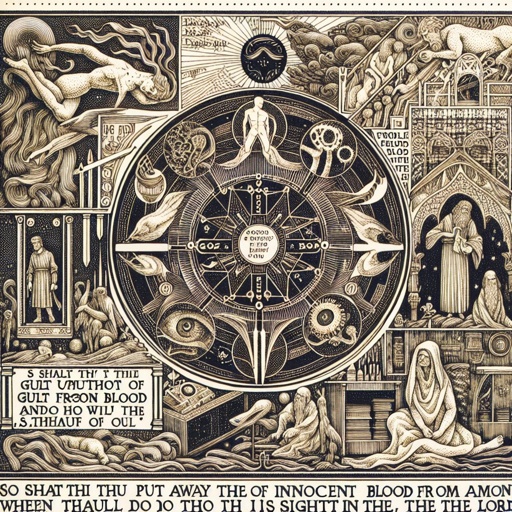
Deuteronomy 21:9 - "So shalt thou put away the guilt of innocent blood from among you, when thou shalt do that which is right in the sight of the LORD."
"So shalt thou put away the guilt of innocent blood from among you, when thou shalt do that which is right in the sight of the LORD." - Deuteronomy 21:9

Deuteronomy 9:21 - "And I took your sin, the calf which ye had made, and burnt it with fire, and stamped it, and ground it very small, even until it was as small as dust: and I cast the dust thereof into the brook that descended out of the mount."

Deuteronomy 1.1-21

Matthew 9:21

Deuteronomy 27:21 - "Cursed be he that lieth with any manner of beast. And all the people shall say, Amen."

Matthew 9:21-22

Matthew 9:21-22

Matthew 9:21-22

Matthew 9:21-22

Matthew 9:21-22

Deuteronomy 21:21 - "And all the men of his city shall stone him with stones, that he die: so shalt thou put evil away from among you; and all Israel shall hear, and fear."

rev 9:21

john 21:9

Genesis 21:9

Deuteronomy 7:21 - "Thou shalt not be affrighted at them: for the LORD thy God is among you, a mighty God and terrible."

Deuteronomy 32:9 - "For the LORD'S portion is his people; Jacob is the lot of his inheritance."

Deuteronomy 18:21 - "And if thou say in thine heart, How shall we know the word which the LORD hath not spoken?"

Deuteronomy 21:7 - "And they shall answer and say, Our hands have not shed this blood, neither have our eyes seen it."

Deuteronomy 3:9 - "(Which Hermon the Sidonians call Sirion; and the Amorites call it Shenir;)"

Deuteronomy 9:22 - "And at Taberah, and at Massah, and at Kibroth-hattaavah, ye provoked the LORD to wrath."

Deuteronomy 21:22 - "¶ And if a man have committed a sin worthy of death, and he be to be put to death, and thou hang him on a tree:"

Deuteronomy 2:21 - "A people great, and many, and tall, as the Anakims; but the LORD destroyed them before them; and they succeeded them, and dwelt in their stead:"

Deuteronomy 21:6 - "And all the elders of that city, that are next unto the slain man, shall wash their hands over the heifer that is beheaded in the valley:"

Deuteronomy 24:21 - "When thou gatherest the grapes of thy vineyard, thou shalt not glean it afterward: it shall be for the stranger, for the fatherless, and for the widow."

Deuteronomy 21:12 - "Then thou shalt bring her home to thine house; and she shall shave her head, and pare her nails;"

2 Chronicles 21:9

Deuteronomy 6:9 - "And thou shalt write them upon the posts of thy house, and on thy gates."

Deuteronomy 21:11 - "And seest among the captives a beautiful woman, and hast a desire unto her, that thou wouldest have her to thy wife;"

Deuteronomy 15:21 - "And if there be any blemish therein, as if it be lame, or blind, or have any ill blemish, thou shalt not sacrifice it unto the LORD thy God."