A New Beginning: Embracing God’s Promises Beyond the Jordan
"On this side Jordan, in the land of Moab, began Moses to declare this law, saying," - Deuteronomy 1:5
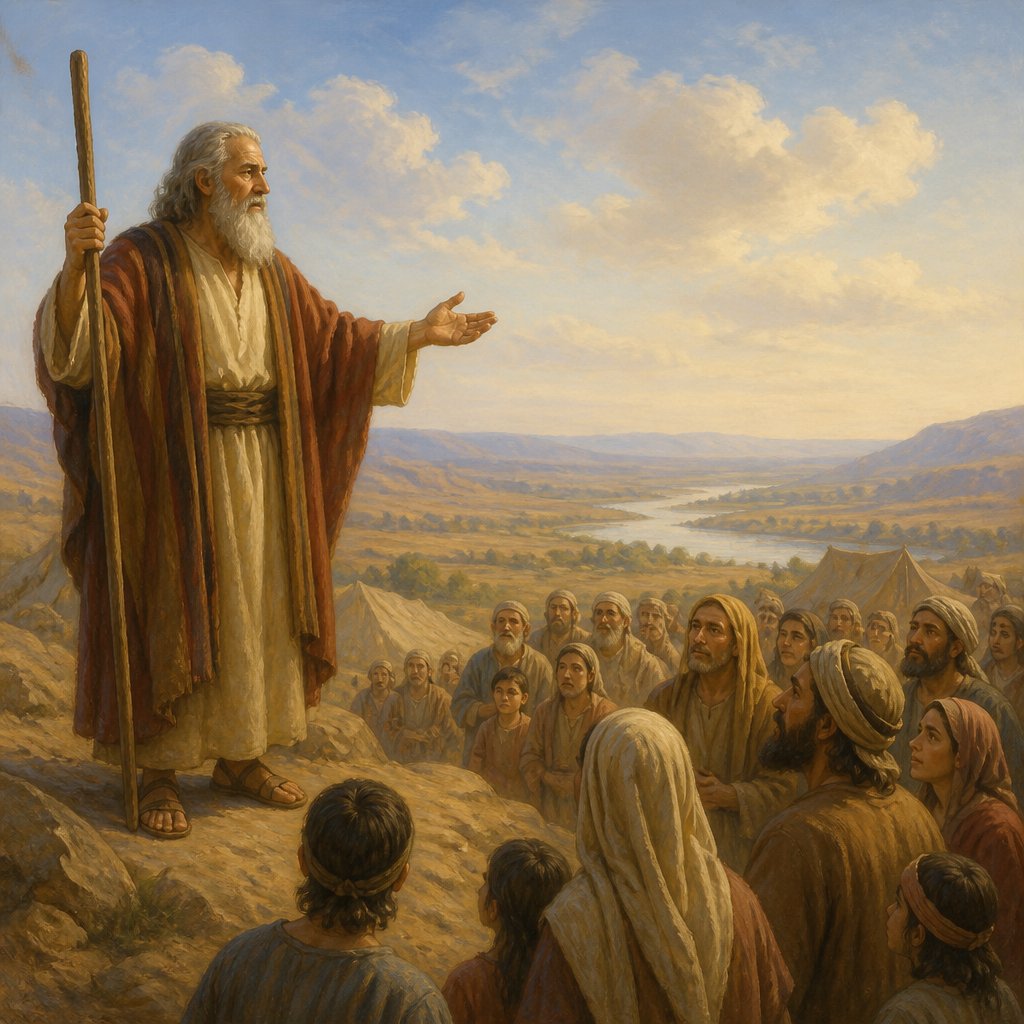
Deuteronomy 1:5 (KJV) states, "On this side Jordan, in the land of Moab, began Moses to declare this law, saying." In this simple yet profound verse, we witness a pivotal moment in the history of the Israelites, where Moses prepares to impart vital teachings and laws before they embark on a new chapter in their journey. This is a time of transition, reflection, and anticipation—a theme that resonates deeply with our spiritual lives today.
As we delve into the context of this scripture, we find Moses, the great leader who had guided the Israelites through countless trials, standing on the brink of the Promised Land. It is not merely a geographical transition; it embodies a spiritual reckoning and preparation for the people of God. They are about to move from a wandering existence in the wilderness into a land flowing with milk and honey—a place fulfilling the covenant promises made by God to their forefathers. This moment is rich with significance, as it reminds us of our own journeys through life, where we face moments of change, uncertainty, and hope.
In the verses preceding this proclamation, Moses recounts the history of Israel’s journey, highlighting their struggles, victories, and the lessons learned along the way. He reminds them of God’s faithfulness despite their unfaithfulness. Each step taken through the wilderness was not in vain; it was part of God’s divine plan to mold them into a people set apart for His purpose.
Moses, standing before the Israelites, serves as a mediator between God and His people, recounting the laws that not only govern their community but also guide their hearts towards holiness and righteousness. His declaration of the law signifies a new beginning—an invitation to understand and embody the covenant relationship they have with God. This law is not just a code of conduct; it is a manifestation of God’s love and justice, a way to express gratitude for His enduring mercy, and a path to live in harmony with Him and each other.
The phrase "began Moses to declare this law" suggests the importance of teaching and the continuity of God’s word across generations. In our present-day walks of faith, we are called to declare the truth of God’s Word. Just as Moses prepared the Israelites to step into their new reality, we too must embrace our roles as disciples and teachers, sharing the lessons learned from our journeys and the truths revealed to us through scripture.
As we reflect on how this scripture applies to our lives, consider the reality that we all face personal Jordans—those boundaries of change that loom before us, often daunting. It might be a career shift, a move to a new city, a relationship ending, or a new chapter beginning. Yet, what lies beyond our personal Jordans is not merely the unknown but the promise of God’s presence and guidance.
Transitioning into a new phase requires preparation, and like the Israelites, we are called to prepare our hearts. We must engage with God's law, not as a list of restrictions, but as a loving guide to how we can live in alignment with His will. This means investing time in prayer, studying scripture, and cultivating our relationship with God. It is in this sacred space that we find clarity and direction.
Moreover, standing in Moab signifies a moment to pause and reflect on God’s faithfulness throughout our wilderness experiences. Let us take time to acknowledge the growth that has occurred during our struggles. Each trial we faced has taught us resilience, faith, and dependence on God. It is a reminder that our past does not define us, but rather shapes us for the future He has prepared.
In conclusion, as we meditate on Deuteronomy 1:5, let us open our hearts to hear God's law proclaimed in our lives. May we embrace our new beginnings with hope, positioned to step forward with faith, knowing that we are entering a season illuminated by His promises. In every transition, God invites us to declare His faithfulness, reminding us that the same God who led Israel is leading us today.
Want to reflect more on Deuteronomy 1:5?
Continue your spiritual journey with Bible Chat — an AI-powered tool for exploring God's Word through conversation. Ask questions, discover connections, and deepen your understanding.
Get Our Apps


Deuteronomy 1:5 Artwork

Deuteronomy 1:5 - "On this side Jordan, in the land of Moab, began Moses to declare this law, saying,"
"On this side Jordan, in the land of Moab, began Moses to declare this law, saying," - Deuteronomy 1:5

Deuteronomy 5:17 - "Thou shalt not kill."

Deuteronomy 34:5-6

Deuteronomy 5:19 - "Neither shalt thou steal."

Deuteronomy 5:18 - "Neither shalt thou commit adultery."

Deuteronomy 28:5 - "Blessed shall be thy basket and thy store."

Deuteronomy 5:1 - "And Moses called all Israel, and said unto them, Hear, O Israel, the statutes and judgments which I speak in your ears this day, that ye may learn them, and keep, and do them."

Deuteronomy 5:2 - "The LORD our God made a covenant with us in Horeb."

Deuteronomy 5:30 - "Go say to them, Get you into your tents again."

"Thou shalt not kill." - Deuteronomy 5:17

Deuteronomy 5:7 - "Thou shalt have none other gods before me."

Deuteronomy 5:13 - "Six days thou shalt labour, and do all thy work:"

Deuteronomy 5:5 - "(I stood between the LORD and you at that time, to shew you the word of the LORD: for ye were afraid by reason of the fire, and went not up into the mount;) saying,"

Deuteronomy 5:20 - "Neither shalt thou bear false witness against thy neighbour."

Deuteronomy 5:4 - "The LORD talked with you face to face in the mount out of the midst of the fire,"

Deuteronomy 32:5 - "They have corrupted themselves, their spot is not the spot of his children: they are a perverse and crooked generation."

Deuteronomy 14:5 - "The hart, and the roebuck, and the fallow deer, and the wild goat, and the pygarg, and the wild ox, and the chamois."

Deuteronomy 5:10 - "And shewing mercy unto thousands of them that love me and keep my commandments."

Deuteronomy 5:12 - "Keep the sabbath day to sanctify it, as the LORD thy God hath commanded thee."

Deuteronomy 11:5 - "And what he did unto you in the wilderness, until ye came into this place;"

Deuteronomy 34:5 - "¶ So Moses the servant of the LORD died there in the land of Moab, according to the word of the LORD."

"Neither shalt thou steal." - Deuteronomy 5:19

Deuteronomy 33:5 - "And he was king in Jeshurun, when the heads of the people and the tribes of Israel were gathered together."

"Neither shalt thou commit adultery." - Deuteronomy 5:18

Deuteronomy 3:5 - "All these cities were fenced with high walls, gates, and bars; beside unwalled towns a great many."

Deuteronomy 32:41

Deuteronomy 5:3 - "The LORD made not this covenant with our fathers, but with us, even us, who are all of us here alive this day."

Deuteronomy 32:43

Deuteronomy 5:6 - "¶ I am the LORD thy God, which brought thee out of the land of Egypt, from the house of bondage."