The Power of Agreement in God’s Calling
"And ye answered me, and said, The thing which thou hast spoken is good for us to do." - Deuteronomy 1:14

When we delve into the depths of Deuteronomy 1:14, we come upon a moment in the journey of the Israelites that is teeming with insight and revelation: "And ye answered me, and said, The thing which thou hast spoken is good for us to do." This verse encapsulates not just a response but a turning point where the heart and ear of the people aligned with the direction God was guiding them.
Moses, as the mediator for God’s commands, had urged the Israelites to take possession of the land promised to them—a land flowing with milk and honey. However, a sense of hesitation and fear had initially creeped into their hearts, stemming from past misgivings and the daunting presence of formidable enemies. Yet here, as they respond with agreement, we witness a transformative pivot from disbelief to faith-based action. The way they reacted to God’s mandate is a powerful reminder of our own responses to God's calling in our lives.
To truly grasp what it means to agree with God's call, let us examine three essential elements illustrated in this response:
1. **Recognition of Goodness**: When the Israelite leaders proclaimed, "The thing which thou hast spoken is good for us to do," they were not merely acknowledging God's direction but recognizing its inherent goodness. In our spiritual journey, it is vital that we cultivate the ability to distinguish between what is merely convenient and what is genuinely good—rooted in the righteousness of God. We must, like the Israelites, seek to find the goodness in God’s requests, even when they seem challenging or intimidating. This requires a deliberate choice to trust in God’s character and sovereignty.
2. **Collective Agreement**: The phrase "ye answered me" indicates a communal response, demonstrating the collective voice of the men and women of Israel. God often works through the collective body of Christ today. This underscores the importance of unity and agreement among believers. Much like the early church, where the disciples gathered together to pray and seek God's will, we too must engage with our community when seeking guidance or expressing our willingness to follow God's directive. Agreement fosters strength, courage, and accountability in the face of daunting tasks laid before us.
3. **Action and Obedience**: The declaration of affirmation points to more than mere words; it’s a call to action. Agreement with God’s commands must be followed by active obedience. The Israelites declared it was good, and their next steps would be to act upon their affirmation. This is where faith is manifest—moving from acknowledgment to actual doing. Our faith should inspire us to practical steps that align with what we profess to believe. Reflection without action is futile; thus, the commitment to do must translate into tangible works in our spiritual lives.
In today’s context, God still speaks to us through words of direction found in Scripture, through prayer, and through communion with one another. What areas in your life is God calling you to respond with agreement? Whether it’s an act of service, a call to ministry, or a relational reconciliation, we are consistently faced with choices.
As you ponder situations that God might be urging you forward, remember to ask:
- Do I recognize the goodness in His call?
- Am I willing to seek the counsel of my community as confirmation of this call?
- Am I prepared to move from agreement into action?
May we learn from the Israelites and choose to respond decisively. Let our answer echo theirs: "The thing which thou hast spoken is good for us to do." In that commitment, we find freedom, purpose, and the profound joy that lies in aligning our lives with God’s perfect plan.
Want to reflect more on Deuteronomy 1:14?
Continue your spiritual journey with Bible Chat — an AI-powered tool for exploring God's Word through conversation. Ask questions, discover connections, and deepen your understanding.
Get Our Apps


Deuteronomy 1:14 Artwork

Deuteronomy 1:14 - "And ye answered me, and said, The thing which thou hast spoken is good for us to do."
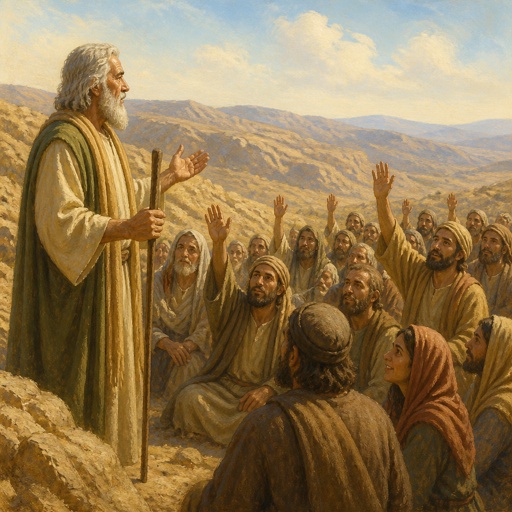
"And ye answered me, and said, The thing which thou hast spoken is good for us to do." - Deuteronomy 1:14

Deuteronomy 1:4 - "After he had slain Sihon the king of the Amorites, which dwelt in Heshbon, and Og the king of Bashan, which dwelt at Astaroth in Edrei:"

Deuteronomy 14:14 - "And every raven after his kind,"

Deuteronomy 14:1 - "Ye are the children of the LORD your God: ye shall not cut yourselves, nor make any baldness between your eyes for the dead."

Deuteronomy 14:17 - "And the pelican, and the gier eagle, and the cormorant,"

"And every raven after his kind," - Deuteronomy 14:14

Deuteronomy 14:16 - "The little owl, and the great owl, and the swan,"

Deuteronomy 14:3 - "¶ Thou shalt not eat any abominable thing."

Deuteronomy 14:11 - "¶ Of all clean birds ye shall eat."

Deuteronomy 14:20 - "But of all clean fowls ye may eat."

Deuteronomy 14:13 - "And the glede, and the kite, and the vulture after his kind,"

Deuteronomy 14:18 - "And the stork, and the heron after her kind, and the lapwing, and the bat."

Deuteronomy 14:12 - "But these are they of which ye shall not eat: the eagle, and the ossifrage, and the ospray,"

Deuteronomy 14:15 - "And the owl, and the night hawk, and the cuckow, and the hawk after his kind,"

Deuteronomy 29:14 - "Neither with you only do I make this covenant and this oath;"

Deuteronomy 14:4 - "These are the beasts which ye shall eat: the ox, the sheep, and the goat,"

Deuteronomy 14:19 - "And every creeping thing that flieth is unclean unto you: they shall not be eaten."

Deuteronomy 25:14 - "Thou shalt not have in thine house divers measures, a great and a small."

"And the pelican, and the gier eagle, and the cormorant," - Deuteronomy 14:17

Deuteronomy 27:14 - "¶ And the Levites shall speak, and say unto all the men of Israel with a loud voice,"

Deuteronomy 14:10 - "And whatsoever hath not fins and scales ye may not eat; it is unclean unto you."

Deuteronomy 14:5 - "The hart, and the roebuck, and the fallow deer, and the wild goat, and the pygarg, and the wild ox, and the chamois."

Deuteronomy 33:14 - "And for the precious fruits brought forth by the sun, and for the precious things put forth by the moon,"

"After he had slain Sihon the king of the Amorites, which dwelt in Heshbon, and Og the king of Bashan, which dwelt at Astaroth in Edrei:" - Deuteronomy 1:4

Deuteronomy 10:14 - "Behold, the heaven and the heaven of heavens is the LORD'S thy God, the earth also, with all that therein is."

Deuteronomy 14:9 - "¶ These ye shall eat of all that are in the waters: all that have fins and scales shall ye eat:"

Deuteronomy 6:14 - "Ye shall not go after other gods, of the gods of the people which are round about you;"

Deuteronomy 30:14 - "But the word is very nigh unto thee, in thy mouth, and in thy heart, that thou mayest do it."

"The little owl, and the great owl, and the swan," - Deuteronomy 14:16