The Refuge of Grace: Understanding Accountability and Mercy
"As when a man goeth into the wood with his neighbour to hew wood, and his hand fetcheth a stroke with the axe to cut down the tree, and the head slippeth from the helve, and lighteth upon his neighbour, that he die; he shall flee unto one of those cities, and live:" - Deuteronomy 19:5
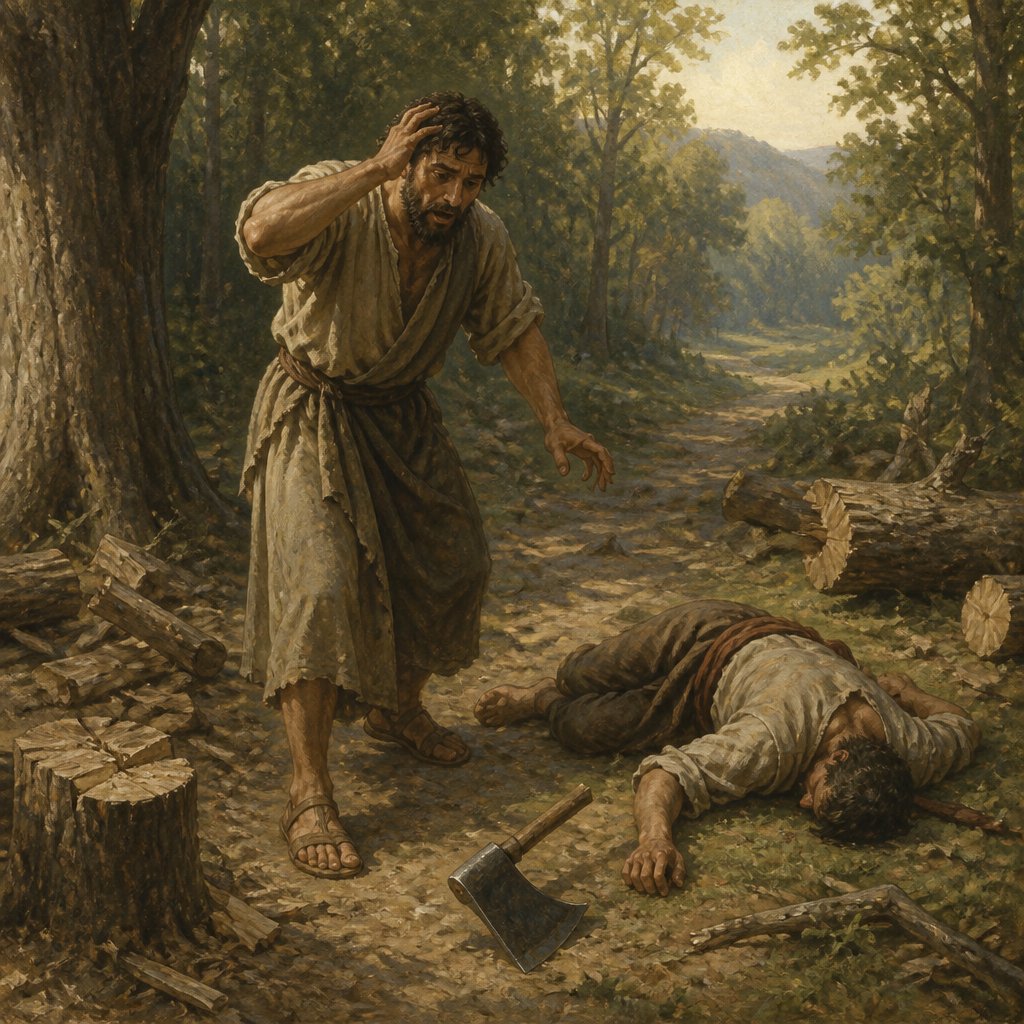
In the book of Deuteronomy, Moses reminds the children of Israel about the importance of justice and mercy in their community. The verse in Deuteronomy 19:5 reads: "As when a man goeth into the wood with his neighbour to hew wood, and his hand fetcheth a stroke with the axe to cut down the tree, and the head slippeth from the helve, and lighteth upon his neighbour, that he die; he shall flee unto one of those cities, and live." This verse encapsulates a profound principle that extends far beyond the literal interpretation of a man accidentally harming his friend while working together. It speaks to the themes of accountability, unintended consequences, and the refuge of grace that God provides in our lives.
Firstly, we can glean from this passage that life is filled with unplanned and unforeseen events. The scenario presented is one of great tragedy—a man swinging an axe, a sudden slip, and an unforeseen death. This image serves as a stark reminder that we live in a broken world where accidents happen, often without malice or intention. How often do we find ourselves scrambling to react to unexpected circumstances, whether in our personal relationships, workplaces, or community? The truth is, we all make mistakes; we all have moments where our choices—intended for good—can lead to harm.
In such circumstances, how do we respond? This law instructs that the individual who causes this unintended consequence is not condemned to death; instead, he is given the opportunity to flee to a city of refuge. This city represents a place where justice is tempered with mercy, where grace abounds even in our most grievous errors. This is reflective of God’s nature—He is just, yet infinitely merciful. When we fail, He provides us with avenues for redemption and restoration.
Moreover, this passage challenges us to consider our relationships with others. The woodcutter was not alone; he was working alongside a neighbor. This emphasizes the communal aspect of life—our actions affect those around us. In today's world, our relationships are continually tested. People are often hurt by our words, our negligence, or even our hasty decisions. Recognizing that accidents can occur in interactions can dictate how we approach conflicts. It teaches us to exercise humility, patience, and grace towards ourselves and others when we inevitably face moments of failure.
Another significant aspect to explore in this scripture is the necessity of accountability. The person who caused the accident is instructed to take responsibility for the outcome of his actions—he must flee, not merely as a means of escape, but as a recognition of the damage done. This fleeing does not diminish the seriousness of the act; rather, it serves as a critical acknowledgment that our actions bear weight, and we must seek resolution and healing, both for ourselves and those affected. Likewise, we must remain vigilant in our own lives to be aware of the impact of our actions on others. Understanding accountability in our relationships fosters a culture of trust and security, where grace can flourish.
Finally, we cannot overlook the foreshadowing of Christ in this verse. Jesus is our city of refuge, our safe haven in times of trouble, and He invites us to come to Him with our burdens and mistakes. Just as the man who accidentally killed his neighbor could flee to safety, we can run to Christ when our lives feel chaotic and marred by sin. He offers forgiveness, healing, and restoration. In Him, we find not just a refuge but also the ability to learn from our mistakes and grow beyond them.
In conclusion, Deuteronomy 19:5 encapsulates the reality of living in an imperfect world while holding tightly to the grace of God that allows us to navigate it. Let us acknowledge the complexities of life, the weight of our relationships, and the immense grace available to us in Christ. May we be quick to seek forgiveness when we err and even quicker to extend grace when others falter.
Want to reflect more on Deuteronomy 19:5?
Continue your spiritual journey with Bible Chat — an AI-powered tool for exploring God's Word through conversation. Ask questions, discover connections, and deepen your understanding.
Get Our Apps


Deuteronomy 19:5 Artwork

Deuteronomy 19:5 - "As when a man goeth into the wood with his neighbour to hew wood, and his hand fetcheth a stroke with the axe to cut down the tree, and the head slippeth from the helve, and lighteth upon his neighbour, that he die; he shall flee unto one of those cities, and live:"
"As when a man goeth into the wood with his neighbour to hew wood, and his hand fetcheth a stroke with the axe to cut down the tree, and the head slippeth from the helve, and lighteth upon his neighbour, that he die; he shall flee unto one of those cities, and live:" - Deuteronomy 19:5

Deuteronomy 5:19 - "Neither shalt thou steal."

"Neither shalt thou steal." - Deuteronomy 5:19

Deuteronomy 30:19:

Deuteronomy 5:17 - "Thou shalt not kill."

Deuteronomy 34:5-6

Deuteronomy 10:19 - "Love ye therefore the stranger: for ye were strangers in the land of Egypt."

Deuteronomy 14:19 - "And every creeping thing that flieth is unclean unto you: they shall not be eaten."

Deuteronomy 5:18 - "Neither shalt thou commit adultery."

Deuteronomy 28:5 - "Blessed shall be thy basket and thy store."

Deuteronomy 19:7 - "Wherefore I command thee, saying, Thou shalt separate three cities for thee."

Deuteronomy 6:19 - "To cast out all thine enemies from before thee, as the LORD hath spoken."

Deuteronomy 5:2 - "The LORD our God made a covenant with us in Horeb."

Deuteronomy 19:16 - "¶ If a false witness rise up against any man to testify against him that which is wrong;"

Deuteronomy 27:19 - "Cursed be he that perverteth the judgment of the stranger, fatherless, and widow. And all the people shall say, Amen."

Deuteronomy 19:19 - "Then shall ye do unto him, as he had thought to have done unto his brother: so shalt thou put the evil away from among you."

Deuteronomy 12:19 - "Take heed to thyself that thou forsake not the Levite as long as thou livest upon the earth."

Deuteronomy 28:19 - "Cursed shalt thou be when thou comest in, and cursed shalt thou be when thou goest out."

Deuteronomy 5:30 - "Go say to them, Get you into your tents again."

Deuteronomy 32:19 - "And when the LORD saw it, he abhorred them, because of the provoking of his sons, and of his daughters."

Romans 5:19

"Thou shalt not kill." - Deuteronomy 5:17

Deuteronomy 5:7 - "Thou shalt have none other gods before me."

Deuteronomy 5:13 - "Six days thou shalt labour, and do all thy work:"

Deuteronomy 1:5 - "On this side Jordan, in the land of Moab, began Moses to declare this law, saying,"

Genesis 19-5

Romans 5:19

Deuteronomy 5:5 - "(I stood between the LORD and you at that time, to shew you the word of the LORD: for ye were afraid by reason of the fire, and went not up into the mount;) saying,"

Deuteronomy 19:18 - "And the judges shall make diligent inquisition: and, behold, if the witness be a false witness, and hath testified falsely against his brother;"