The Sacredness of the Passover Sacrifice
"Thou mayest not sacrifice the passover within any of thy gates, which the LORD thy God giveth thee:" - Deuteronomy 16:5
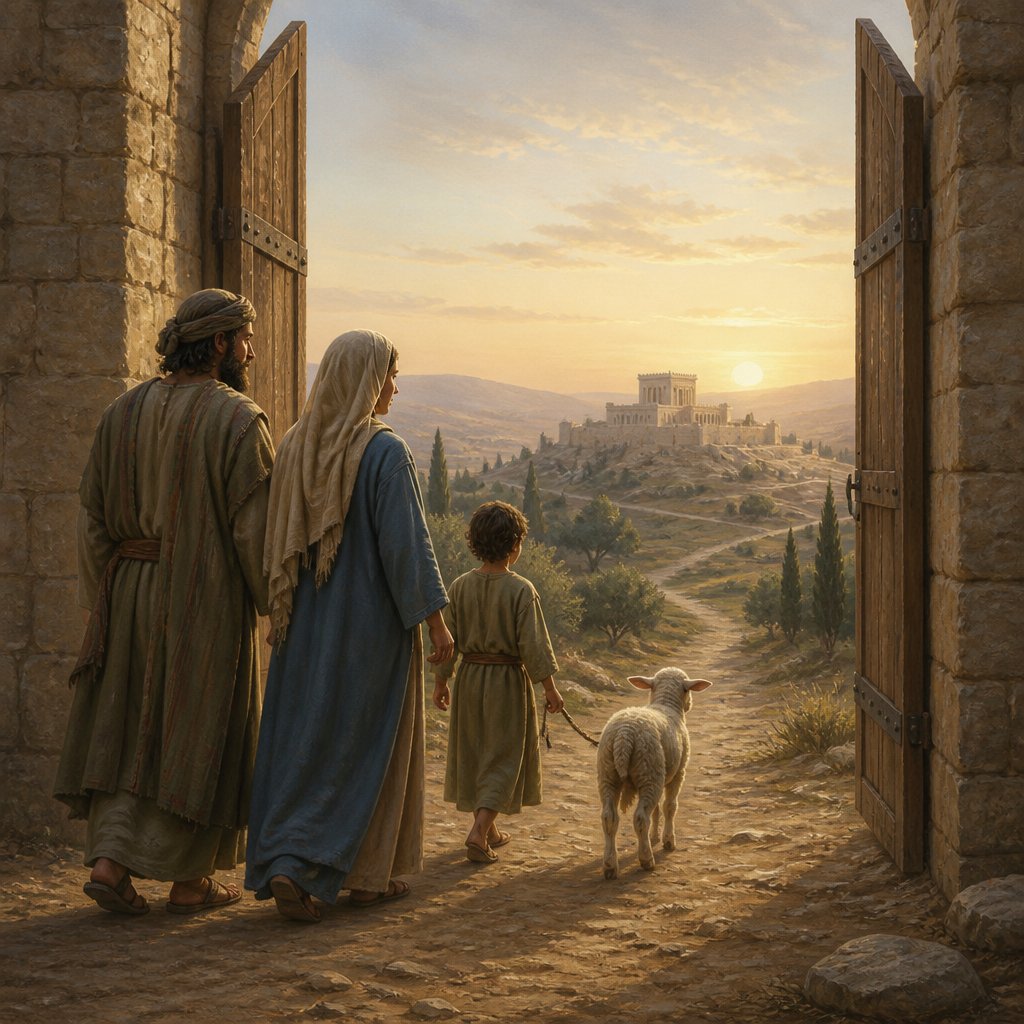
**The Sacredness of the Passover Sacrifice**
Deuteronomy 16:5 states, "Thou mayest not sacrifice the passover within any of thy gates, which the LORD thy God giveth thee." This commandment, seemingly simple in its directive, carries profound significance for us as believers today, urging us to examine not only the act of worship but also the place and the spirit in which we approach God.
The backdrop of the Passover is pivotal to our understanding. It recalls the moment when the children of Israel were delivered from Egypt, liberated from bondage, and ushered into a covenant relationship with Yahweh. The blood of the lamb painted on doorposts and lintels symbolized safety and God’s redemptive plan. Yet, as Moses reiterates this command in Deuteronomy, he reinforces that the act of sacrifice is not merely a routine ritual but a profoundly sacred act that demands specificity, honor, and sanctity.
In this age, where we often seek convenience in our spiritual lives, it becomes crucial to unpack the deeper meanings of why God insisted that the Passover be sacrificed outside the gates. The location signifies a sacred boundary. Sacrificing within one’s gates could imply a casual approach to something that is profoundly significant. It indicates a heart that may risk treating the divine act of worship as ordinary or commonplace.
Consider the tension between the sacred and the secular. God desires that we approach Him with reverence and intentionality. This is mirrored in our own worship practices today. How often do we rush into worship, whether in church or in private, without adequately preparing our hearts? Do we offer our praise 'within our gates,' in the routine of our lives, without recognizing the gravity of what we’re engaging in? The divine invitation to worship is meant to elevate us beyond our circumstances, not to confine us to the mundane.
Furthermore, God's instruction to sacrifice outside the gates invites us to reflect on the nature of the sacrifice itself. In biblical times, the gates were seen as thresholds. They were the points where the community converged, where social and civic life transpired. By placing the Passover sacrifice outside the gates, God intended to draw His people out of their comfort zones and into a communal acknowledgment of His sovereignty. It speaks to the collective memory of Israel and the significance of the act as a national heritage, binding them in unity as they remember how God delivered them.
Reflect on this collectively: As we come together for worship or engage in any sacrificial offering, are we doing so with our hearts aligned toward the community and the act’s holiness? God’s commandments are not merely restrictions; they guide us into deeper fellowship with Him and with one another. They compel us to preserve the sanctity of worship and to recognize the power of our memories as we remember our own deliverance in Christ.
Let us also ask ourselves: Are we bringing our praise and sacrifices only within the safety of our personal gates, or are we taking the time to acknowledge and proclaim the significance of our relationship with God to our communities? The sacrifice of the Passover was a celebration that transformed the Israelites’ identity, and our act of worship should inspire new identities in our lives and communities.
As children of God, we are called not just to remember His past acts but to live in a constant state of gratitude that radiates outward. Therefore, when you approach the altar of sacrifice, whether it is an offering of praise, time, or resources, consider where that act takes place. Is it within the gates, comfortable and secluded, or is it a public proclamation of faith that glorifies God and honors the community?
In closing, may we seek to honor the sacredness of our worship as we reflect on Deuteronomy 16:5. Let us mark our hearts as the genuine places of sacrifice, offering the best of ourselves in reverence and in the recognition of God’s mighty works, mindful always of the covenant we uphold together.
Want to reflect more on Deuteronomy 16:5?
Continue your spiritual journey with Bible Chat — an AI-powered tool for exploring God's Word through conversation. Ask questions, discover connections, and deepen your understanding.
Get Our Apps


Deuteronomy 16:5 Artwork

Deuteronomy 16:5 - "Thou mayest not sacrifice the passover within any of thy gates, which the LORD thy God giveth thee:"
"Thou mayest not sacrifice the passover within any of thy gates, which the LORD thy God giveth thee:" - Deuteronomy 16:5

Deuteronomy 5:16 - "¶ Honour thy father and thy mother, as the LORD thy God hath commanded thee; that thy days may be prolonged, and that it may go well with thee, in the land which the LORD thy God giveth thee."

Deuteronomy 20:16

Deuteronomy 20:16

Deuteronomy 20:16

Deuteronomy 14:16 - "The little owl, and the great owl, and the swan,"

Deuteronomy 10:16 - "Circumcise therefore the foreskin of your heart, and be no more stiffnecked."

Deuteronomy 5:17 - "Thou shalt not kill."

Deuteronomy 34:5-6

Deuteronomy 28:16 - "Cursed shalt thou be in the city, and cursed shalt thou be in the field."

Deuteronomy 5:19 - "Neither shalt thou steal."

Deuteronomy 5:18 - "Neither shalt thou commit adultery."

Deuteronomy 28:5 - "Blessed shall be thy basket and thy store."

Deuteronomy 32:16 - "They provoked him to jealousy with strange gods, with abominations provoked they him to anger."

Deuteronomy 5:2 - "The LORD our God made a covenant with us in Horeb."

Deuteronomy 6:16 - "¶ Ye shall not tempt the LORD your God, as ye tempted him in Massah."

Deuteronomy 5:30 - "Go say to them, Get you into your tents again."

Deuteronomy 19:16 - "¶ If a false witness rise up against any man to testify against him that which is wrong;"

Deuteronomy 16:12 - "And thou shalt remember that thou wast a bondman in Egypt: and thou shalt observe and do these statutes."

Deuteronomy 12:16 - "Only ye shall not eat the blood; ye shall pour it upon the earth as water."

Deuteronomy 25:16 - "For all that do such things, and all that do unrighteously, are an abomination unto the LORD thy God."

"Thou shalt not kill." - Deuteronomy 5:17

Deuteronomy 5:7 - "Thou shalt have none other gods before me."

Deuteronomy 5:13 - "Six days thou shalt labour, and do all thy work:"

Deuteronomy 1:5 - "On this side Jordan, in the land of Moab, began Moses to declare this law, saying,"

Deuteronomy 2:16 - "¶ So it came to pass, when all the men of war were consumed and dead from among the people,"

Deuteronomy 27:16 - "Cursed be he that setteth light by his father or his mother. And all the people shall say, Amen."

Deuteronomy 5:5 - "(I stood between the LORD and you at that time, to shew you the word of the LORD: for ye were afraid by reason of the fire, and went not up into the mount;) saying,"

"The little owl, and the great owl, and the swan," - Deuteronomy 14:16