The Joyful Abundance of Tithing: Honoring God's Provision
"¶ At the end of three years thou shalt bring forth all the tithe of thine increase the same year, and shalt lay it up within thy gates:" - Deuteronomy 14:28
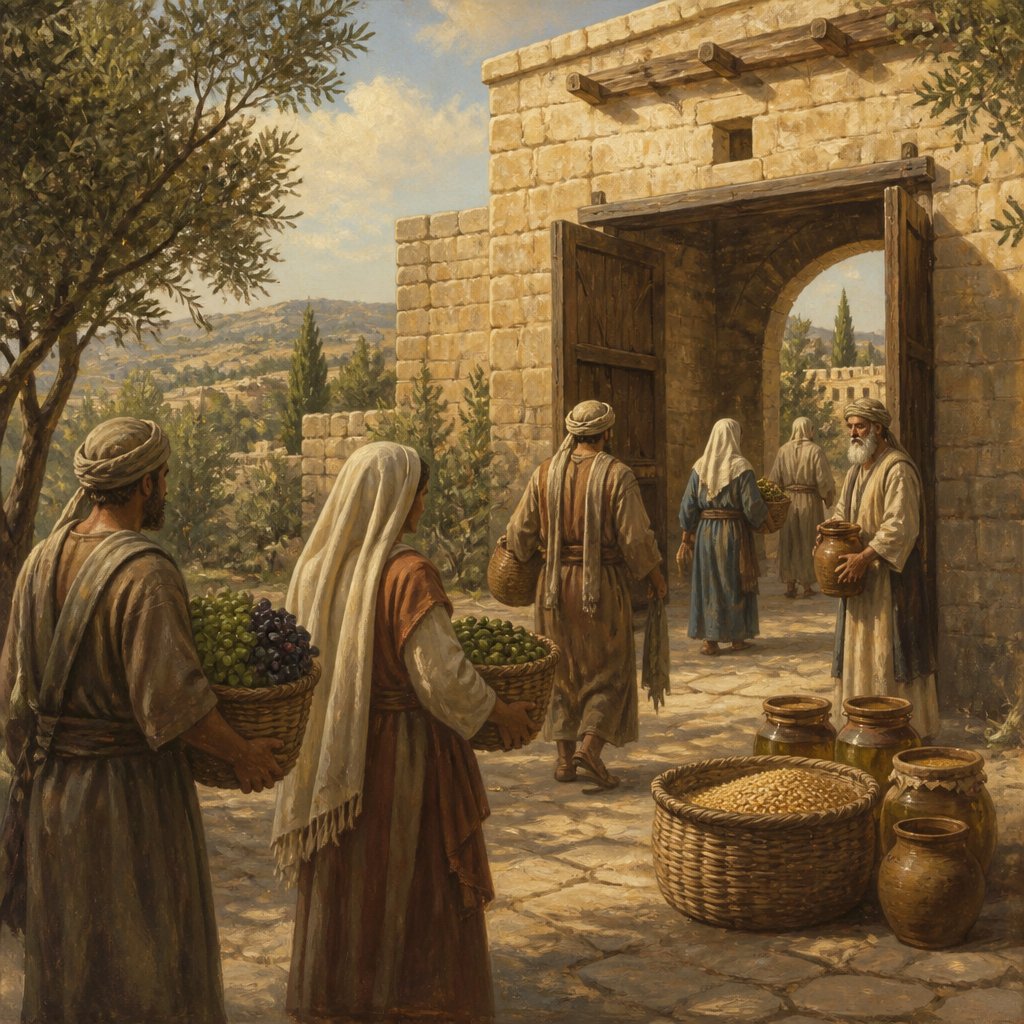
Deuteronomy 14:28 states, "At the end of three years thou shalt bring forth all the tithe of thine increase the same year, and shalt lay it up within thy gates." This verse speaks to the importance of giving back to God what rightfully belongs to Him, a foundational principle that reverberates throughout the entire narrative of Scripture. As we reflect on this passage, we are reminded not only of our duty to tithe but also of the joy and blessings that accompany faithful giving.
The context of this commandment originates from the covenantal relationship between God and His people, Israel. God had established a system of tithing, which constituted one-tenth of a person’s income or increase. This increase could be in the form of crops, livestock, or other harvests. By setting aside a portion of their earnings for God, the Israelites were expressing gratitude for His many blessings and acknowledging that all they possessed came from His generous hands. Tithing thus becomes not just an obligation but an act of worship and thanksgiving.
In our modern context, the principle of tithing remains relevant. In a society marked by consumerism and self-sufficiency, God calls us to counter cultural norms by recognizing Him as our ultimate provider. Our income, in any form, is not solely our own. When we realize that we are merely stewards of what God has entrusted to us, we gain a new perspective – one that encourages us to give joyfully rather than grudgingly.
The instruction in Deuteronomy to bring forth the tithe at the end of three years is significant. It highlights the rhythm of giving as a regular practice that brings structure to our financial stewardship. In the agricultural society of ancient Israel, the cycle of sowing and harvesting represented the ebb and flow of life, filled with varying seasons of increase and need. The three-year period allows God's people to plan and prepare their giving, ensuring it becomes a habitual part of their lives.
When we lay up our tithes “within thy gates,” we are reminded that our contributions are to be used for the community – supporting the work of the Levites, the widows, the orphans, and the foreigners among us. Tithing serves as a means to care for those in need and to promote the work of the Kingdom of God in our localities. It resonates with the teaching of Jesus, who said that whatever we do for the least of these, we are doing for Him (Matthew 25:40).
The promise that ensues from faithful tithing is profound. God’s people are invited into a partnership with Him. Malachi 3:10 challenges us to test God with our tithes, assuring us that when we honor Him, He will open the windows of heaven and pour out blessings until there is no more need. This promise assures us that tithing is not merely a financial transaction but a relational interaction with our Creator who desires to bless and provide for His children.
As we think about our own giving, it’s essential to evaluate our hearts’ posture. Are we hesitant in our tithes, fearing a lack in our own lives? Or are we embracing the joy of giving, believing that God provides abundantly? Tithing is not limited to monetary gifts; it encompasses giving our time, talents, and resources to serve others and advance God’s kingdom.
In conclusion, let us embrace the practice of tithing not with reluctance but with joyful hearts that celebrate how God provides. May we be diligent stewards of all He has given us, bringing forth our increase as an act of faith and love. In doing so, we not only enrich the community but align ourselves with God’s abundant promise. Let us remember that when we give, we participate in a divine cycle of provision, care, and blessing that reflects the heart of our generous God.
Want to reflect more on Deuteronomy 14:28?
Continue your spiritual journey with Bible Chat — an AI-powered tool for exploring God's Word through conversation. Ask questions, discover connections, and deepen your understanding.
Get Our Apps


Deuteronomy 14:28 Artwork
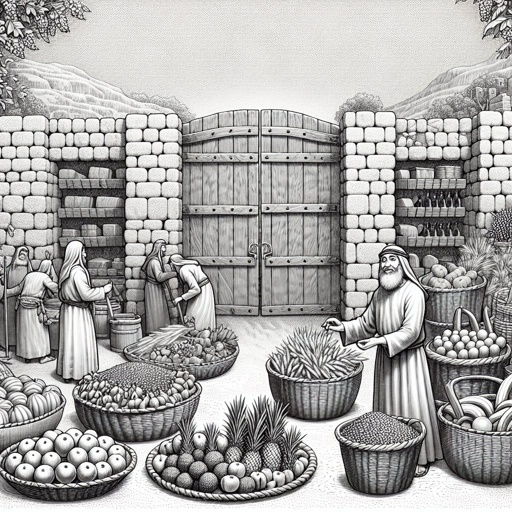
Deuteronomy 14:28 - "¶ At the end of three years thou shalt bring forth all the tithe of thine increase the same year, and shalt lay it up within thy gates:"

Deuteronomy 14:28-29 - "At the end of every three years, bring all the tithes of that year’s produce and store it in your towns, so that the Levites (who have no allotment or inheritance of their own) and the foreigners, the fatherless and the widows who live in your towns may come and eat and be satisfied, and so that the LORD your God may bless you in all the work of your hands."
"¶ At the end of three years thou shalt bring forth all the tithe of thine increase the same year, and shalt lay it up within thy gates:" - Deuteronomy 14:28
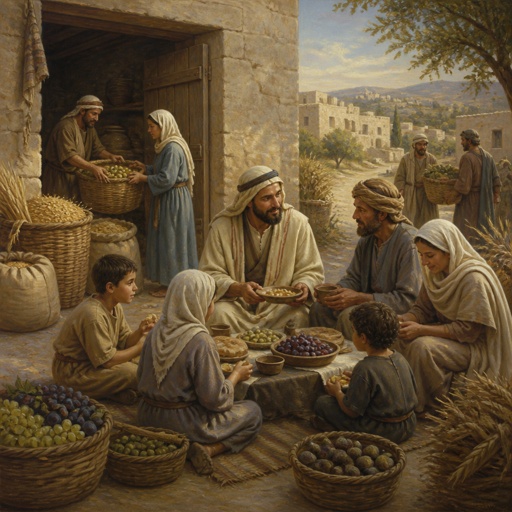
"At the end of every three years, bring all the tithes of that year’s produce and store it in your towns, so that the Levites (who have no allotment or inheritance of their own) and the foreigners, the fatherless and the widows who live in your towns may come and eat and be satisfied, and so that the LORD your God may bless you in all the work of your hands." - Deuteronomy 14:28-29

Deuteronomy 28:14 - "And thou shalt not go aside from any of the words which I command thee this day, to the right hand, or to the left, to go after other gods to serve them."

Deuteronomy 28:28 - "The LORD shall smite thee with madness, and blindness, and astonishment of heart:"

Deuteronomy 28:5 - "Blessed shall be thy basket and thy store."

Deuteronomy 14:14 - "And every raven after his kind,"

Deuteronomy 28:17 - "Cursed shall be thy basket and thy store."

Deuteronomy 32:28 - "For they are a nation void of counsel, neither is there any understanding in them."

"The LORD shall smite thee with madness, and blindness, and astonishment of heart:" - Deuteronomy 28:28

Deuteronomy 28:16 - "Cursed shalt thou be in the city, and cursed shalt thou be in the field."

Deuteronomy 28:3 - "Blessed shalt thou be in the city, and blessed shalt thou be in the field."

Deuteronomy 28:42 - "All thy trees and fruit of thy land shall the locust consume."

Deuteronomy 28:46 - "And they shall be upon thee for a sign and for a wonder, and upon thy seed for ever."

Genesis 28-14

John 14:28

Deuteronomy 28:34 - "So that thou shalt be mad for the sight of thine eyes which thou shalt see."

Deuteronomy 14:17 - "And the pelican, and the gier eagle, and the cormorant,"

Deuteronomy 22:28 - "¶ If a man find a damsel that is a virgin, which is not betrothed, and lay hold on her, and lie with her, and they be found;"

Deuteronomy 28:27 - "The LORD will smite thee with the botch of Egypt, and with the emerods, and with the scab, and with the itch, whereof thou canst not be healed."

Deuteronomy 28:23 - "And thy heaven that is over thy head shall be brass, and the earth that is under thee shall be iron."

Deuteronomy 28:41 - "Thou shalt beget sons and daughters, but thou shalt not enjoy them; for they shall go into captivity."

"And every raven after his kind," - Deuteronomy 14:14

Deuteronomy 28:47 - "Because thou servedst not the LORD thy God with joyfulness, and with gladness of heart, for the abundance of all things;"

Deuteronomy 28:50 - "A nation of fierce countenance, which shall not regard the person of the old, nor shew favour to the young:"

Deuteronomy 14:16 - "The little owl, and the great owl, and the swan,"

Deuteronomy 28:19 - "Cursed shalt thou be when thou comest in, and cursed shalt thou be when thou goest out."

Acts 14:28 - "And there they abode long time with the disciples."

Deuteronomy 28:10 - "And all people of the earth shall see that thou art called by the name of the LORD; and they shall be afraid of thee."