The Troubling Presence of God: Lessons from Belshazzar's Feast
"Then was king Belshazzar greatly troubled, and his countenance was changed in him, and his lords were astonied." - Daniel 5:9
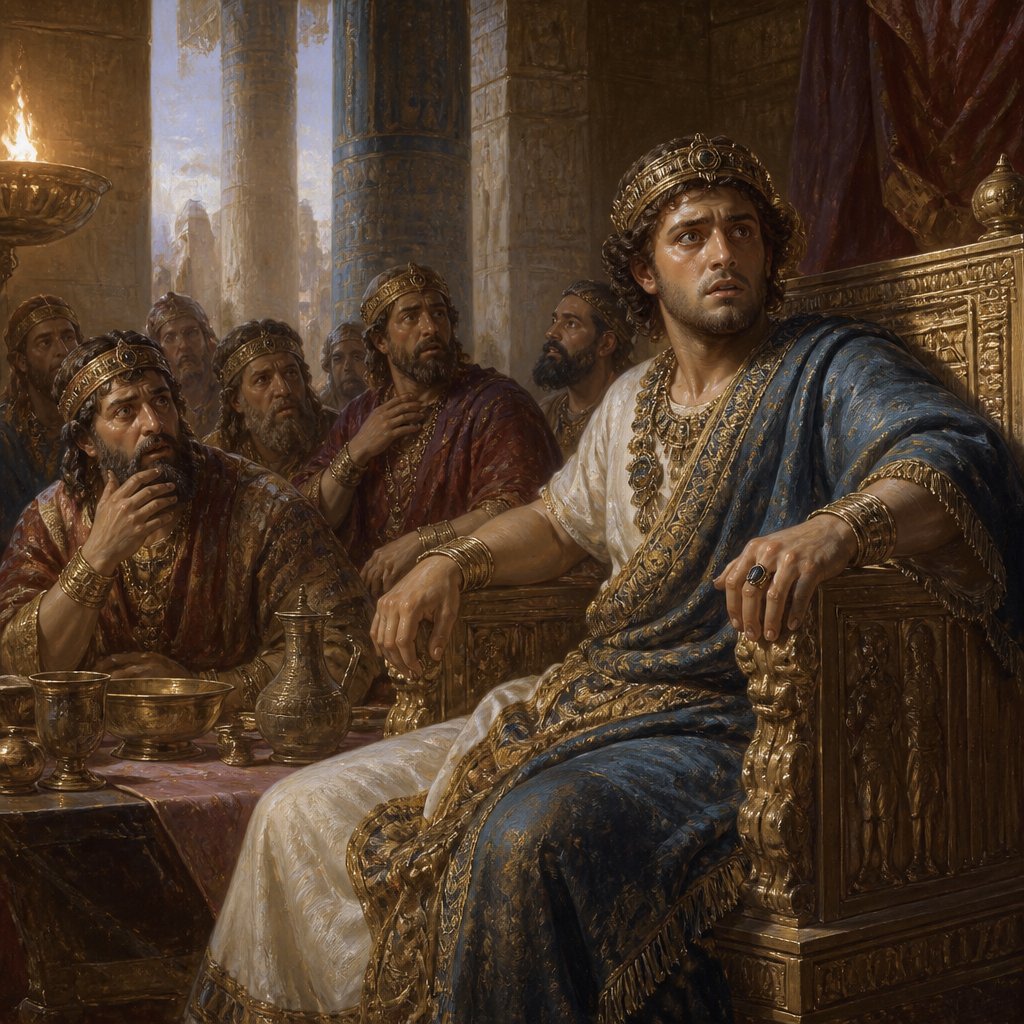
Daniel 5:9 states: "Then was king Belshazzar greatly troubled, and his countenance was changed in him, and his lords were astonied." This captivating moment in the life of King Belshazzar serves as a striking reminder of the power and presence of God and the deep implications of encountering His holiness.
As we delve into this context, we find ourselves at a lavish banquet hosted by King Belshazzar, who, despite the impending threat of the Medes and Persians, chooses to indulge in excess and revelry. The opulent feast symbolizes a kingdom in decline, a ruler whose arrogance blinds him to the reality surrounding him. Historical accounts suggest that Belshazzar was living in a time of spiritual darkness, far removed from the teachings of God as revealed to his forefathers. In his pride, he challenges the Almighty by using the sacred vessels taken from the temple in Jerusalem to serve drinks to his guests. The king’s act was not merely a social faux pas but a direct affront to the God who had once raised up Nebuchadnezzar and humbled him.
It is in this context that we witness the extraordinary moment of divine intervention. As Belshazzar revels in his desecration, a mysterious hand appears, writing on the wall, igniting instant fear in the hearts of the king and his lords. The text of Daniel emphasizes the agitation of Belshazzar: "Then was king Belshazzar greatly troubled, and his countenance was changed in him, and his lords were astonied." This profound disturbance of spirit moves beyond mere anxiety; it conveys an existential dread as the king faces the enormity of his actions and the impending judgment looming over him.
Here, we learn a significant lesson about the nature of God’s judgment, which doesn’t always come in the form we expect. Belshazzar was not an evil man in the traditional sense, nor was he unaware of the legacy of Daniel and the prophetic visions of his predecessor. However, he chose to ignore the warnings and the evidences of God’s power that had been presented to him. His troubling experience symbolizes the weight of conviction that often follows those who flirt with blasphemy and presumption.
Furthermore, Belshazzar’s response to the writing highlights a lesson about pride and humility. The king's immediate reaction was not one of repentance or reflection; instead, it was one of panic and disbelief. His lords – those who shared in his revelry – were equally astonished, revealing a collective blindness to the spiritual truth surrounding them. In our own lives, we may also encounter moments when our own sins or distractions blind us to the seriousness of our actions before God. Just as Belshazzar was led astray by his pride and disbelief, we too must guard against the temptation to dismiss God’s messages.
The eventual interpretation of the writing by Daniel – "Mene, Mene, Tekel, Upharsin" – speaks to the weight of Belshazzar's deeds. Each word carries a profound meaning of judgment and finality. In contrast, the scant time that had passed since the writing appeared to the time of its interpretation signifies a God who is patient yet just. We see here a parallel to our own lives; we may find ourselves in seasons of arrogance, ignoring the still small voice pleading for our attention. The troubling moments we face often lead us back to our knees, drawing us closer to our Creator, who desires a humble heart.
As we reflect on this moment in Scripture, we are reminded that the presence of God should invoke reverence and transformation in our lives. Rather than allowing worldly distractions to define us, let us come before the Lord with a humble heart, asking for clarity and guidance. Like Belshazzar, we may be troubled, but the good news is that God welcomes our contrition and offers grace to those who seek Him earnestly. May we learn from the folly of pride and choose the path of humility, ready to heed His warnings before we, too, find our countenance changed.
Want to reflect more on Daniel 5:9?
Continue your spiritual journey with Bible Chat — an AI-powered tool for exploring God's Word through conversation. Ask questions, discover connections, and deepen your understanding.
Get Our Apps


Daniel 5:9 Artwork

Daniel 5:9 - "Then was king Belshazzar greatly troubled, and his countenance was changed in him, and his lords were astonied."
"Then was king Belshazzar greatly troubled, and his countenance was changed in him, and his lords were astonied." - Daniel 5:9

Daniel 9:5 - "We have sinned, and have committed iniquity, and have done wickedly, and have rebelled, even by departing from thy precepts and from thy judgments:"

daniel 5:5

Daniel 5:5

Daniel 1:9 - "Now God had brought Daniel into favour and tender love with the prince of the eunuchs."

Daniel 5:13 - "Then was Daniel brought in before the king. And the king spake and said unto Daniel, Art thou that Daniel, which art of the children of the captivity of Judah, whom the king my father brought out of Jewry?"

Daniel 1:9

Daniel 12:9 - "And he said, Go thy way, Daniel: for the words are closed up and sealed till the time of the end."

Daniel 10:5

Daniel 7:5

Daniel 7:5

Daniel 5:4

Daniel 5:3

Daniel 7:5

Daniel 10:5

Daniel 7: 9-10

Daniel 7:9-10

Daniel 7:9-10

Daniel 7:9-10

Daniel 12:5 - "¶ Then I Daniel looked, and, behold, there stood other two, the one on this side of the bank of the river, and the other on that side of the bank of the river."

Daniel 9:22 - "And he informed me, and talked with me, and said, O Daniel, I am now come forth to give thee skill and understanding."

Daniel 9:9 - "To the Lord our God belong mercies and forgivenesses, though we have rebelled against him;"

Daniel 5:12 - "Forasmuch as an excellent spirit, and knowledge, and understanding, interpreting of dreams, and shewing of hard sentences, and dissolving of doubts, were found in the same Daniel, whom the king named Belteshazzar: now let Daniel be called, and he will shew the interpretation."

Daniel 6:5 - "Then said these men, We shall not find any occasion against this Daniel, except we find it against him concerning the law of his God."
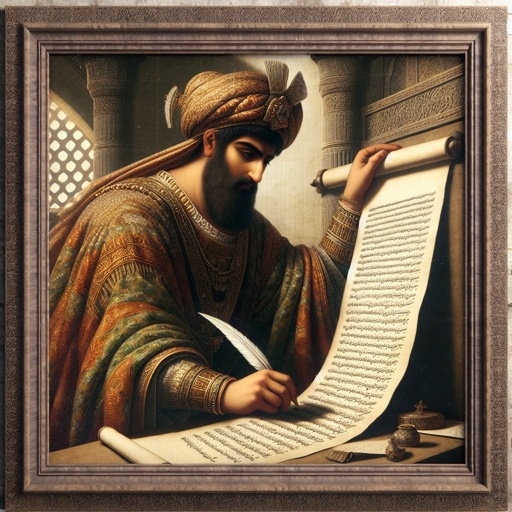
Daniel 6:9 - "Wherefore king Darius signed the writing and the decree."

Daniel 5:30 - "¶ In that night was Belshazzar the king of the Chaldeans slain."

Daniel 5:25 - "¶ And this is the writing that was written, MENE, MENE, TEKEL, UPHARSIN."

Daniel 5:29 - "Then commanded Belshazzar, and they clothed Daniel with scarlet, and put a chain of gold about his neck, and made a proclamation concerning him, that he should be the third ruler in the kingdom."

Daniel 5:24 - "Then was the part of the hand sent from him; and this writing was written."