The Towering Tree: A Lesson in Humility and Sovereignty
"The tree that thou sawest, which grew, and was strong, whose height reached unto the heaven, and the sight thereof to all the earth;" - Daniel 4:20
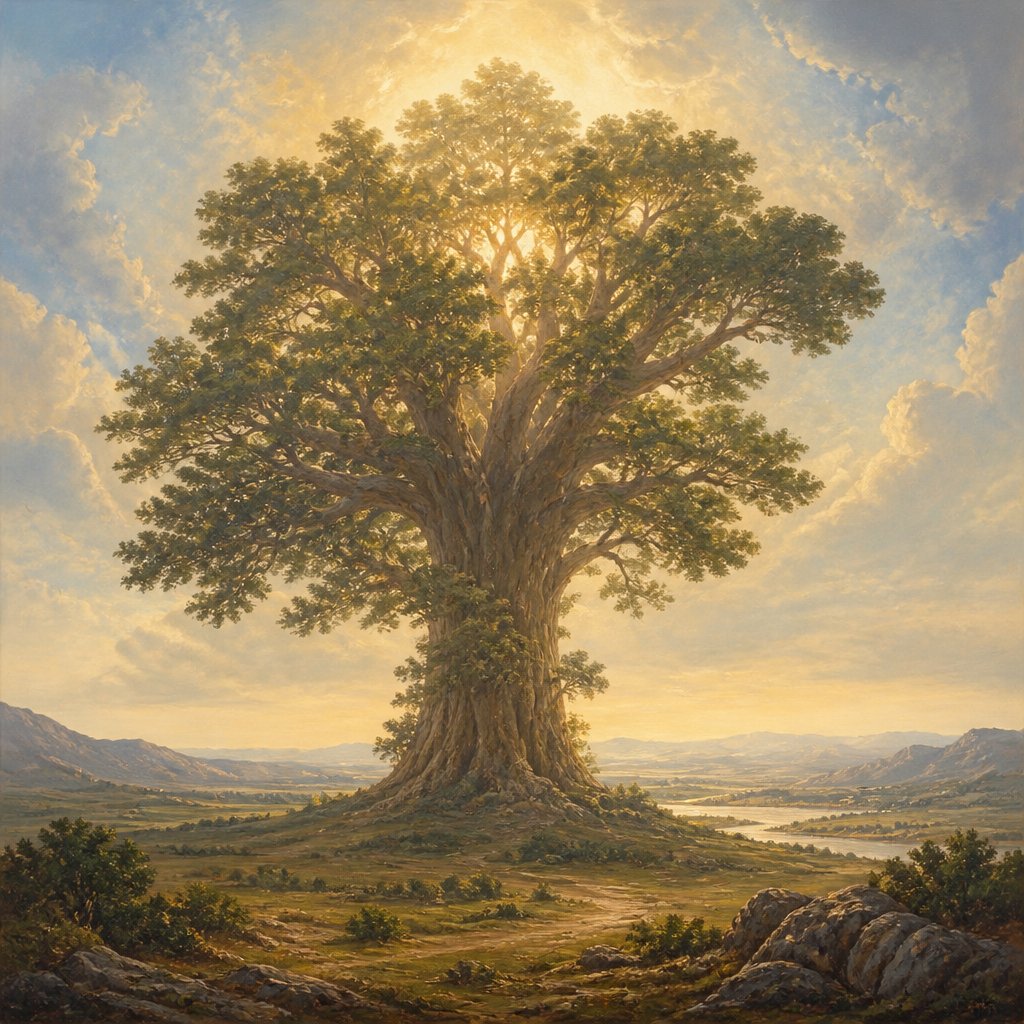
In the captivating narrative of Daniel chapter 4, we encounter Nebuchadnezzar, the powerful king of Babylon, who is presented with a perplexing dream. Among the vivid imagery in this dream, a magnificent tree stands tall, described in verse 20 (KJV): "The tree that thou sawest, which grew, and was strong, whose height reached unto the heaven, and the sight thereof to all the earth." This tree symbolizes not only the greatness of Nebuchadnezzar's kingdom but also offers profound lessons about human pride and the sovereign authority of God.
Firstly, let’s delve into the imagery of the "towering tree" itself. It portrays grandeur, strength, and visibility to all. This tree, whose height "reached unto heaven," signifies the lofty aspirations of humanity when they overlook their dependence on God. In our lives, we may cultivate ambitions that soar high, seeking recognition and approval from those around us. Work successes, wealth, or even our capabilities might give rise to a sense of superiority that can cloud our vision. Like Nebuchadnezzar, who saw his kingdom as an indomitable force, we too can become blinded by our achievements.
However, the strength of the tree, majestic as it may appear, offers a stark warning. The ensuing narrative reveals that this tree is also marked for destruction—its greatness leads to a fall. The interpretation given to Nebuchadnezzar explains that he, best known for his accomplishments, will lose his grasp on the very things that elevated him. The fallacy of pride is crucial here; history is littered with accounts of those who have risen to great heights only to be brought back down by the very sins of arrogance and self-reliance. In contrast, 1 Peter 5:6 reminds us to "Humble yourselves therefore under the mighty hand of God, that he may exalt you in due time."
What, then, is the posture we must adopt in light of this lesson from the towering tree?
The answer lies in the heart of humility. God resists the proud but gives grace to the humble (James 4:6). The towering tree represents not only human power but the fleeting nature of it. Ultimately, God, the gardener of our lives, desires to shape us, reminding us that our strength and status do not arise from our cultivation alone, but through His sovereign hand. Consider this: when we acknowledge the sovereignty of God in our lives, we create room for His grace to operate. It’s in our recognition of weakness that we tap into His strength, a profound paradox that runs throughout scripture.
Furthermore, the tree not only provides context of power but also of care and provisioning. The dream describes that "the leaves thereof were fair, and the fruit thereof much, and in it was meat for all." This indicates that Nebuchadnezzar's rule had also provided for many, yet it stands as a reminder that with great power comes great responsibility. As believers, we are called to lead with humility, reflecting the light of Christ, feeding those sunk in darkness with the fruit of our faith—love, patience, kindness, and truth.
In conclusion, the towering tree in Nebuchadnezzar’s dream teaches us about the precariousness of pride and the timeless truth of divine sovereignty. Let us remember that our worth and our strength are inextricably linked to our relationship with God. Like Nebuchadnezzar, we may look around and think we have made it on our own, but in doing so, we risk (and often do) falling from the heights we have reached. Shall we choose to learn from the towering tree, finding purpose in humility, acknowledging His sovereignty, and serving those around us? May we strive to grow not as towering trees that overshadow, but as fruitful branches that nourish and sustain one another.
Want to reflect more on Daniel 4:20?
Continue your spiritual journey with Bible Chat — an AI-powered tool for exploring God's Word through conversation. Ask questions, discover connections, and deepen your understanding.
Get Our Apps


Daniel 4:20 Artwork

Daniel 4:20 - "The tree that thou sawest, which grew, and was strong, whose height reached unto the heaven, and the sight thereof to all the earth;"
"The tree that thou sawest, which grew, and was strong, whose height reached unto the heaven, and the sight thereof to all the earth;" - Daniel 4:20

Daniel 2:20 - "Daniel answered and said, Blessed be the name of God for ever and ever: for wisdom and might are his:"

Daniel 6:20 - "And when he came to the den, he cried with a lamentable voice unto Daniel: and the king spake and said to Daniel, O Daniel, servant of the living God, is thy God, whom thou servest continually, able to deliver thee from the lions?"

Daniel 4:15

Daniel 7:4

Daniel 5:4

Daniel 6:3-4 - "Daniel 6:3-4: Then this Daniel was preferred above the presidents and princes, because an excellent spirit was in him; and the king thought to set him over the whole realm. So the presidents and princes sought to find occasion against Daniel concerning the kingdom; but they could find none occasion nor fault; forasmuch as he was faithful, neither was there any error or fault found in him."

Daniel 4:4 - "¶ I Nebuchadnezzar was at rest in mine house, and flourishing in my palace:"

Daniel 4:13-14

Daniel 4:10-14

Daniel 4:13-14

Daniel 4:1-3

"Daniel answered and said, Blessed be the name of God for ever and ever: for wisdom and might are his:" - Daniel 2:20

Daniel 8:20 - "The ram which thou sawest having two horns are the kings of Media and Persia."

Daniel 12:4 - "But thou, O Daniel, shut up the words, and seal the book, even to the time of the end: many shall run to and fro, and knowledge shall be increased."

Daniel 4:28 - "¶ All this came upon the king Nebuchadnezzar."

Daniel 4:8 - "¶ But at the last Daniel came in before me, whose name was Belteshazzar, according to the name of my god, and in whom is the spirit of the holy gods: and before him I told the dream, saying,"

Daniel 4:29 - "At the end of twelve months he walked in the palace of the kingdom of Babylon."

Daniel 6:4 - "¶ Then the presidents and princes sought to find occasion against Daniel concerning the kingdom; but they could find none occasion nor fault; forasmuch as he was faithful, neither was there any error or fault found in him."

Daniel 3:4 - "Then an herald cried aloud, To you it is commanded, O people, nations, and languages,"

Daniel 4:10-12 – Nebuchadnezzar’s dream of a tree.

Daniel 5:4 - "They drank wine, and praised the gods of gold, and of silver, of brass, of iron, of wood, and of stone."
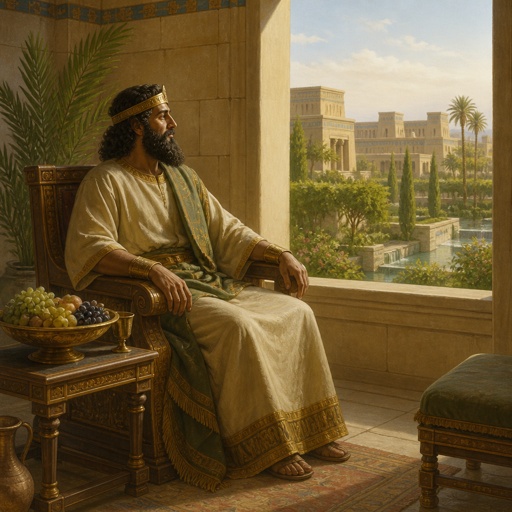
"¶ I Nebuchadnezzar was at rest in mine house, and flourishing in my palace:" - Daniel 4:4

Daniel 10:4 - "And in the four and twentieth day of the first month, as I was by the side of the great river, which is Hiddekel;"

Daniel 3:20 - "And he commanded the most mighty men that were in his army to bind Shadrach, Meshach, and Abed-nego, and to cast them into the burning fiery furnace."

"And when he came to the den, he cried with a lamentable voice unto Daniel: and the king spake and said to Daniel, O Daniel, servant of the living God, is thy God, whom thou servest continually, able to deliver thee from the lions?" - Daniel 6:20

"¶ All this came upon the king Nebuchadnezzar." - Daniel 4:28

Daniel 4:24 - "This is the interpretation, O king, and this is the decree of the most High, which is come upon my lord the king:"

Daniel 4:2 - "I thought it good to shew the signs and wonders that the high God hath wrought toward me."