The Stump of Restoration: Hope Beyond Judgment
"Nevertheless leave the stump of his roots in the earth, even with a band of iron and brass, in the tender grass of the field; and let it be wet with the dew of heaven, and let his portion be with the beasts in the grass of the earth:" - Daniel 4:15
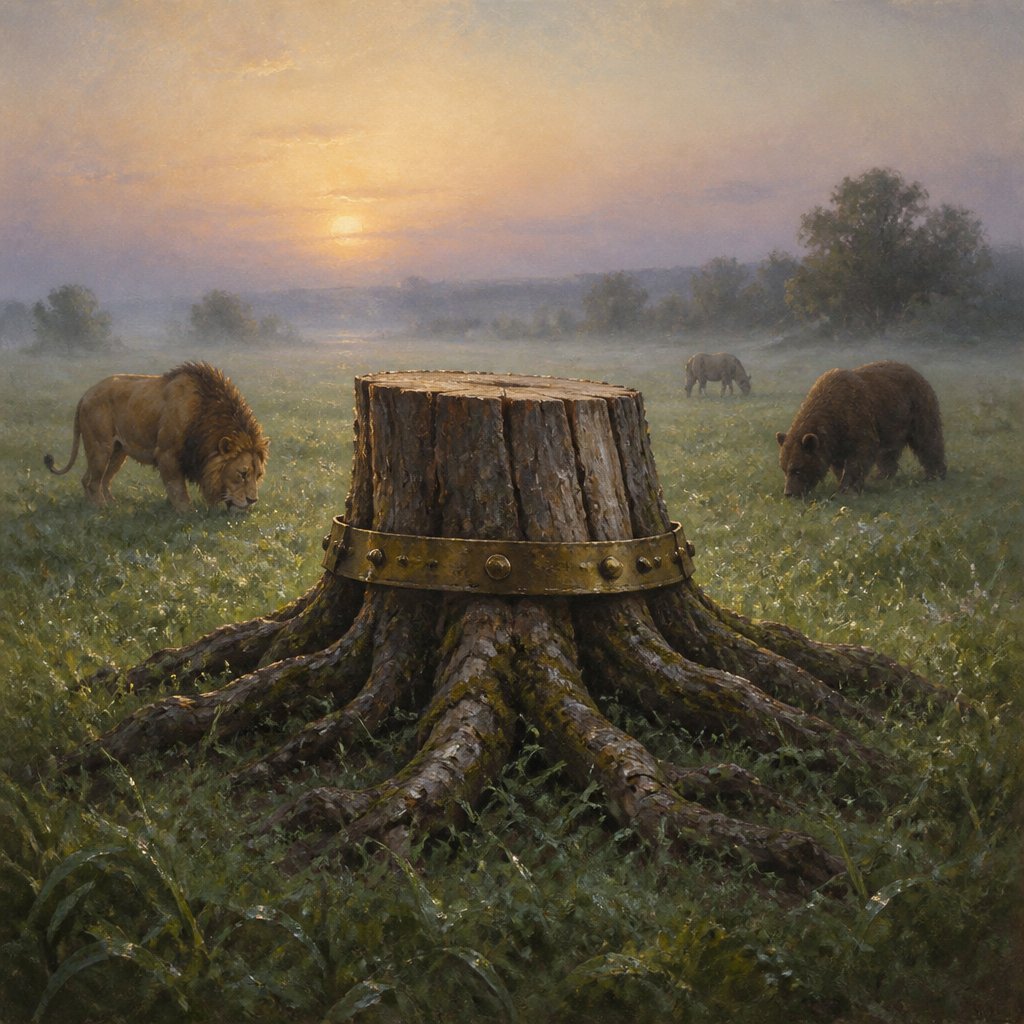
In the fourth chapter of the Book of Daniel, we encounter a captivating narrative that illustrates God's sovereignty, His justice, and His mercy. Verse 15 states, "Nevertheless leave the stump of his roots in the earth, even with a band of iron and brass, in the tender grass of the field; and let it be wet with the dew of heaven, and let his portion be with the beasts in the grass of the earth." This verse, attributed to God's prophetic revelation to King Nebuchadnezzar through Daniel, carries profound theological implications, particularly regarding judgment, mercy, and restoration.
To understand the significance of the stump, we must first explore the context of Nebuchadnezzar's dream. The king had witnessed a majestic tree that symbolized his own reign and glory. However, the tree was cut down as a divine judgment for his pride and arrogance. He was warned that he would be driven away from humanity to live like a beast until he acknowledged that the Most High rules over the kingdoms of men (Daniel 4:17). The destruction of the tree signifies the removal of his authority, power, and pride. Yet, in verse 15, there is a critical shift: amidst this judgment, a remnant of hope remains.
The stump of the tree represents God's preservation of Nebuchadnezzar's kingdom, signifying that while judgment is severe, it is not absolute. The fact that the stump is left means there is life beneath the surface, a potential for restoration. God's judgment is often seen as harsh and unyielding, but it is essential to recognize that He always leaves room for grace and rebirth. In this instance, the stump serves as a promise—a reminder that God does not delight in the destruction of His creation, but rather desires repentance and redemption.
The imagery of the stump being bound with bands of iron and brass signifies protection, a restraining presence that prevents total destruction. This duality showcases God's nature; He is both just and merciful. He does not abandon the sinner to their fate but uses circumstances to guide them toward humility and recognition of His authority. The iron and brass bands may illustrate how God holds the consequences of our actions in place, ensuring that while we face trials, we are not beyond repair.
The statement, "let it be wet with the dew of heaven," further conveys a promise of sustenance and renewal. Dew is gentle, nourishing, and often signifies God's grace. It reveals that even in our lowest moments—like Nebuchadnezzar's descent into a beast-like existence—there is a divine provision that nurtures the soul. God desires to water the roots of our faith even when we feel desolate and far from Him. His dew falls gently upon us, coaxing us back to life and inviting us to regrow in our understanding of His character.
As we delve deeper, we realize that this narrative speaks not only to the individual heart of Nebuchadnezzar but to us as a corporate body. In our own lives, we may encounter moments where judgment feels imminent due to our pride, our choices, or our turning away from God. Yet, like the stump left in the earth, we are reminded that our journey does not have to end in despair. Restoration is always within reach, should we choose to repent.
Thus, we are called to reflect upon our lives. Are there areas where we have allowed pride to overshadow humility? Where have we felt cut down, desolate, and without hope? God assures us that, just as Nebuchadnezzar eventually recognized, the Most High reigns over every valley and every mountain in our lives. He will grace us with dew, helping our faith to sprout once more.
Let us cling to the promise found in Daniel 4:15. May we be encouraged to seek the Lord’s nurturing hand, allowing Him to restore us wholly, teaching us to lean into vulnerability rather than pride, knowing that even when we are brought low, we can rise anew with His grace. Remember, the stump may be a sign of judgment, but it is also the starting point for miraculous restoration.
Want to reflect more on Daniel 4:15?
Continue your spiritual journey with Bible Chat — an AI-powered tool for exploring God's Word through conversation. Ask questions, discover connections, and deepen your understanding.
Get Our Apps


Daniel 4:15 Artwork

Daniel 4:15

Daniel 4:15 - "Nevertheless leave the stump of his roots in the earth, even with a band of iron and brass, in the tender grass of the field; and let it be wet with the dew of heaven, and let his portion be with the beasts in the grass of the earth:"
"Nevertheless leave the stump of his roots in the earth, even with a band of iron and brass, in the tender grass of the field; and let it be wet with the dew of heaven, and let his portion be with the beasts in the grass of the earth:" - Daniel 4:15

Ephesians 4:1-5

Daniel 7:15 - "¶ I Daniel was grieved in my spirit in the midst of my body, and the visions of my head troubled me."

Daniel 2:15 - "He answered and said to Arioch the king's captain, Why is the decree so hasty from the king? Then Arioch made the thing known to Daniel."

Daniel 8:15 - "¶ And it came to pass, when I, even I Daniel, had seen the vision, and sought for the meaning, then, behold, there stood before me as the appearance of a man."

Daniel 5:4

Daniel 7:4

Daniel 6:3-4 - "Daniel 6:3-4: Then this Daniel was preferred above the presidents and princes, because an excellent spirit was in him; and the king thought to set him over the whole realm. So the presidents and princes sought to find occasion against Daniel concerning the kingdom; but they could find none occasion nor fault; forasmuch as he was faithful, neither was there any error or fault found in him."

Daniel 4:4 - "¶ I Nebuchadnezzar was at rest in mine house, and flourishing in my palace:"

Daniel 4:13-14

Daniel 4:10-14

Daniel 4:13-14

Daniel 4:1-3

Daniel 12:4 - "But thou, O Daniel, shut up the words, and seal the book, even to the time of the end: many shall run to and fro, and knowledge shall be increased."

Daniel 4:28 - "¶ All this came upon the king Nebuchadnezzar."

Daniel 4:8 - "¶ But at the last Daniel came in before me, whose name was Belteshazzar, according to the name of my god, and in whom is the spirit of the holy gods: and before him I told the dream, saying,"

Daniel 4:29 - "At the end of twelve months he walked in the palace of the kingdom of Babylon."

"¶ I Daniel was grieved in my spirit in the midst of my body, and the visions of my head troubled me." - Daniel 7:15

Daniel 6:4 - "¶ Then the presidents and princes sought to find occasion against Daniel concerning the kingdom; but they could find none occasion nor fault; forasmuch as he was faithful, neither was there any error or fault found in him."

Daniel 3:4 - "Then an herald cried aloud, To you it is commanded, O people, nations, and languages,"

Daniel 4:10-12 – Nebuchadnezzar’s dream of a tree.

Daniel 5:4 - "They drank wine, and praised the gods of gold, and of silver, of brass, of iron, of wood, and of stone."
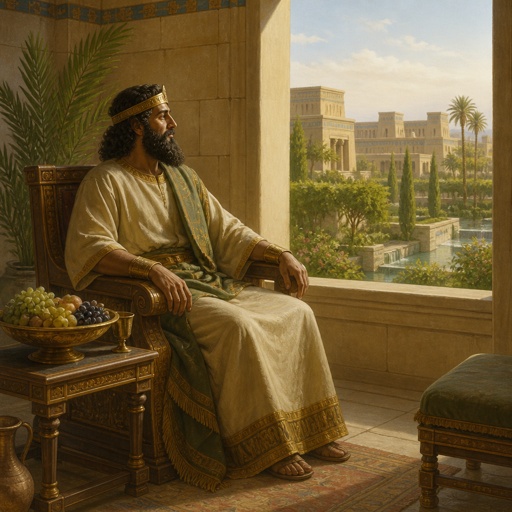
"¶ I Nebuchadnezzar was at rest in mine house, and flourishing in my palace:" - Daniel 4:4

Daniel 10:4 - "And in the four and twentieth day of the first month, as I was by the side of the great river, which is Hiddekel;"

Daniel 10:15 - "And when he had spoken such words unto me, I set my face toward the ground, and I became dumb."

"¶ All this came upon the king Nebuchadnezzar." - Daniel 4:28

Daniel 4:24 - "This is the interpretation, O king, and this is the decree of the most High, which is come upon my lord the king:"

Daniel 1:15 - "And at the end of ten days their countenances appeared fairer and fatter in flesh than all the children which did eat the portion of the king's meat."