Strength and Fragility: A Reflection on Daniel 2:42
"And as the toes of the feet were part of iron, and part of clay, so the kingdom shall be partly strong, and partly broken." - Daniel 2:42

The Book of Daniel is a profound narrative that not only chronicles the life of a young exile in Babylon but also serves as a prophetic testament of God's sovereignty over human kingdoms. Within its pages lies a vision that King Nebuchadnezzar had, which Daniel interpreted to reveal future empires and ultimately the eternal kingdom of God. One particularly striking verse in this narrative captures a deep spiritual truth: "And as the toes of the feet were part of iron, and part of clay, so the kingdom shall be partly strong, and partly broken" (Daniel 2:42, KJV).
As we delve into this verse, we must appreciate the imagery it presents. The statue Nebuchadnezzar dreamt of was composed of various materials, each representing different kingdoms—the head of gold representing Babylon, the chest of silver representing Media-Persia, the belly of brass representing Greece, and the legs of iron representing Rome. However, it is at the toes of the feet, composed of iron mixed with clay, where we find our focus. Iron represents strength and durability, while clay signifies fragility and weakness. The juxtaposition of these materials reveals a complex nature of the final kingdoms—their mixed strength and inherent instability.
In our own lives and in the kingdoms of this world, we encounter similar realities. We find systems and structures that appear invincible—societies, governments, and institutions—but beneath the surface lies an unsettling mixture of resilience and vulnerability. Just as the toes of the statue were not wholly made of iron or clay but a mixture, so too is our world partially strong and partially broken. This reflection forces us to confront our own circumstances: Are we standing on the solid ground of faith, or are we relying on the frail structures of human effort? In what areas of our lives do we exhibit strength, and in what ways are we merely holding on by the fragile clay of our own making?
The mixture of materials in the statue serves as a metaphor for the human condition. We all possess strengths and weaknesses. The strongest person has vulnerabilities; the mightiest nations have their weaknesses. We may experience periods where we feel like iron, standing firmly in our faith, hoping and trusting in God’s power. Yet, there are days when we feel like clay—cracked and fragile, susceptible to the weight of life’s trials.
Daniel’s prophecy also serves as a reminder that despite the apparent strength of human empires, they are ultimately destined for downfall. The kingdoms represented in the dream, while powerful, are temporary. They are subject to the divine will of God, reminding us that no matter how fortified our plans might seem, they can crumble. This brings us comfort and challenge: comfort in that we do not place our hope in human constructs but in the eternal kingdom of God, which will never falter or fade.
The call, then, for believers today is profound. We are encouraged to build our lives upon the Rock, Jesus Christ, not the shifting sands of worldly assurance. In times of uncertainty, we must remind ourselves to lean not on our own understanding, still, in all our ways acknowledge Him (Proverbs 3:5-6, KJV). When we recognize where we stand—being partly strong yet partly broken—we can offer our fragmented selves to God, who is more than capable of mending and strengthening us.
As we reflect on Daniel 2:42, let us ask ourselves: What areas in our lives reflect the strength of iron, and what areas are we clinging to that resemble the fragile clay? Can we turn over our vulnerabilities to Christ, trusting He uses even our cracks to showcase His glory? May we find strength in our weaknesses, for it is through our brokenness that His grace and power are perfected (2 Corinthians 12:9, KJV).
In conclusion, understand that while we are partly strong and partly broken, in Christ, we are made whole. Let us lean into His strength, entrusting our weaknesses to Him, confident in the hope of His everlasting kingdom.
Want to reflect more on Daniel 2:42?
Continue your spiritual journey with Bible Chat — an AI-powered tool for exploring God's Word through conversation. Ask questions, discover connections, and deepen your understanding.
Get Our Apps


Daniel 2:42 Artwork

Daniel 2:42 - "And as the toes of the feet were part of iron, and part of clay, so the kingdom shall be partly strong, and partly broken."

"And as the toes of the feet were part of iron, and part of clay, so the kingdom shall be partly strong, and partly broken." - Daniel 2:42

Daniel 11:42 - "He shall stretch forth his hand also upon the countries: and the land of Egypt shall not escape."
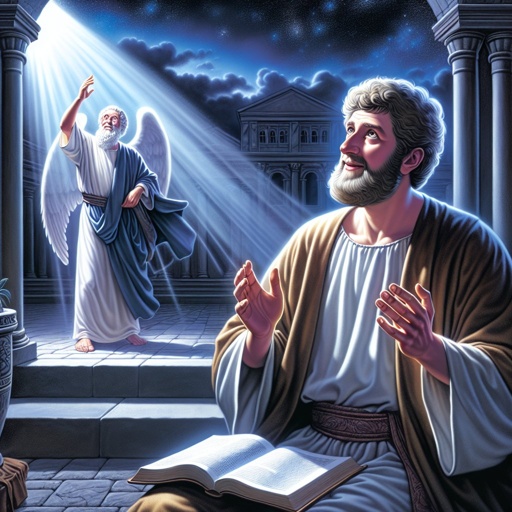
Daniel 2:19 - "¶ Then was the secret revealed unto Daniel in a night vision. Then Daniel blessed the God of heaven."

Daniel 10:2 - "In those days I Daniel was mourning three full weeks."

Daniel 2:49 - "Then Daniel requested of the king, and he set Shadrach, Meshach, and Abed-nego, over the affairs of the province of Babylon: but Daniel sat in the gate of the king."

"He shall stretch forth his hand also upon the countries: and the land of Egypt shall not escape." - Daniel 11:42

Daniel 2:20 - "Daniel answered and said, Blessed be the name of God for ever and ever: for wisdom and might are his:"

Daniel 2:17 - "Then Daniel went to his house, and made the thing known to Hananiah, Mishael, and Azariah, his companions:"

Daniel 2:13 - "And the decree went forth that the wise men should be slain; and they sought Daniel and his fellows to be slain."

Genesis 42:1-2

Acts 2:41-42

Acts 2:41-42

Acts 2:41-42

Acts 2:41-42

Acts 2:41-42

Acts 2:41-42

Acts 2:41-42

Acts 2:41-42

Acts 2:41-42

Acts 2:41-42

Acts 2:41-42

Acts 2:41-42

Acts 2:41-42

Acts 2:41-42

Acts 2:41-42

Acts 2:41-42

Acts 2:41-42

Acts 2:41-42

Acts 2:41-42