The Silent Sacrifice: Understanding Christ’s Submission
"The place of the scripture which he read was this, He was led as a sheep to the slaughter; and like a lamb dumb before his shearer, so opened he not his mouth:" - Acts 8:32
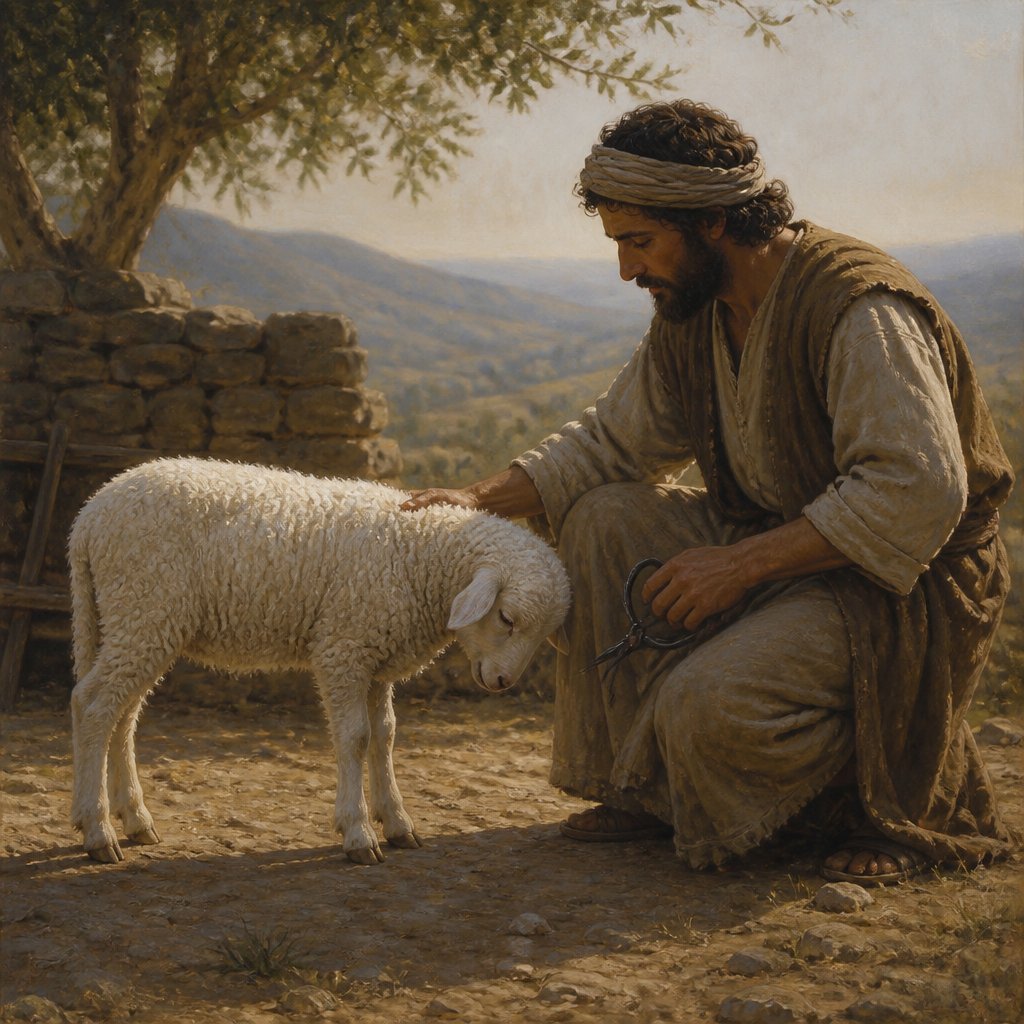
When reflecting upon Acts 8:32, we encounter a profound moment of divine providence and revelation: "The place of the scripture which he read was this, He was led as a sheep to the slaughter; and like a lamb dumb before his shearer, so opened he not his mouth." In this passage, we witness a pivotal moment in the ministry of Philip as he encounters the Ethiopian eunuch. This verse not only illustrates the fulfillment of prophecy in Christ's suffering but invites us to contemplate the deeper implications of Christ's silence and submission in the face of adversity.
The imagery presented in this verse serves as a striking contrast to our often chaotic and noisy world. The metaphor of the lamb led to slaughter evokes helplessness and submission, reflecting a profound act of obedience and trust. Here, we find a parallel to the suffering of Jesus Christ during His trial and crucifixion—a silent Lamb, innocent yet condemned, choosing to bear the weight of humanity's sin without protest. This silence is not an absence of opinion or power; rather, it is filled with purpose—a willingness to fulfill the divine plan of salvation despite the horror and injustice surrounding Him.
In reflecting on the significance of Christ's silence, we are reminded of Isaiah 53:7, which prophetically describes Him: "He was oppressed, and he was afflicted, yet he opened not his mouth: he is brought as a lamb to the slaughter, and as a sheep before her shearers is dumb, so he openeth not his mouth." The depth of this submission becomes a model for us in our walk of faith. In moments of trial, when faced with unfairness or persecution, we tend to react out of frustration, voicing our grievances, and seeking to defend ourselves. Yet, Christ’s response encourages us to practice restraint, to reflect on the trust He exhibited, and to find strength in surrendering our will to God's greater purpose.
The act of waiting quietly allows space not only for God’s timing but sustains us in troubled waters. James instructs us in James 1:19, "Wherefore, my beloved brethren, let every man be swift to hear, slow to speak, slow to wrath." This thoughtful approach to speaking and responding emanates from our understanding of who God is and how He works in our lives. When we trust in God, we can embrace the silence of surrender, knowing that He is at work even in our unvoiced struggles.
Moreover, Christ's silent submission was a powerful testimony to seeds of faith planted around Him, even in the most unjust circumstances. How many souls were touched by His quiet resolve? How many were moved to reconsider the depth of God’s love as they saw Christ enduring suffering without recrimination? Let us use this example as a catalyst in our lives; our reactions amid trials can serve as a testimony to others. When we respond with grace instead of outrage, we reflect Christ’s character, influencing those around us and drawing them nearer to His love.
Additionally, we are called to be aware of the purpose behind our suffering. Romans 8:28 assures us that "all things work together for good to them that love God." Even when we feel led to a slaughter, we must trust that God has a divine plan at work—a purpose beyond our comprehension. As we ponder over Acts 8:32, let us be challenged to not only embrace the wisdom of Christ's quietness but also to actively seek to uncover the good that emerges from our valleys.
In conclusion, Acts 8:32 presents us with a transformative depiction of Christ as the Lamb. May we learn from His silence, wielding it as a strength that brings forth powerful testimonies of faith. As we go forth into the world, let us carry with us the lessons of His sacrifice—our faith in God, our ability to forgive, and our role in others’ journeys towards salvation. Like the Ethiopian eunuch, who was led to the truth, may our lives reflect the profound narrative of Christ’s early days as He walked the path of obedience for the sake of the world.
Want to reflect more on Acts 8:32?
Continue your spiritual journey with Bible Chat — an AI-powered tool for exploring God's Word through conversation. Ask questions, discover connections, and deepen your understanding.
Get Our Apps


Acts 8:32 Artwork

Acts 8:32 - "The place of the scripture which he read was this, He was led as a sheep to the slaughter; and like a lamb dumb before his shearer, so opened he not his mouth:"
"The place of the scripture which he read was this, He was led as a sheep to the slaughter; and like a lamb dumb before his shearer, so opened he not his mouth:" - Acts 8:32

Matthew 8:32

Matthew 8:32

Matthew 8:32

2 Chronicles 32:32 - "Now the rest of the acts of Hezekiah, and his goodness, behold, they are written in the vision of Isaiah the prophet, the son of Amoz, and in the book of the kings of Judah and Israel."

Acts 23:32 - "On the morrow they left the horsemen to go with him, and returned to the castle:"

Psalm 32:8

Psalm 32:8

Psalm 32:8

Psalm 32:8

Psalm 32:8

Psalm 32:8

Acts 27:32 - "Then the soldiers cut off the ropes of the boat, and let her fall off."

Acts 2:32 - "This Jesus hath God raised up, whereof we all are witnesses."

Acts 16:32 - "And they spake unto him the word of the Lord, and to all that were in his house."

Acts 8:8 - "And there was great joy in that city."

Acts 15:32 - "And Judas and Silas, being prophets also themselves, exhorted the brethren with many words, and confirmed them."

Acts 13:32 - "And we declare unto you glad tidings, how that the promise which was made unto the fathers,"

Acts 17:32 - "¶ And when they heard of the resurrection of the dead, some mocked: and others said, We will hear thee again of this matter."

Ezra 8:32 - "And we came to Jerusalem, and abode there three days."

"And there was great joy in that city." - Acts 8:8

Acts 1:8

Acts 5:32 - "And we are his witnesses of these things; and so is also the Holy Ghost, whom God hath given to them that obey him."

Acts 26:32 - "Then said Agrippa unto Festus, This man might have been set at liberty, if he had not appealed unto Caesar."

Acts 9:32 - "¶ And it came to pass, as Peter passed throughout all quarters, he came down also to the saints which dwelt at Lydda."

Acts 8:33

Job 32:8 - "But there is a spirit in man: and the inspiration of the Almighty giveth them understanding."

The Plague of Flies - Exodus 8:20-32.

The Plague of Flies - Exodus 8:20-32