The Way of Worship: A Journey in Faith
"But this I confess unto thee, that after the way which they call heresy, so worship I the God of my fathers, believing all things which are written in the law and in the prophets:" - Acts 24:14
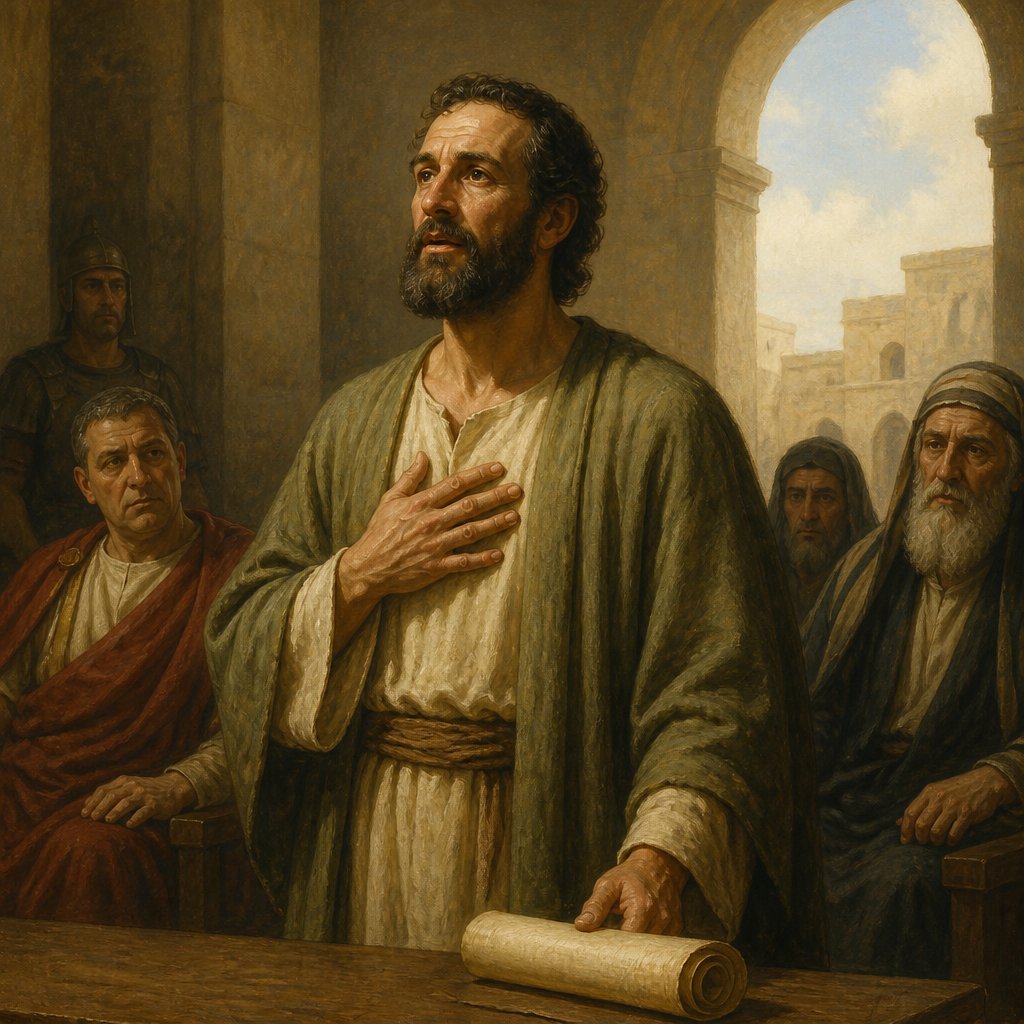
In Acts 24:14, the Apostle Paul stood before Felix, the Roman governor, to defend his faith. He proclaimed, "But this I confess unto thee, that after the way which they call heresy, so worship I the God of my fathers, believing all things which are written in the law and in the prophets." This verse captures a profound essence of faith and conviction, revealing how adherents to God's path often encounter misunderstanding and opposition.
The term "heresy" carries a heavy weight. It communicates not just disagreement but a fundamental misalignment with accepted beliefs. For Paul, who was deeply rooted in Jewish tradition, the life and teachings of Jesus Christ signified the fulfillment of the law and the prophets. Thus, his method of worship felt revolutionary to the Jewish leaders of his time—an expression of faith that challenged the very core of their religious understanding.
Paul’s acknowledgment of the title "heresy" is significant. It shows that true worship—grounded firmly in faith and relationship with God—may often be perceived as unconventional. Today, many believers still experience this tension between traditional expectations and the call to a dynamic, personal relationship with God. What should we take away from this verse?
Firstly, as we reflect on Paul's statement, we are directed to consider the essence of true worship. The phrase "the way which they call heresy" suggests that worship is not confined to rigid structures or accepted dogmas. Instead, worship involves a heartfelt connection with God, recognizing Him as our Creator and Sustainer. The God of our fathers—who reaches back through generations—is not just a remnant of history but a living presence guiding us toward righteousness.
Secondly, Paul embodies the courage required in faith. His public confession to Felix about what he believes reveals a person unashamed of the gospel message. In our own lives, are we willing to stand up for our beliefs when faced with skepticism or hostility? The Apostle Paul understood the transformative power of the gospel, which propelled him to evangelize, despite the consequences. Being a follower of Christ sometimes means bucking societal norms and standing firm in our convictions. How might we express this in our lives?
Furthermore, Paul affirmed his belief in "all things which are written in the law and in the prophets." This statement reminds us of the importance of scripture in shaping our understanding of God’s character and His will for our lives. The Old Testament law and prophetic writings were foundational to Paul's understanding and served as solid ground for his convictions. We must be people of the Word, allowing Scripture to inform our actions, beliefs, and practices. Our lifelines to faith through difficult seasons lie in the truths laid out for us in the Bible.
In living out our faith, we may encounter people who misunderstand or even reject our beliefs, labeling them as "heresy." However, like Paul, we should respond with grace and truth, confident in our hope. Reflecting God's love and understanding that some will not accept our faith necessitates deep dependence on the Holy Spirit. It requires us to pray continually for both courage and compassion.
Ultimately, Acts 24:14 challenges us to explore how we, too, worship the God of our fathers today. Are we intertwining our lives with the teachings of Jesus, the fulfillment of the law, and the message of the prophets? Let us worship with authenticity, guided by scripture, emboldened by the Holy Spirit, and driven by love for those who may yet call our faith heretical.
In conclusion, as we go forth from this reflection, I encourage you to confess your faith boldly, embolden your heart with the scriptures, and embrace the path that God has set for you, even if it is misunderstood by those around you. For this is the way of worship—a journey of faith that elevates, transforms, and ultimately leads us to the heart of God.
Want to reflect more on Acts 24:14?
Continue your spiritual journey with Bible Chat — an AI-powered tool for exploring God's Word through conversation. Ask questions, discover connections, and deepen your understanding.
Get Our Apps


Acts 24:14 Artwork

Acts 24:14 - "But this I confess unto thee, that after the way which they call heresy, so worship I the God of my fathers, believing all things which are written in the law and in the prophets:"
"But this I confess unto thee, that after the way which they call heresy, so worship I the God of my fathers, believing all things which are written in the law and in the prophets:" - Acts 24:14

Acts 14:24 - "And after they had passed throughout Pisidia, they came to Pamphylia."

"And after they had passed throughout Pisidia, they came to Pamphylia." - Acts 14:24

Acts 12:24 - "¶ But the word of God grew and multiplied."

Acts 14:17

Acts 14:7 - "And there they preached the gospel."

Acts 24:9 - "And the Jews also assented, saying that these things were so."

Genesis 24-14

Acts 24:13 - "Neither can they prove the things whereof they now accuse me."

Acts 28:24 - "And some believed the things which were spoken, and some believed not."

Acts 24:24 - "And after certain days, when Felix came with his wife Drusilla, which was a Jewess, he sent for Paul, and heard him concerning the faith in Christ."

Acts 14:28 - "And there they abode long time with the disciples."

Acts 14:14 - "Which when the apostles, Barnabas and Paul, heard of, they rent their clothes, and ran in among the people, crying out,"

"¶ But the word of God grew and multiplied." - Acts 12:24

Acts 9:24 - "But their laying await was known of Saul. And they watched the gates day and night to kill him."

Acts 24:3 - "We accept it always, and in all places, most noble Felix, with all thankfulness."

"And there they preached the gospel." - Acts 14:7

Exodus 7:14-24

Acts 24:17 - "Now after many years I came to bring alms to my nation, and offerings."

Acts 23:24 - "And provide them beasts, that they may set Paul on, and bring him safe unto Felix the governor."

Acts 16:24 - "Who, having received such a charge, thrust them into the inner prison, and made their feet fast in the stocks."

Acts 11:24 - "For he was a good man, and full of the Holy Ghost and of faith: and much people was added unto the Lord."

Acts 24:19 - "Who ought to have been here before thee, and object, if they had ought against me."

Acts 18:24 - "¶ And a certain Jew named Apollos, born at Alexandria, an eloquent man, and mighty in the scriptures, came to Ephesus."

1 Chronicles 24:14 - "The fifteenth to Bilgah, the sixteenth to Immer,"

"And there were also sodomites in the land: and they did according to all the abominations of the nations which the LORD cast out before the children of Israel." - 1 Kings 14:24

2 Kings 24:5 - "¶ Now the rest of the acts of Jehoiakim, and all that he did, are they not written in the book of the chronicles of the kings of Judah?"

Acts 7:24 - "And seeing one of them suffer wrong, he defended him, and avenged him that was oppressed, and smote the Egyptian:"

Depict the events of Acts 19:14-17