The Journey of Worship: Understanding and Intentionality in Faith
"Because that thou mayest understand, that there are yet but twelve days since I went up to Jerusalem for to worship." - Acts 24:11
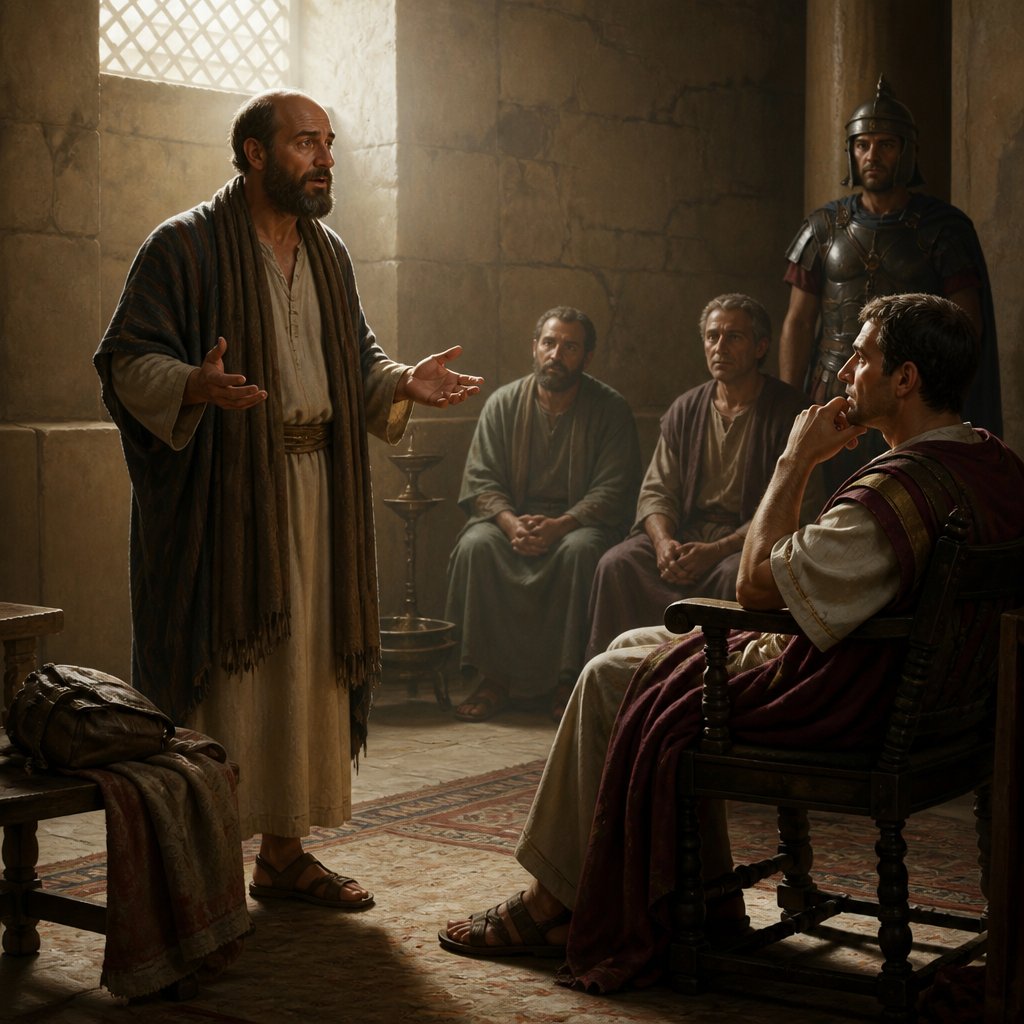
Acts 24:11 states, "Because that thou mayest understand, that there are yet but twelve days since I went up to Jerusalem for to worship." In this seemingly straightforward statement, the Apostle Paul lays a foundation for both his actions and his beliefs, urging us to reflect on the nature of our own worship and the intentions that lie behind it.
In the context of this chapter, Paul finds himself defending his faith before Felix, the governor of Judea. He speaks of his recent pilgrimage to Jerusalem, pointing out that it has only been twelve days since he set out with the intention to worship God. This time frame is crucial; it emphasizes both the urgency and sincerity of his mission. Paul’s detailed recounting of these twelve days invites us to examine how we approach our own worship and religious obligations.
At first glance, the idea of worship as merely going through the motions—gathering at specific places, participating in rituals, or observing holidays—might not seem significant. Yet, Paul teaches us that worship should arise from a deeper understanding and relationship with God. His journey to Jerusalem was not just a physical trek; it was a spiritual commitment that reflects his love and devotion.
Worship, as Paul demonstrates, is not bound by time or location, but rather it is a commitment of the heart and mind. The twelve days he mentions signify a period of anticipation, preparation, and dedication to the act of worship. Each day, Paul may have prayed fervently, prepared his heart, and sought to align his thoughts with God’s purposes. In our busy lives, we might benefit from setting aside time for reflection, recognizing that thoughtful worship takes intentional effort. How often do we treat worship as just another item on our busy to-do lists, rushing in and out without considering its profound significance?
Furthermore, Paul’s mention of Jerusalem—a central location for worship in his faith—hints at a broader significance of gathering with the body of believers. In Acts, we learn that communal worship was vital to the early church. Paul’s willingness to journey to the heart of Judaism signifies his commitment not only to worship himself but to participate in the worship of the larger community. It teaches us the importance of fellowship in our worship experience. When we gather together, we experience the fullness of God’s presence expressed through the body of Christ.
Moreover, Paul’s defense indicates that genuine worship often comes with challenges. His trip to Jerusalem was filled with risk, despite his devotion; he faced persecution and ultimately arrest. This brings us to a key realization: true worship doesn’t always lead to comfortable situations. Instead, it might lead us into challenges, refining our faith and strengthening our resolve to worship even amid trials. It asks the question: Are we willing to engage in acts of worship that may cost us? In the face of discomfort or adversity, do we still treasure the act of drawing near to God?
As we contemplate Paul’s twelve days of preparation for worship, let us also assess our own lives. May we create a space for sincere worship, filled with authenticity and intention. Let us commit to bringing our full selves into the worship experience—our brokenness, our joys, and our longings—trusting that God will receive us as we are. In doing so, we grow not only in understanding but in our relationship with Him.
Paul’s journey urges us to be intentional in our worship journey—taking steps toward understanding, amidst our own busy lives, that can often distract us from the very essence of why we seek God. It is our hope that we, too, can approach the throne of grace with the sincerity and commitment inherent in Paul’s approach. Thus, let worship not merely be an obligation, but a joyful expression stemming from a heart grateful to God for His unending love and grace.
Want to reflect more on Acts 24:11?
Continue your spiritual journey with Bible Chat — an AI-powered tool for exploring God's Word through conversation. Ask questions, discover connections, and deepen your understanding.
Get Our Apps


Acts 24:11 Artwork

Acts 24:11 - "Because that thou mayest understand, that there are yet but twelve days since I went up to Jerusalem for to worship."
"Because that thou mayest understand, that there are yet but twelve days since I went up to Jerusalem for to worship." - Acts 24:11

Acts 11:24 - "For he was a good man, and full of the Holy Ghost and of faith: and much people was added unto the Lord."
"For he was a good man, and full of the Holy Ghost and of faith: and much people was added unto the Lord." - Acts 11:24

Acts 12:24 - "¶ But the word of God grew and multiplied."

James 1:2-4

Mark 2:4

Romans 2:4

Acts 24:9 - "And the Jews also assented, saying that these things were so."

Acts 20:11

Acts 11:2

Acts 11:2

Acts 19: 11

Acts 19:11

acts 3 11

Acts 11:2

Acts 14:24 - "And after they had passed throughout Pisidia, they came to Pamphylia."

James 1: 2-4

Acts 24:13 - "Neither can they prove the things whereof they now accuse me."

Acts 28:24 - "And some believed the things which were spoken, and some believed not."

Acts 24:24 - "And after certain days, when Felix came with his wife Drusilla, which was a Jewess, he sent for Paul, and heard him concerning the faith in Christ."

1 Kings 11:41 - "¶ And the rest of the acts of Solomon, and all that he did, and his wisdom, are they not written in the book of the acts of Solomon?"

James 2:2-4

Acts 1:1-11

Genesis 24-11

Acts 1:1-11

"¶ But the word of God grew and multiplied." - Acts 12:24

Acts 9:24 - "But their laying await was known of Saul. And they watched the gates day and night to kill him."

Acts 24:3 - "We accept it always, and in all places, most noble Felix, with all thankfulness."

Acts 24:17 - "Now after many years I came to bring alms to my nation, and offerings."