The Wisdom of Paul: Standing Firm in Truth
"Then said Paul unto him, God shall smite thee, thou whited wall: for sittest thou to judge me after the law, and commandest me to be smitten contrary to the law?" - Acts 23:3
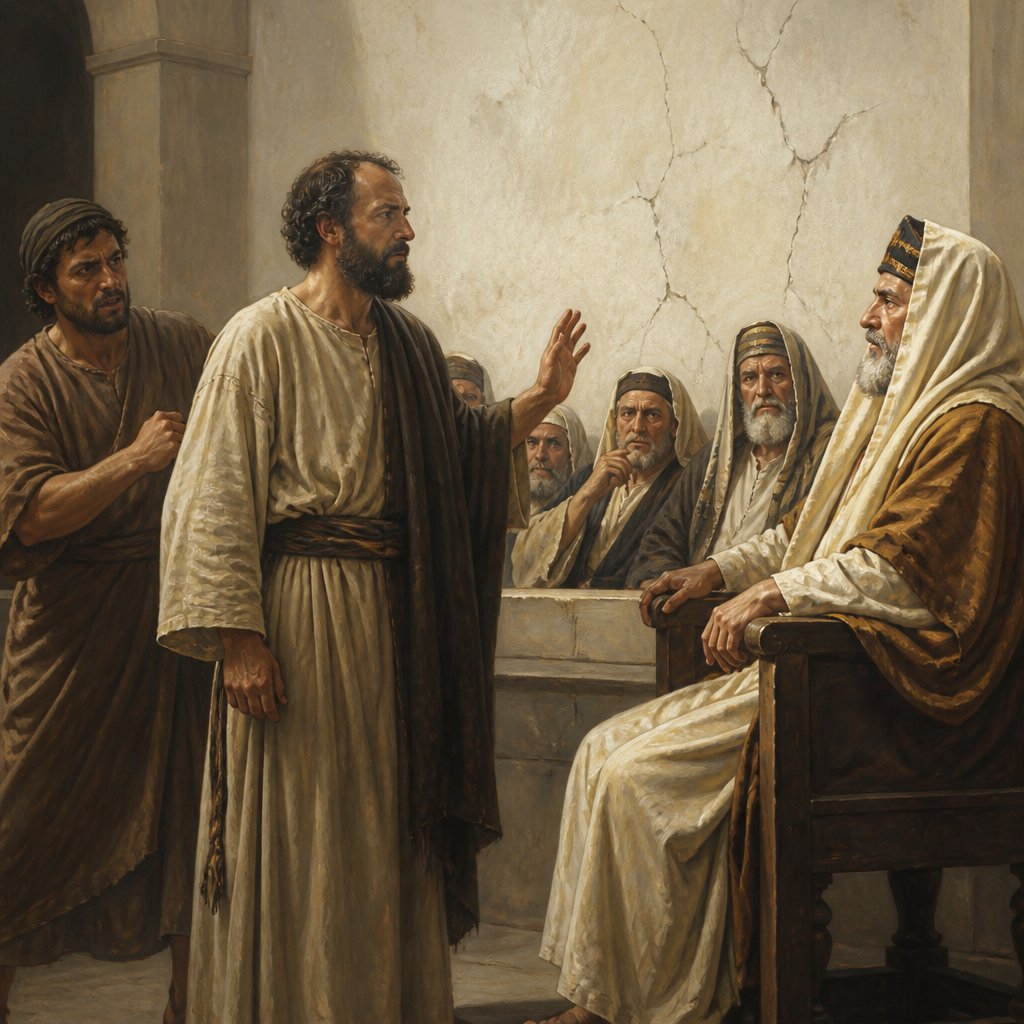
In the hustle and bustle of life, it can be easy to lose our way, to lose sight of our values, and to falter in the presence of those in authority. Yet, throughout the Bible, we see that God places His servants in positions to speak truth, even when that truth goes against the common flow. Acts 23:3 provides us with a powerful illustration of this principle as we witness the Apostle Paul standing resolutely before a council, confronting not just his accusers, but the very injustice they represent: "Then said Paul unto him, God shall smite thee, thou whited wall: for sittest thou to judge me after the law, and commandest me to be smitten contrary to the law?" (KJV).
This verse occurs in a context filled with political and religious tension, illustrating Paul’s plight as he finds himself unjustly accused. The words "God shall smite thee, thou whited wall" reveal Paul's sharp condemnation of hypocrisy. To be a 'whited wall' is to appear clean and acceptable on the outside while being rotten and corrupt on the inside. Paul was addressing a high priest who, in so many words, was standing in violation of God's law, showcasing the glaring dissonance between his position and his actions.
The essence of Paul’s rebuke is a call for integrity and adherence to the truth of God's Word, regardless of the authority of the person in question. Paul understood that in the eyes of God, all are held accountable to His standard. This highlights a critical lesson for us as believers today: We are not to allow ourselves to be silenced or intimidated by positions of authority that do not uphold godly principles. In a world that often prioritizes popularity and conformity over truth, it is imperative that we stand up for righteousness, just as Paul did.
Confrontation is uncomfortable; it requires a level of courage that many struggle with. Yet, as Christians, we are called to be the light in this world (Matthew 5:14). Paul was not just speaking from his own authority—rather, he invoked God’s judgment upon hypocrisy. This serves as a powerful reminder that in confrontation, we must lean on divine backing. When we stand firm in truth, we rely on the strength and authority of God Almighty.
In addition, Paul's response also illustrates the importance of understanding the law and its implications. When the high priest commanded Paul to be smitten without due process, he was violating both Jewish law and, in essence, divine justice. Paul's voice becomes the alarm bell ringing against injustice, calling believers to be aware of their rights and the moral law that governs their lives. Tolerance for injustice only paves the way for more rampant abuses of power. Thus, knowing when and how to respond is paramount in maintaining faithfulness to the Gospel.
As we contemplate this encounter, we are propelled to examine our own lives. Are there times when we stand silent, allowing injustice to flourish before us? Are we compromising our witness for the sake of comfort? The challenge set forth by Paul’s example demands of us a boldness that reflects Christ—a willingness to confront sin and injustice while still embodying grace and truth.
Moreover, let us reflect on the importance of community and accountability. While Paul stood alone in this instance, we have the benefit of a faith community to encourage one another to uphold righteousness. In moments where we might waver, we can find strength in the body of Christ, reaffirming our commitment to speak up and act rightly.
In conclusion, Acts 23:3 offers profound wisdom for our daily walk. May we be diligent in our pursuit of justice and truth, bold in our declarations, and unwavering in our faith—knowing that, like the Apostle Paul, our true Judge is seated on the throne of Heaven, calling us to live out His standards on Earth. Amen.
Want to reflect more on Acts 23:3?
Continue your spiritual journey with Bible Chat — an AI-powered tool for exploring God's Word through conversation. Ask questions, discover connections, and deepen your understanding.
Get Our Apps


Acts 23:3 Artwork

Acts 23:3 - "Then said Paul unto him, God shall smite thee, thou whited wall: for sittest thou to judge me after the law, and commandest me to be smitten contrary to the law?"
"Then said Paul unto him, God shall smite thee, thou whited wall: for sittest thou to judge me after the law, and commandest me to be smitten contrary to the law?" - Acts 23:3

Acts 3:23 - "And it shall come to pass, that every soul, which will not hear that prophet, shall be destroyed from among the people."

"And it shall come to pass, that every soul, which will not hear that prophet, shall be destroyed from among the people." - Acts 3:23

Acts 1:21-23

Acts 23:25 - "And he wrote a letter after this manner:"

Acts 3:16

Acts 3:16

Acts 3:16

Acts 3:16

Acts 19:23 - "And the same time there arose no small stir about that way."

Acts 23:4 - "And they that stood by said, Revilest thou God's high priest?"

Acts 23:32 - "On the morrow they left the horsemen to go with him, and returned to the castle:"

Acts 8:23 - "For I perceive that thou art in the gall of bitterness, and in the bond of iniquity."

Acts 23:13 - "And they were more than forty which had made this conspiracy."

Acts 22:23 - "And as they cried out, and cast off their clothes, and threw dust into the air,"

Acts 3:6-7

Acts 3:6-7

Acts 3:6-7

Acts 3:6-7

Acts 3:6-7

Acts 23:26 - "Claudius Lysias unto the most excellent governor Felix sendeth greeting."

Acts 23:31 - "Then the soldiers, as it was commanded them, took Paul, and brought him by night to Antipatris."

Acts 1:23 - "And they appointed two, Joseph called Barsabas, who was surnamed Justus, and Matthias."

Acts 23:2 - "And the high priest Ananias commanded them that stood by him to smite him on the mouth."

Acts 9:23 - "¶ And after that many days were fulfilled, the Jews took counsel to kill him:"

Acts 2;2-3

acts 3 11

Acts 2:3

Acts 23:8 - "For the Sadducees say that there is no resurrection, neither angel, nor spirit: but the Pharisees confess both."