Navigating Disagreement with Grace: A Lesson from Acts 15:2
"When therefore Paul and Barnabas had no small dissension and disputation with them, they determined that Paul and Barnabas, and certain other of them, should go up to Jerusalem unto the apostles and elders about this question." - Acts 15:2
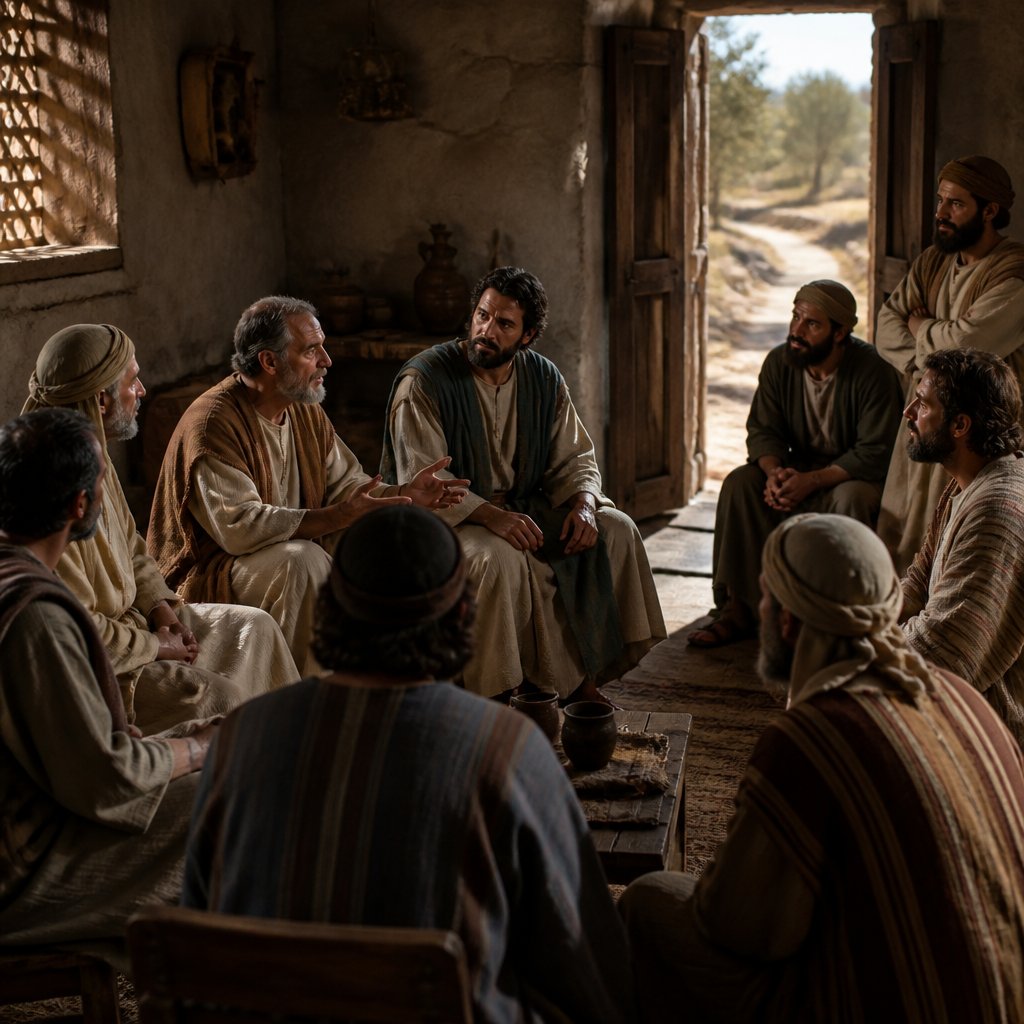
In Acts 15:2, we find an intense yet crucial moment in the early church, marked by what the King James Version describes as “no small dissension and disputation.” In observing this scene, we uncover profound insights on how to navigate disagreements in our own lives and communities.
The conflict arose over a pivotal question regarding the nature of salvation and the Torah's role in the lives of Gentile believers. The community of faith was accustomed to certain traditions, practices, and the Mosaic Law, and when Gentiles began to join the way of Christ, some members insisted that these new converts must adhere to the Jewish law—including circumcision. Paul and Barnabas, witnessing the transformative power of grace through faith among the Gentiles, were compelled to voice their beliefs against this sentiment.
The phrase “no small dissension” suggests a fierce debate—one filled with passion and deeply held convictions. Paul and Barnabas were not timid in the face of opposition. They stood firm in their understanding of the Gospel, which emphasizes that salvation is a gift of grace through faith, and not by works of the law. This situation highlights a critical aspect of Christian conversations: that disagreement can be vital in discerning truth, especially when it pertains to core beliefs about Christ’s message and His sacrifice.
What can we glean about handling disputes from this verse? First, we learn the importance of dialogue. Rather than shying away from difficult conversations, Paul and Barnabas confronted the issue head-on. They represent a model of believers who were not afraid to engage in robust debate for the sake of maintaining the integrity of the Gospel. In today’s world, where differing opinions can often lead to division, we are encouraged to enter discussions with the same spirit of earnestness, seeking to clarify and understand rather than to condemn or dismiss.
Moreover, the resolution of their dispute did not solely rest on individual opinions but rather required collective wisdom from the broader community. The act of determining who would travel to Jerusalem emphasizes the importance of church leadership and communal discernment. It reminds us that in times of conflict, we are not meant to navigate alone; God has established spiritual authorities in our lives—pastors, elders, mentors—who can guide us in understanding and addressing sensitive issues. Gathering wisdom from multiple voices fosters unity rather than fragmentation.
Additionally, the desire to reach resolution—evidenced in the decision to send Paul and Barnabas to the apostles and elders—speaks to the heart of the community's mission: upholding the unity of the body of Christ. Paul and Barnabas did not view the dissenters as enemies, but rather, they recognized the need for reconciliation and clarity. This core belief in unity over individual preference must resonate within us as we encounter disagreements, allowing us to approach disagreements not as battlegrounds but rather as opportunities for collaboration in understanding God’s will.
As we reflect on Acts 15:2, let us ask ourselves how we handle disagreements. Are we quick to argue or to listen? Do we allow the community of faith to speak into our lives with grace and conviction? God calls us to advance His kingdom, which includes dealing with disputes in a manner that reflects His love and pursuit of truth. In moments of contention, may we find the strength to pursue grace, the humility to listen, and the courage to speak truthfully, for it is in these moments that we truly reflect the heart of Christ.
In conclusion, let Acts 15:2 serve as a reminder that disagreements are not the end but rather a means to growth, understanding, and deeper relationships within the body of Christ. Let us honor the process of coming together to seek God’s will, united in our purpose to proclaim the Gospel to all.
Want to reflect more on Acts 15:2?
Continue your spiritual journey with Bible Chat — an AI-powered tool for exploring God's Word through conversation. Ask questions, discover connections, and deepen your understanding.
Get Our Apps


Acts 15:2 Artwork

Acts 15:2 - "When therefore Paul and Barnabas had no small dissension and disputation with them, they determined that Paul and Barnabas, and certain other of them, should go up to Jerusalem unto the apostles and elders about this question."
"When therefore Paul and Barnabas had no small dissension and disputation with them, they determined that Paul and Barnabas, and certain other of them, should go up to Jerusalem unto the apostles and elders about this question." - Acts 15:2

Acts 2:15 - "For these are not drunken, as ye suppose, seeing it is but the third hour of the day."

2 Kings 15:15 - "And the rest of the acts of Shallum, and his conspiracy which he made, behold, they are written in the book of the chronicles of the kings of Israel."

2 Kings 15:11 - "And the rest of the acts of Zachariah, behold, they are written in the book of the chronicles of the kings of Israel."

2 Kings 15:6 - "And the rest of the acts of Azariah, and all that he did, are they not written in the book of the chronicles of the kings of Judah?"

2 Kings 15:21 - "¶ And the rest of the acts of Menahem, and all that he did, are they not written in the book of the chronicles of the kings of Israel?"

2 Kings 15:31 - "And the rest of the acts of Pekah, and all that he did, behold, they are written in the book of the chronicles of the kings of Israel."

2 Kings 15:36 - "¶ Now the rest of the acts of Jotham, and all that he did, are they not written in the book of the chronicles of the kings of Judah?"

2 Kings 15:26 - "And the rest of the acts of Pekahiah, and all that he did, behold, they are written in the book of the chronicles of the kings of Israel."
"For these are not drunken, as ye suppose, seeing it is but the third hour of the day." - Acts 2:15

Acts 15:15 - "And to this agree the words of the prophets; as it is written,"

acts 15

2 Chronicles 12:15 - "Now the acts of Rehoboam, first and last, are they not written in the book of Shemaiah the prophet, and of Iddo the seer concerning genealogies? And there were wars between Rehoboam and Jeroboam continually."

2 Kings 14:15 - "¶ Now the rest of the acts of Jehoash which he did, and his might, and how he fought with Amaziah king of Judah, are they not written in the book of the chronicles of the kings of Israel?"

Acts 17:15

"And the rest of the acts of Shallum, and his conspiracy which he made, behold, they are written in the book of the chronicles of the kings of Israel." - 2 Kings 15:15

"And the rest of the acts of Zachariah, behold, they are written in the book of the chronicles of the kings of Israel." - 2 Kings 15:11

"And to this agree the words of the prophets; as it is written," - Acts 15:15

Acts 15:34 - "Notwithstanding it pleased Silas to abide there still."

"¶ And the rest of the acts of Menahem, and all that he did, are they not written in the book of the chronicles of the kings of Israel?" - 2 Kings 15:21

"And the rest of the acts of Azariah, and all that he did, are they not written in the book of the chronicles of the kings of Judah?" - 2 Kings 15:6

put on a scroll acts 15:29

Acts 15:31 - "Which when they had read, they rejoiced for the consolation."

Acts 15:6 - "¶ And the apostles and elders came together for to consider of this matter."

Acts 2:2

Acts 15:41 - "And he went through Syria and Cilicia, confirming the churches."

Acts 2:2

"And the rest of the acts of Pekah, and all that he did, behold, they are written in the book of the chronicles of the kings of Israel." - 2 Kings 15:31

"And the rest of the acts of Pekahiah, and all that he did, behold, they are written in the book of the chronicles of the kings of Israel." - 2 Kings 15:26