Turning from Vanities: A Call to the Living God
"And saying, Sirs, why do ye these things? We also are men of like passions with you, and preach unto you that ye should turn from these vanities unto the living God, which made heaven, and earth, and the sea, and all things that are therein:" - Acts 14:15
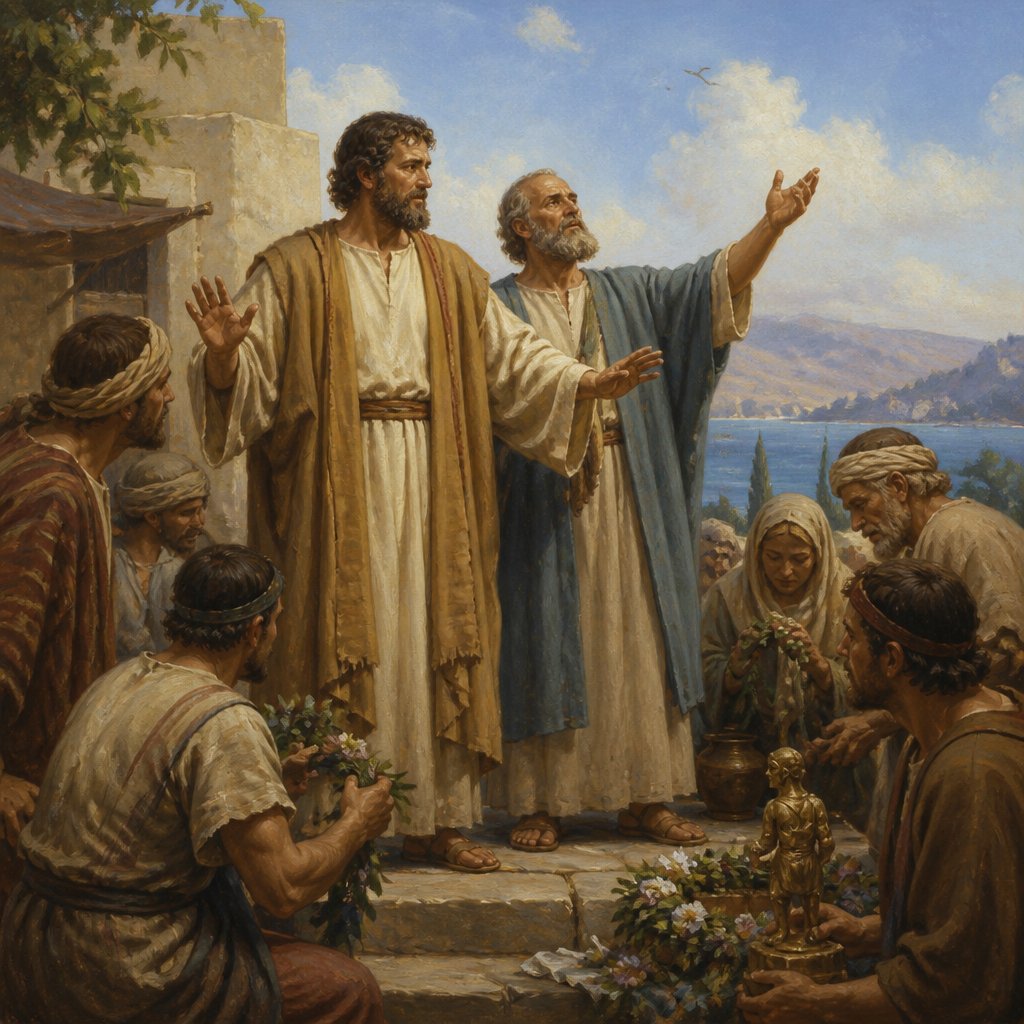
Acts 14:15 (KJV) proclaims: "And saying, Sirs, why do ye these things? We also are men of like passions with you, and preach unto you that ye should turn from these vanities unto the living God, which made heaven, and earth, and the sea, and all things that are therein." This poignant verse captures a critical moment in the ministry of Paul and Barnabas as they address the people of Lystra, who mistakenly worshipped them as gods after witnessing a miraculous healing.
The initial question posed by Paul and Barnabas highlights a fundamental aspect of human nature—the tendency to elevate others to divine status. It serves as a reminder that even the greatest of men, who perform profound acts, are ultimately mere mortals, "men of like passions." This statement humbles both the speakers and their audience, drawing attention away from human glory and directing it towards the glory of God. In today's world, we often idolize celebrities, leaders, and influencers, forgetting that their humanity parallels ours. We should not mistake greatness in ability for divinity in essence.
Paul and Barnabas did not come to the people of Lystra to bask in the adoration that would lead them astray; rather, they preached a message that called for a significant paradigm shift: turning away from vanities and towards the living God. The word "vanities" denotes empty pursuits, things that distract and lead us away from the truth. In the context of the surrounding culture, the people were entrenched in shrines, sacrifices, and superstitions, all grounded in a focus on false gods and futile practices. This call is not merely relevant to the citizens of Lystra; it resonates throughout time and echoes into our present.
In our modern society, we encounter numerous vanities: the pursuit of success, the desire for recognition, the chase for material possessions, and the allure of pleasure. These distractions can lead us into a spiritual wilderness where the thirst for a genuine relationship with God becomes overshadowed by the noise of temporal desires. When we try to fill our lives with these pursuits, we find ourselves spiritually bankrupt, much like the people of Lystra who relied on their empty worship.
The pivotal aspect of this verse is the invitation to "turn to the living God." This is more than an action; it’s a radical transformation of our hearts and minds. To "repent" means to turn away from those fleeting desires and turn towards the One who created us and sustains us. When we redirect our lives toward God, we shift from a mindset of emptiness to one of fulfillment, discovering that true purpose and joy can only be found in Him.
Paul continues to emphasize God's sovereign power, identifying Him as "the living God, which made heaven, and earth, and the sea, and all things that are therein." By reminding the listeners of God’s active role in creation, he reinforces the argument that the God who made all things is deserving of their reverence and worship. Engaging deeply with our creator allows us to recognize our smallness in the grand scheme and, yet, the enormous value He places upon each of us. The implications of believing in the 'living God' transcend mere acknowledgment; they compel action and lifestyle change.
In prayer and reflection, consider what vanities you may be holding onto that distract you from your relationship with the Lord. Just as Paul and Barnabas urged the people of Lystra, we, too, are called to turn away from these empty pursuits and redirect our focus toward the living God. In doing so, we not only experience a radical shift in our hearts but also become catalysts for others to encounter the divine. Like Paul and Barnabas, may we reflect the glory of God and encourage others to join us in worshiping Him—not in the hollow reverence of man-made idols, but in the fullness of life that comes from knowing our Creator.
Want to reflect more on Acts 14:15?
Continue your spiritual journey with Bible Chat — an AI-powered tool for exploring God's Word through conversation. Ask questions, discover connections, and deepen your understanding.
Get Our Apps


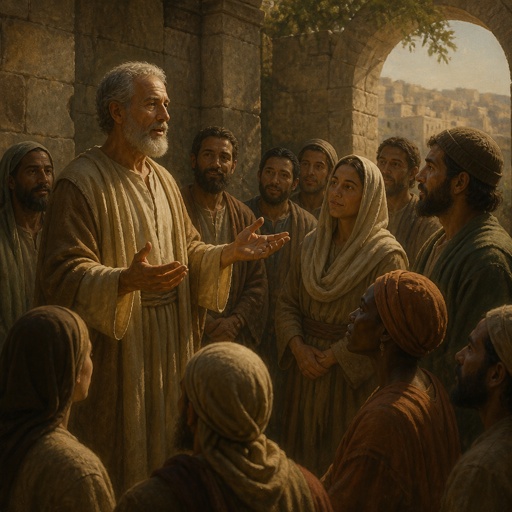
Acts 14:15 Artwork

Acts 14:15 - "And saying, Sirs, why do ye these things? We also are men of like passions with you, and preach unto you that ye should turn from these vanities unto the living God, which made heaven, and earth, and the sea, and all things that are therein:"
"And saying, Sirs, why do ye these things? We also are men of like passions with you, and preach unto you that ye should turn from these vanities unto the living God, which made heaven, and earth, and the sea, and all things that are therein:" - Acts 14:15
Acts 15:14 - "Simeon hath declared how God at the first did visit the Gentiles, to take out of them a people for his name."

2 Kings 14:15 - "¶ Now the rest of the acts of Jehoash which he did, and his might, and how he fought with Amaziah king of Judah, are they not written in the book of the chronicles of the kings of Israel?"
Example (आदर्श) - लुदिया – Act. 16:14-15

Acts 15:15 - "And to this agree the words of the prophets; as it is written,"

acts 15

Acts 13:14-15 - "But when they departed from Perga, they came to Antioch in Pisidia, and went into the synagogue on the Sabbath day, and sat down. And after the reading of the Law and the Prophets, the rulers of the synagogue sent to them, saying, "Men and brethren, if you have any word of exhortation for the people, say on.""

Acts 17:15

Acts 14:17
"Simeon hath declared how God at the first did visit the Gentiles, to take out of them a people for his name." - Acts 15:14

"And to this agree the words of the prophets; as it is written," - Acts 15:15

Acts 14:7 - "And there they preached the gospel."

Jude 1:14-15 - "And Enoch, the seventh from Adam, prophesied about them: “See, the Lord is coming with thousands upon thousands of his holy ones to judge everyone, and to convict all of them of all the ungodly acts they have committed in their ungodliness, and of all the defiant words ungodly sinners have spoken against him.”"

Acts 14:28 - "And there they abode long time with the disciples."

Acts 15:34 - "Notwithstanding it pleased Silas to abide there still."

Acts 14:14 - "Which when the apostles, Barnabas and Paul, heard of, they rent their clothes, and ran in among the people, crying out,"

put on a scroll acts 15:29

2 Kings 15:15 - "And the rest of the acts of Shallum, and his conspiracy which he made, behold, they are written in the book of the chronicles of the kings of Israel."

"And there they preached the gospel." - Acts 14:7

Acts 15:31 - "Which when they had read, they rejoiced for the consolation."

Acts 15:6 - "¶ And the apostles and elders came together for to consider of this matter."

Acts 2:15 - "For these are not drunken, as ye suppose, seeing it is but the third hour of the day."

Acts 15:41 - "And he went through Syria and Cilicia, confirming the churches."

Acts 14:24 - "And after they had passed throughout Pisidia, they came to Pamphylia."

Acts 15:9 - "And put no difference between us and them, purifying their hearts by faith."

Acts 15:37 - "And Barnabas determined to take with them John, whose surname was Mark."

Genesis 15:14

Depict the events of Acts 19:14-17

Acts 27:14 - "But not long after there arose against it a tempestuous wind, called Euroclydon."