Breaking Barriers: The Power of Inclusion
"Saying, Thou wentest in to men uncircumcised, and didst eat with them." - Acts 11:3
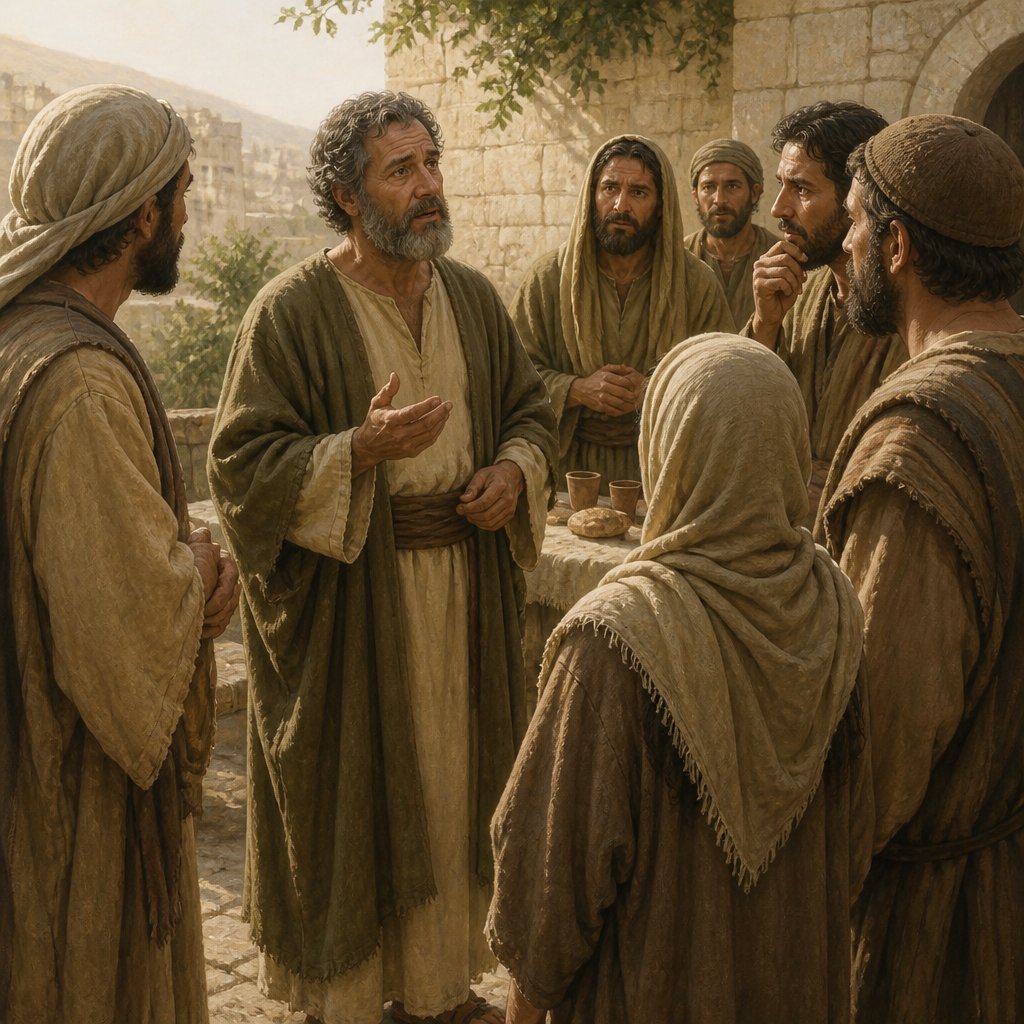
In Acts 11:3, we encounter a pivotal moment in the early church. The verse states, "Saying, Thou wentest in to men uncircumcised, and didst eat with them." This accusation reflects a profound cultural and religious tension that existed at the time, where adherence to the Jewish law defined social interactions and accepted norms. Peter’s actions in this passage provide us with a powerful testimony about breaking barriers and expanding the circles of love and fellowship.
To fully appreciate the significance of this verse, we must recognize the historical context. The early church was predominantly Jewish, and the customs regarding ritual cleanliness were stringent. Jews would typically avoid associating with Gentiles, seen as "uncircumcised" and therefore unclean. Peter's decision to enter the household of Cornelius, a Gentile, and share a meal with him was radical. It defied societal conventions and stirred up controversy among the Jewish believers who were still grappling with the inclusivity of the Gospel.
Peter’s actions challenge us to reflect on our own lives and the barriers we may consciously or unconsciously uphold. How often do we create divisions based on background, ethnicity, social status, or even denominational lines? The discomfort of breaking bread with the "other" can call into question our preconceived notions and challenge our faith.
In this passage, Peter's experience was catalyzed further by a vision from God, as recounted in Acts 10, where he was shown a sheet filled with all kinds of animals, some of which were considered unclean by Jewish law. God's command, "What God hath cleansed, that call not thou common" (Acts 10:15), marked a turning point—not only for Peter but for the entire church. This divine revelation exemplified that the Gospel transcends our human-made barriers. Christ's sacrifice on the cross was meant for all humanity, breaking down walls of division and reconciling the world to Himself (Ephesians 2:14).
As we meditate on Acts 11:3, we are called not just to observe Peter's actions, but to embrace the spirit of his mission. When we look beyond our comfort zones and engage with those we view as outsiders, we fulfill the call of Christ. In our communities, do we extend hospitality to those who are different from us? Do we create spaces for dialogue, understanding, and empathy?
Moreover, the initial rebuke that Peter faced reminds us of the resistance we may encounter when we challenge the status quo. Just as Peter faced scrutiny, we may find ourselves facing opposition from those who cling to tradition over transformation. Yet, it is essential to remember that our commitment lies first with God and His mission to seek and save the lost (Luke 19:10). Just as Peter was eventually vindicated as he recounted his experiences and the work of the Holy Spirit among the Gentiles (Acts 11:15-18), we too can trust that God will affirm our commitment to love and inclusion.
As followers of Christ, we are equipped with His love to reach out to others, to embrace the unwelcomed and the marginalized, and to build bridges where there often seems to be no way forward. This call to inclusivity is not merely a suggestion—it is a fundamental expression of our faith. It is in these meals shared, these conversations had, and these barriers broken, that we are transformed and witnesses of God’s grace.
Let us pray today, asking God to reveal any biases in our hearts and to embolden us to be agents of reconciliation. Let us take the example of Peter to heart and spread the love of Christ across every divide. May our lives reflect the radical inclusivity of the Gospel that Paul later proclaims: "There is neither Jew nor Gentile, neither slave nor free, nor is there male and female, for you are all one in Christ Jesus" (Galatians 3:28).
As we break bread with the diverse members of our community, we are participating in a powerful act of obedience to God’s call. Let us be like Peter, ready to follow where the Spirit leads, and in doing so, transform our world into a place reflecting the Kingdom of God.
Want to reflect more on Acts 11:3?
Continue your spiritual journey with Bible Chat — an AI-powered tool for exploring God's Word through conversation. Ask questions, discover connections, and deepen your understanding.
Get Our Apps


Acts 11:3 Artwork

Acts 11:3 - "Saying, Thou wentest in to men uncircumcised, and didst eat with them."
"Saying, Thou wentest in to men uncircumcised, and didst eat with them." - Acts 11:3

acts 3 11

Deuteronomy 11:3 - "And his miracles, and his acts, which he did in the midst of Egypt unto Pharaoh the king of Egypt, and unto all his land;"

Acts 3:11 - "And as the lame man which was healed held Peter and John, all the people ran together unto them in the porch that is called Solomon's, greatly wondering."

Acts 11:2

Acts 20:11

Acts 11:2

Acts 11:2

Acts 19: 11

Acts 19:11

Acts 3:16

Acts 3:16

Acts 3:16

Acts 3:16

1 Kings 11:41 - "¶ And the rest of the acts of Solomon, and all that he did, and his wisdom, are they not written in the book of the acts of Solomon?"

Acts 3:6-7

Acts 3:6-7

Acts 3:6-7

Acts 3:6-7

Acts 3:6-7

Acts 1:1-11

Acts 1:1-11

Acts 2;2-3

Acts 2:3

Acts 11:25 - "Then departed Barnabas to Tarsus, for to seek Saul:"

Acts 3:3 - "Who seeing Peter and John about to go into the temple asked an alms."

Acts 19:11 - "And God wrought special miracles by the hands of Paul:"

Acts 2:2-3

Acts 2:2-3