The Table of Grace: A Legacy of Kindness and Restoration
"Then said Ziba unto the king, According to all that my lord the king hath commanded his servant, so shall thy servant do. As for Mephibosheth, said the king, he shall eat at my table, as one of the king's sons." - 2 Samuel 9:11

In a world often fragmented by rivalry, pain, and social disparity, the story of King David and Mephibosheth resonates powerfully, revealing the heart of grace and unconditional love. In 2 Samuel 9:11, we encounter a pivotal moment of David's reign, marked by compassion and covenant faithfulness. The scripture reads, "Then said Ziba unto the king, According to all that my lord the king hath commanded his servant, so shall thy servant do. As for Mephibosheth, said the king, he shall eat at my table, as one of the king's sons."
This moment brings to life God’s incredible invitation to grace, exemplified through David's relationship with Mephibosheth, the son of Jonathan, who was crippled and living in obscurity. To understand the profound impact of David’s words, we must consider the context surrounding them. Mephibosheth was the last surviving descendant of Saul, David's predecessor, and the one through whom the throne of Israel might have been threatened. Typically, a king would eliminate any potential threats from the previous dynasty; yet, David’s heart was not inclined toward revenge but toward covenant kindness.
David remembered the bond he had with Jonathan, Mephibosheth’s father, which was a covenant of loyalty and love. This act of kindness was born from a commitment to honor the legacy of Jonathan rather than annihilate the heirs of Saul. The phrase, "he shall eat at my table, as one of the king's sons," was revolutionary. In ancient Near Eastern customs, sharing a table signified security, inclusion, and familial love. In inviting Mephibosheth to dine with him, David initiated a relationship based on grace. Mephibosheth, despite his physical limitations, was no longer a figure of pity or shame. Instead, he was transformed into a beloved son at the king’s table—a symbol of acceptance and restoration.
David's actions invite us to reflect on several vital aspects of our faith. First, it demonstrates the nature of God's grace toward us. Just as David extended grace to the undeserving Mephibosheth, God offers the same profound kindness to us. We, too, are crippled by sin, limited and broken, but through the grace of God, we are invited to His table. In Ephesians 2:8-9 (KJV), Paul writes, "For by grace are ye saved through faith; and that not of yourselves: it is the gift of God: Not of works, lest any man should boast." This underscores that our place at God's table, like that of Mephibosheth, is not based on our merit but solely on His mercy.
Furthermore, this story teaches us the importance of legacy and the impact of kindness. David’s covenant love toward Jonathan manifests in a tangible way through his kindness to Mephibosheth. Similarly, we are called to honor our relationships and commitments—in our families, churches, and communities—by embodying grace and kindness. Every gesture of genuine love can change lives, drawing them closer to the heart of God.
Lastly, let us reflect on the attitude of Ziba, Mephibosheth’s servant, who responded with obedience to the king’s command. His willingness to serve illustrates the importance of humility and faithful service. In our interactions, whether we are leading, serving, or simply being present, we must remember that we reflect the character of God through our actions. Ziba’s role as a servant reminds us that we, too, are called to serve and uplift others, putting aside our own egos to ensure others feel included at God’s table.
In conclusion, as we meditate on this profound story, we are reminded that the Table of Grace is open to all, regardless of circumstance or status. Through David, we see a foreshadowing of Christ’s ultimate invitation to all humanity—come, dine, and be restored. Let us approach God's table with grateful hearts, recognizing that we are all Mephibosheth in need of His love and kindness.
Want to reflect more on 2 Samuel 9:11?
Continue your spiritual journey with Bible Chat — an AI-powered tool for exploring God's Word through conversation. Ask questions, discover connections, and deepen your understanding.
Get Our Apps


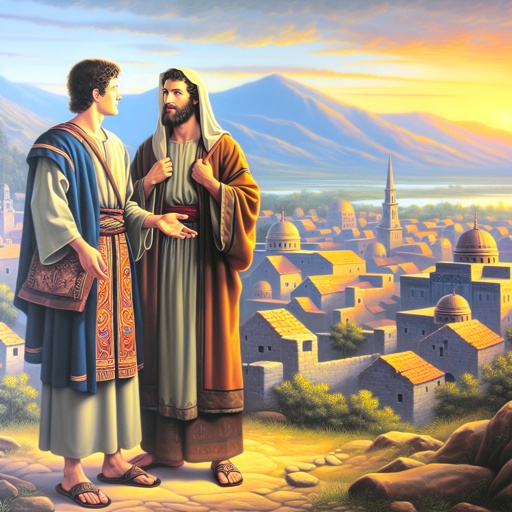
2 Samuel 9:11 Artwork

2 Samuel 9:11 - "Then said Ziba unto the king, According to all that my lord the king hath commanded his servant, so shall thy servant do. As for Mephibosheth, said the king, he shall eat at my table, as one of the king's sons."

"Then said Ziba unto the king, According to all that my lord the king hath commanded his servant, so shall thy servant do. As for Mephibosheth, said the king, he shall eat at my table, as one of the king's sons." - 2 Samuel 9:11

2 Samuel 11:9

2 samuel 9:7 fhdhdhdhhd

2 Samuel 11:9 - "But Uriah slept at the door of the king's house with all the servants of his lord, and went not down to his house."

2 Samuel 11:11

2 Samuel 11

2 samuel 11

1 Samuel 9:11 - "¶ And as they went up the hill to the city, they found young maidens going out to draw water, and said unto them, Is the seer here?"
1 Samuel 9:1-2

"But Uriah slept at the door of the king's house with all the servants of his lord, and went not down to his house." - 2 Samuel 11:9

2 Samuel 2:11 - "And the time that David was king in Hebron over the house of Judah was seven years and six months."

Philippians 2:9-11

Philippians 2:9-11

Philippians 2:9-11

Philippians 2:9-11

2 Chronicles 11:9 - "And Adoraim, and Lachish, and Azekah,"

2 Samuel 11:18 - "¶ Then Joab sent and told David all the things concerning the war;"

2 Samuel 21:11 - "And it was told David what Rizpah the daughter of Aiah, the concubine of Saul, had done."

2 Samuel 11:5 - "And the woman conceived, and sent and told David, and said, I am with child."

2 Samuel 3:11 - "And he could not answer Abner a word again, because he feared him."

2 Samuel 11:14 - "¶ And it came to pass in the morning, that David wrote a letter to Joab, and sent it by the hand of Uriah."

2 Samuel 2:9 - "And made him king over Gilead, and over the Ashurites, and over Jezreel, and over Ephraim, and over Benjamin, and over all Israel."

2 Samuel 22:11 - "And he rode upon a cherub, and did fly: and he was seen upon the wings of the wind."

2 Samuel 11:22 - "¶ So the messenger went, and came and shewed David all that Joab had sent him for."

2 Samuel 8:9 - "¶ When Toi king of Hamath heard that David had smitten all the host of Hadadezer,"

2 Samuel 9:9 - "¶ Then the king called to Ziba, Saul's servant, and said unto him, I have given unto thy master's son all that pertained to Saul and to all his house."

2 Samuel 6:9 - "And David was afraid of the LORD that day, and said, How shall the ark of the LORD come to me?"

2 Samuel 15:9 - "And the king said unto him, Go in peace. So he arose, and went to Hebron."

2 Samuel 11:6 - "¶ And David sent to Joab, saying, Send me Uriah the Hittite. And Joab sent Uriah to David."