A Seat at the King's Table: The Grace of Mephibosheth
"Thou therefore, and thy sons, and thy servants, shall till the land for him, and thou shalt bring in the fruits, that thy master's son may have food to eat: but Mephibosheth thy master's son shall eat bread alway at my table. Now Ziba had fifteen sons and twenty servants." - 2 Samuel 9:10
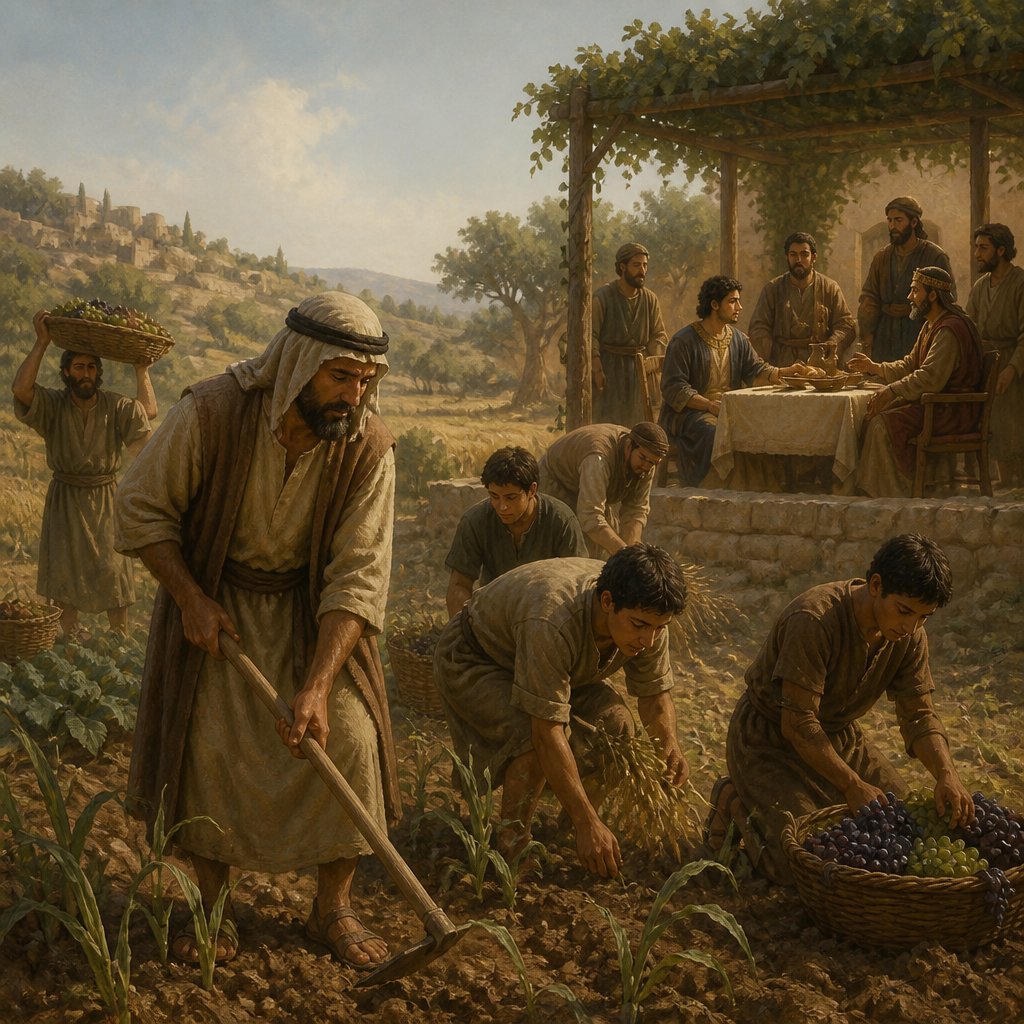
The narrative surrounding Mephibosheth in 2 Samuel 9 encapsulates the theme of grace, restoration, and unconditional love. Verse 10 reads: "Thou therefore, and thy sons, and thy servants, shall till the land for him, and thou shalt bring in the fruits, that thy master's son may have food to eat: but Mephibosheth thy master's son shall eat bread alway at my table. Now Ziba had fifteen sons and twenty servants." This declaration from King David offers a profound insight into our own relationship with God and His boundless grace towards us.
Mephibosheth was the son of Jonathan, who was the son of Saul, Israel’s first king. After Saul's demise and the subsequent turmoil of a kingdom in transition, Mephibosheth found himself in a precarious situation. He was crippled, both physically and socially disconnected from the world that once revered his lineage. In the eyes of the world, he had lost his royal privileges and a sense of belonging due to his disability and his lineage being linked to a fallen dynasty. However, in the heart of David, a man after God's own heart, there resided a commitment to the covenant made with Jonathan.
David’s inquiry about Mephibosheth reveals a king who seeks to extend favor to the remnants of his friend’s bloodline. This moment is not just an act of kindness; it is the fulfillment of a promise and a demonstration of grace that reflects God's character. When we observe David's proclamation to Ziba, it is clear that the king is establishing a restoration plan that is both practical and profound. Ziba and his sons are charged with tilling the land and bringing food for Mephibosheth, which speaks to the need for support and community—even royal sustenance does not operate in isolation.
The phrase, "Mephibosheth thy master's son shall eat bread alway at my table," is breathtaking in its implications. In this one sentence, we see the transition from shame to honor. Mephibosheth was no longer just a crippled son of a defeated prince; he was now invited to dine at the king's table, a symbol of inclusion, affirmation, and restoration.
In our own lives, we often find ourselves feeling like Mephibosheth—crippled by past mistakes, failures, or the weight of the world’s judgments. We might grapple with a sense of unworthiness or think we have lost our rightful place among God’s people. Yet, just as King David chose Mephibosheth, God, out of His great love and mercy, welcomes us to His table. Through Jesus Christ, we have an invitation to partake in the richness of God’s grace. Despite our errors and incapacities, His table is spread for us, calling us to come and feast on His love, forgiveness, and nurturing presence.
The fact that David also appointed Ziba and his sons to serve Mephibosheth emphasizes the role of community in our journey towards restoration. Just as Ziba was tasked with caring for and supporting Mephibosheth, we are called to build each other up in love, providing the emotional and spiritual sustenance needed. We are all Mephibosheth at one point or another in our lives, and we need a Ziba — someone who understands the depth of grace and serves as a reminder of our privilege in Christ.
In conclusion, reflecting on Mephibosheth’s experience, we are reminded that no matter how far we stray or how incapacitated we feel, God’s grace is always available to restore, redeem, and invite us to dine at His table. Amidst our failures, we can celebrate the truth that we are always a part of His family. Let us embrace this invitation with open hearts, extend grace to ourselves, and learn to extend the same grace to others. In Christ, we have a permanent seat at the King’s table.
Want to reflect more on 2 Samuel 9:10?
Continue your spiritual journey with Bible Chat — an AI-powered tool for exploring God's Word through conversation. Ask questions, discover connections, and deepen your understanding.
Get Our Apps


2 Samuel 9:10 Artwork

2 Samuel 9:10 - "Thou therefore, and thy sons, and thy servants, shall till the land for him, and thou shalt bring in the fruits, that thy master's son may have food to eat: but Mephibosheth thy master's son shall eat bread alway at my table. Now Ziba had fifteen sons and twenty servants."
"Thou therefore, and thy sons, and thy servants, shall till the land for him, and thou shalt bring in the fruits, that thy master's son may have food to eat: but Mephibosheth thy master's son shall eat bread alway at my table. Now Ziba had fifteen sons and twenty servants." - 2 Samuel 9:10

2 Samuel 10:9 - "When Joab saw that the front of the battle was against him before and behind, he chose of all the choice men of Israel, and put them in array against the Syrians:"

2 samuel 9:7 fhdhdhdhhd

2 Samuel 11:9

1 Samuel 9:10 - "Then said Saul to his servant, Well said; come, let us go. So they went unto the city where the man of God was."

2 Samuel 10:4

2 Samuel 10:4
1 Samuel 9:1-2

1 Samuel 10:9 - "¶ And it was so, that when he had turned his back to go from Samuel, God gave him another heart: and all those signs came to pass that day."

Titus 2:9-10

Titus 2:9-10

2 Samuel 5:10 - "And David went on, and grew great, and the LORD God of hosts was with him."

2 Samuel 10:10 - "And the rest of the people he delivered into the hand of Abishai his brother, that he might put them in array against the children of Ammon."
2 Corinthians 12:9-10

2 Samuel 22:10 - "He bowed the heavens also, and came down; and darkness was under his feet."

2 Samuel 10:7 - "And when David heard of it, he sent Joab, and all the host of the mighty men."

2 Samuel 10:15 - "¶ And when the Syrians saw that they were smitten before Israel, they gathered themselves together."

2 Samuel 2:9 - "And made him king over Gilead, and over the Ashurites, and over Jezreel, and over Ephraim, and over Benjamin, and over all Israel."

2 Samuel 8:9 - "¶ When Toi king of Hamath heard that David had smitten all the host of Hadadezer,"

2 Samuel 9:9 - "¶ Then the king called to Ziba, Saul's servant, and said unto him, I have given unto thy master's son all that pertained to Saul and to all his house."

2 Samuel 6:9 - "And David was afraid of the LORD that day, and said, How shall the ark of the LORD come to me?"

2 Samuel 15:9 - "And the king said unto him, Go in peace. So he arose, and went to Hebron."

2 Samuel 18:10 - "And a certain man saw it, and told Joab, and said, Behold, I saw Absalom hanged in an oak."

2 Samuel 9:5 - "¶ Then king David sent, and fetched him out of the house of Machir, the son of Ammiel, from Lo-debar."

2 Samuel 9:1 - "And David said, Is there yet any that is left of the house of Saul, that I may shew him kindness for Jonathan's sake?"

2 Samuel 11:9 - "But Uriah slept at the door of the king's house with all the servants of his lord, and went not down to his house."

2 Corinthians 10:9 - "That I may not seem as if I would terrify you by letters."

2 Samuel 9:13 - "So Mephibosheth dwelt in Jerusalem: for he did eat continually at the king's table; and was lame on both his feet."

1 Samuel 2:9 - "He will keep the feet of his saints, and the wicked shall be silent in darkness; for by strength shall no man prevail."