The Covenant of Honor: A Lesson from 2 Samuel 3:13
"¶ And he said, Well; I will make a league with thee: but one thing I require of thee, that is, Thou shalt not see my face, except thou first bring Michal Saul's daughter, when thou comest to see my face." - 2 Samuel 3:13
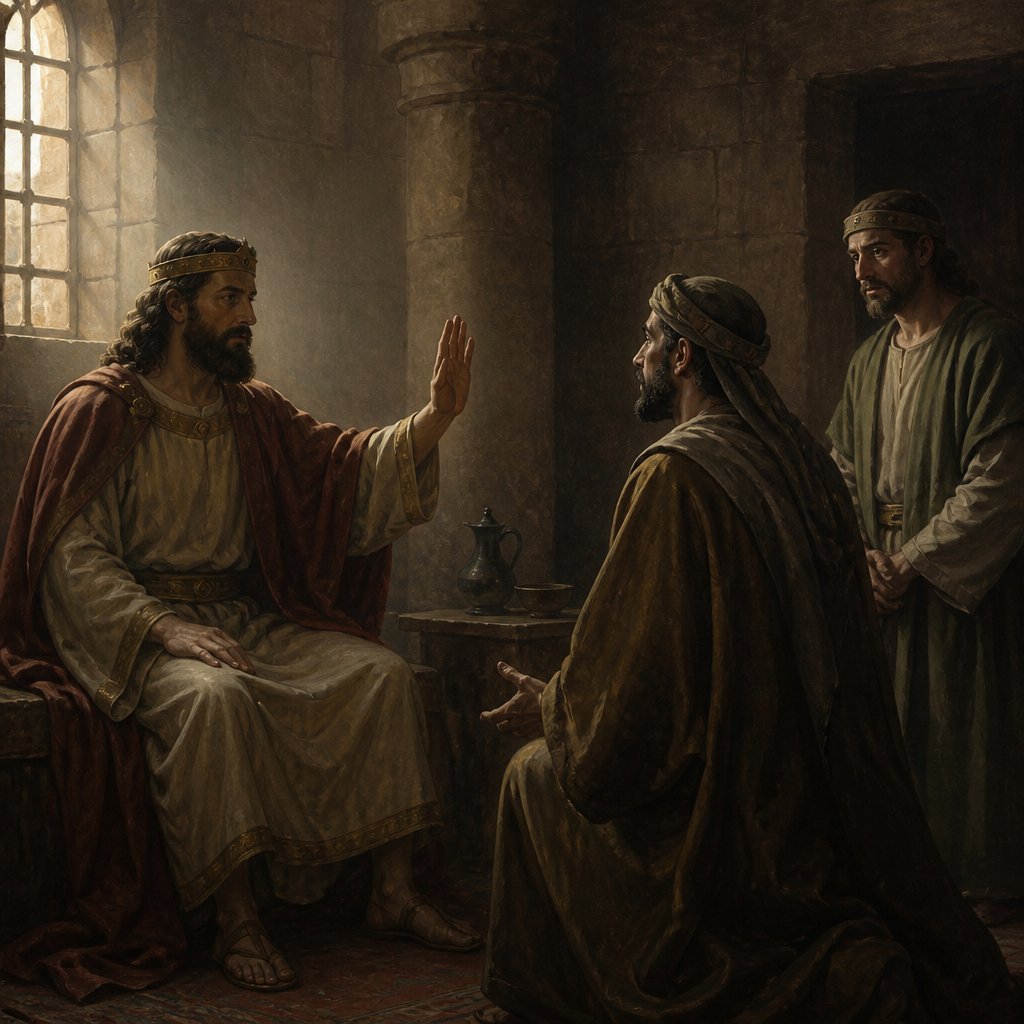
In the intricate tapestry of David's journey to the throne, 2 Samuel 3:13 encapsulates a pivotal moment that not only illustrates the value of covenant relationships but also highlights the complexities of human emotions and the significance of honor in those relationships. The verse reads, "And he said, Well; I will make a league with thee: but one thing I require of thee, that is, Thou shalt not see my face, except thou first bring Michal Saul's daughter, when thou comest to see my face."
This scripture showcases a conversation between David and Abner, the commander of Saul's forces. At this point, David had been anointed by God to be king, yet much stood in the way of his reign. One such barrier was the ongoing conflict between the house of David and the house of Saul. Abner, who represented the latter, was seeking to ally with David, which could have been a significant step toward unifying the kingdom and establishing a peaceful reign. However, David places an unusual condition on this peace treaty: the return of Michal.
At first glance, David's request might seem personal or even petty. Michal, the daughter of Saul, was originally David's wife. Yet, as we delve deeper, we discover layers of meaning in this request. Michal's situation should not be underestimated. She represents not only David's love but also the deeply intertwined fates of two families caught in divine providence. David, by reclaiming Michal, was not merely pursuing his own happiness; he was restoring honor to his marital covenant and reclaiming everything that had been taken from him.
This moment prompts us to reflect on the importance of honor and loyalty in our relationships. David's desire to have Michal by his side isn’t merely about love; it's about recognition. He is asserting that reconciliation should not come at the cost of honor. In a world where trust can be easily broken and relationships strained, we are reminded of the core values that sustain us—loyalty, respect, and a commitment to integrity.
Moreover, there is an element of prophetic significance in David's condition. Michal represents the past, the heritage, and the legacy of the Saul dynasty—elements that David must acknowledge to move into the promise God has laid before him. This serves as a reminder to us that in our pursuit of God’s purpose, we must often confront and honor our past.
In our spiritual walk, how often do we seek God’s blessings while ignoring the relationships we have neglected or the bonds that have been strained? Restoration often requires us to first seek reconciliation and to honor those commitments we've made. Just as David sought Michal, we too might need to pursue those missed opportunities to restore broken relationships, heal wounds, and mend fences before we can fully embrace what God has in store for us.
Furthermore, this situation emphasizes the idea of a covenant—a serious commitment that goes beyond mere agreements. David's covenant with Abner is serious; it is a life-and-death matter that carries the weight of their histories and the futures of their people. Likewise, as followers of Christ, we are in an eternal covenant with God, one founded on Jesus’ sacrifice. Our responses to the relationships and commitments in our lives should mirror the seriousness and sanctity of that covenant.
As we meditate on 2 Samuel 3:13, let us ask ourselves: Are we honoring our commitments? Are we seeking reconciliation where there is estrangement? Are we recognizing the true significance of our relationships, knowing they are mirrors reflecting our own standing before God? In this journey of faith, may we strive to live with integrity, fostering peace and honoring the bonds that connect us to others.
Want to reflect more on 2 Samuel 3:13?
Continue your spiritual journey with Bible Chat — an AI-powered tool for exploring God's Word through conversation. Ask questions, discover connections, and deepen your understanding.
Get Our Apps


2 Samuel 3:13 Artwork

2 Samuel 3:13 - "¶ And he said, Well; I will make a league with thee: but one thing I require of thee, that is, Thou shalt not see my face, except thou first bring Michal Saul's daughter, when thou comest to see my face."
"¶ And he said, Well; I will make a league with thee: but one thing I require of thee, that is, Thou shalt not see my face, except thou first bring Michal Saul's daughter, when thou comest to see my face." - 2 Samuel 3:13

2 Samuel 13:3 - "But Amnon had a friend, whose name was Jonadab, the son of Shimeah David's brother: and Jonadab was a very subtil man."

2 Samuel 13:38 - "So Absalom fled, and went to Geshur, and was there three years."

2 Samuel 22:13 - "Through the brightness before him were coals of fire kindled."

"But Amnon had a friend, whose name was Jonadab, the son of Shimeah David's brother: and Jonadab was a very subtil man." - 2 Samuel 13:3

2 Samuel 15:13 - "¶ And there came a messenger to David, saying, The hearts of the men of Israel are after Absalom."

2 Samuel 13:21 - "¶ But when king David heard of all these things, he was very wroth."

2 Samuel 3:2 - "¶ And unto David were sons born in Hebron: and his firstborn was Amnon, of Ahinoam the Jezreelitess;"

1 Samuel 13:3 - "And Jonathan smote the garrison of the Philistines that was in Geba, and the Philistines heard of it. And Saul blew the trumpet throughout all the land, saying, Let the Hebrews hear."

2 Samuel 4:3 - "And the Beerothites fled to Gittaim, and were sojourners there until this day.)"

1 Samuel 3:13 - "For I have told him that I will judge his house for ever for the iniquity which he knoweth; because his sons made themselves vile, and he restrained them not."

2 Samuel 13:27 - "But Absalom pressed him, that he let Amnon and all the king's sons go with him."

2 Samuel 3:4 - "And the fourth, Adonijah the son of Haggith; and the fifth, Shephatiah the son of Abital;"

2 Samuel 3:3 - "And his second, Chileab, of Abigail the wife of Nabal the Carmelite; and the third, Absalom the son of Maacah the daughter of Talmai king of Geshur;"

2 Samuel 3:11 - "And he could not answer Abner a word again, because he feared him."

2 Samuel 13:35 - "And Jonadab said unto the king, Behold, the king's sons come: as thy servant said, so it is."

2 Samuel 7:13 - "He shall build an house for my name, and I will stablish the throne of his kingdom for ever."

2 Thessalonians 3:13 - "But ye, brethren, be not weary in well doing."

2 Samuel 3:33 - "And the king lamented over Abner, and said, Died Abner as a fool dieth?"

2 Samuel 3:5 - "And the sixth, Ithream, by Eglah David's wife. These were born to David in Hebron."

2 Samuel 10:13 - "And Joab drew nigh, and the people that were with him, unto the battle against the Syrians: and they fled before him."

2 Samuel 2:3 - "And his men that were with him did David bring up, every man with his household: and they dwelt in the cities of Hebron."

2 Samuel 6:13 - "And it was so, that when they that bare the ark of the LORD had gone six paces, he sacrificed oxen and fatlings."

2 Samuel 13:31 - "Then the king arose, and tare his garments, and lay on the earth; and all his servants stood by with their clothes rent."

2 Samuel 6:13 - "And it was so, that when they that bare the ark of the LORD had gone six paces, he sacrificed oxen and fatlings."

2 Samuel 6:13 - "And it was so, that when they that bare the ark of the LORD had gone six paces, he sacrificed oxen and fatlings."

2 Samuel 7:3 - "And Nathan said to the king, Go, do all that is in thine heart; for the LORD is with thee."

2 Samuel 13:7 - "Then David sent home to Tamar, saying, Go now to thy brother Amnon's house, and dress him meat."

2 Samuel 13:37 - "¶ But Absalom fled, and went to Talmai, the son of Ammihud, king of Geshur. And David mourned for his son every day."