Dwelling Together: A Journey to Hebron
"And his men that were with him did David bring up, every man with his household: and they dwelt in the cities of Hebron." - 2 Samuel 2:3
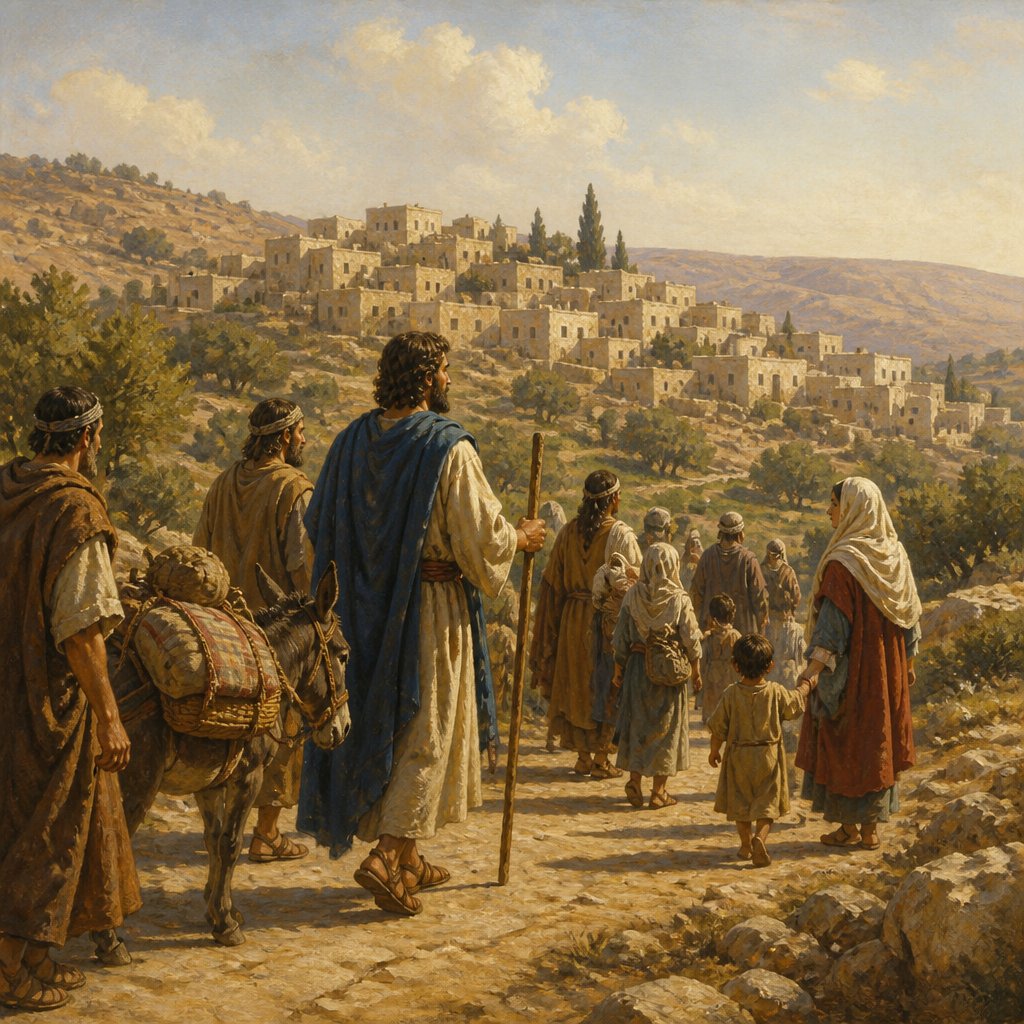
When we read 2 Samuel 2:3, we encounter a poignant moment in David's life: "And his men that were with him did David bring up, every man with his household: and they dwelt in the cities of Hebron." This verse is rich with meaning and invites us to reflect on themes of leadership, community, and divine ordination.
First, let’s consider the context of this passage. David, having been on the run from Saul and enduring years of hardship, now begins a new chapter in his life. With the death of Saul, the Israelites were left in turmoil, and David emerged as a leader who was tasked with reuniting God’s people. The journey to Hebron is not just a geographical move; it represents a shift from struggle to stability, from isolation to community.
Hebron, the city of refuge, signifies a place of safety and belonging. It is here that David chooses to gather his men and their households. This decision reveals profound insights into David’s character as a leader. Instead of seeking power for himself, he brings his men along with their families, emphasizing the importance of community in leadership. David understands that leadership is not about ruling over others but about building a foundation where people can thrive together.
As we reflect on this verse, we see how leadership in our own lives should emulate David’s example. In our workplaces, churches, and communities, true leaders cultivate an environment where individuals feel safe to express themselves and develop as part of a collective. David’s act of gathering his men and their families is a reminder that God’s kingdom is built on relationships. It underscores the importance of creating spaces where we can dwell together, support one another, and grow in our faith.
Furthermore, we see the concept of ‘every man with his household,’ which speaks to the importance of family in God’s plan. David’s leadership extended beyond his men; it necessitated the well-being of their families. In a world where families are sometimes fragmented, we are called to re-examine how we can build and strengthen the bonds within our own households and extend that love and unity to others in our community. Are we fostering an environment where families can feel secure, loved, and valued?
Additionally, dwelling in the cities of Hebron symbolizes a place of divine appointment. Hebron was significant in biblical history; it was here where Abraham dwelt, and it was a place God chose for important events. David’s arrival there, with his men and families, signifies God’s timing and leadership in action. Just as David was led to a place of promise and purpose, we are also called to recognize where God is leading us. Are we attentive to His nudges in our lives? Are we willing to step out in faith and dwell in the places He has prepared for us?
Moreover, the act of ‘dwelling’ indicates a commitment to making Hebron their home. In our spiritual journey, we are called to dwell in the presence of God, to make His ways and His truth our home. Psalm 91:1 says, "He that dwelleth in the secret place of the Most High shall abide under the shadow of the Almighty." This invitation to dwell speaks of intimacy, trust, and dependence on God’s protection and guidance. As we explore our paths, let us remember that every decision we make should seek to draw us closer to Him, allowing us to feel secure in His presence.
In conclusion, 2 Samuel 2:3 is not merely a historical account. It calls us to embrace community, foster familial bonds, and recognize God’s placement and purpose in our lives. As we journey through our own lives, may we aspire to lead like David, bringing others along, honoring our families, and dwelling in the presence of the Lord, trusting that He has ordained our steps. Let us reconvene in our own Hebron, knowing that together, with God, we can build a legacy of faith and unity.
Want to reflect more on 2 Samuel 2:3?
Continue your spiritual journey with Bible Chat — an AI-powered tool for exploring God's Word through conversation. Ask questions, discover connections, and deepen your understanding.
Get Our Apps


2 Samuel 2:3 Artwork

2 Samuel 2:3 - "And his men that were with him did David bring up, every man with his household: and they dwelt in the cities of Hebron."
"And his men that were with him did David bring up, every man with his household: and they dwelt in the cities of Hebron." - 2 Samuel 2:3

2 Samuel 3:2 - "¶ And unto David were sons born in Hebron: and his firstborn was Amnon, of Ahinoam the Jezreelitess;"

2 Samuel 4:3 - "And the Beerothites fled to Gittaim, and were sojourners there until this day.)"

2 Samuel 3:4 - "And the fourth, Adonijah the son of Haggith; and the fifth, Shephatiah the son of Abital;"

2 Samuel 3:33 - "And the king lamented over Abner, and said, Died Abner as a fool dieth?"

2 Samuel 3:5 - "And the sixth, Ithream, by Eglah David's wife. These were born to David in Hebron."

2 Samuel 3:3 - "And his second, Chileab, of Abigail the wife of Nabal the Carmelite; and the third, Absalom the son of Maacah the daughter of Talmai king of Geshur;"

2 Samuel 7:3 - "And Nathan said to the king, Go, do all that is in thine heart; for the LORD is with thee."

2 Samuel 3:11 - "And he could not answer Abner a word again, because he feared him."

2 Samuel 3:37 - "For all the people and all Israel understood that day that it was not of the king to slay Abner the son of Ner."

2 Samuel 14:3 - "And come to the king, and speak on this manner unto him. So Joab put the words in her mouth."

2 Samuel 3:36 - "And all the people took notice of it, and it pleased them: as whatsoever the king did pleased all the people."

2 Samuel 3:15 - "And Ish-bosheth sent, and took her from her husband, even from Phaltiel the son of Laish."

2 Samuel 3:38 - "And the king said unto his servants, Know ye not that there is a prince and a great man fallen this day in Israel?"

2 Samuel 3:6 - "¶ And it came to pass, while there was war between the house of Saul and the house of David, that Abner made himself strong for the house of Saul."

2 Samuel 11:3 - "And David sent and enquired after the woman. And one said, Is not this Bath-sheba, the daughter of Eliam, the wife of Uriah the Hittite?"

2 Samuel 19:3 - "And the people gat them by stealth that day into the city, as people being ashamed steal away when they flee in battle."

2 Samuel 3:17 - "¶ And Abner had communication with the elders of Israel, saying, Ye sought for David in times past to be king over you:"

2 Samuel 3:32 - "And they buried Abner in Hebron: and the king lifted up his voice, and wept at the grave of Abner; and all the people wept."

2 Samuel 15:3 - "And Absalom said unto him, See, thy matters are good and right; but there is no man deputed of the king to hear thee."

2 Samuel 13:3 - "But Amnon had a friend, whose name was Jonadab, the son of Shimeah David's brother: and Jonadab was a very subtil man."

2 Samuel 3:30 - "So Joab and Abishai his brother slew Abner, because he had slain their brother Asahel at Gibeon in the battle."

2 Samuel 8:3 - "¶ David smote also Hadadezer, the son of Rehob, king of Zobah, as he went to recover his border at the river Euphrates."

2 Samuel 3:20 - "So Abner came to David to Hebron, and twenty men with him. And David made Abner and the men that were with him a feast."

2 Samuel 3:1 - "Now there was long war between the house of Saul and the house of David: but David waxed stronger and stronger, and the house of Saul waxed weaker and weaker."
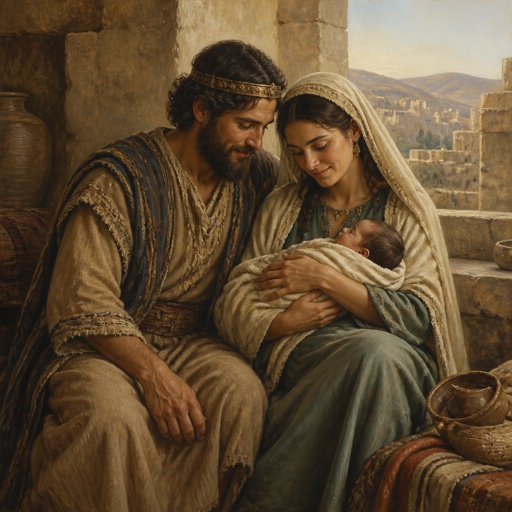
"¶ And unto David were sons born in Hebron: and his firstborn was Amnon, of Ahinoam the Jezreelitess;" - 2 Samuel 3:2

2 Samuel 3:9 - "So do God to Abner, and more also, except, as the LORD hath sworn to David, even so I do to him;"

2 Samuel 23:3 - "The God of Israel said, the Rock of Israel spake to me, He that ruleth over men must be just, ruling in the fear of God."

2 Samuel 3:10 - "To translate the kingdom from the house of Saul, and to set up the throne of David over Israel and over Judah, from Dan even to Beer-sheba."