The Price of Kingly Choices: A Reflection on 2 Samuel 20:3
"¶ And David came to his house at Jerusalem; and the king took the ten women his concubines, whom he had left to keep the house, and put them in ward, and fed them, but went not in unto them. So they were shut up unto the day of their death, living in widowhood." - 2 Samuel 20:3
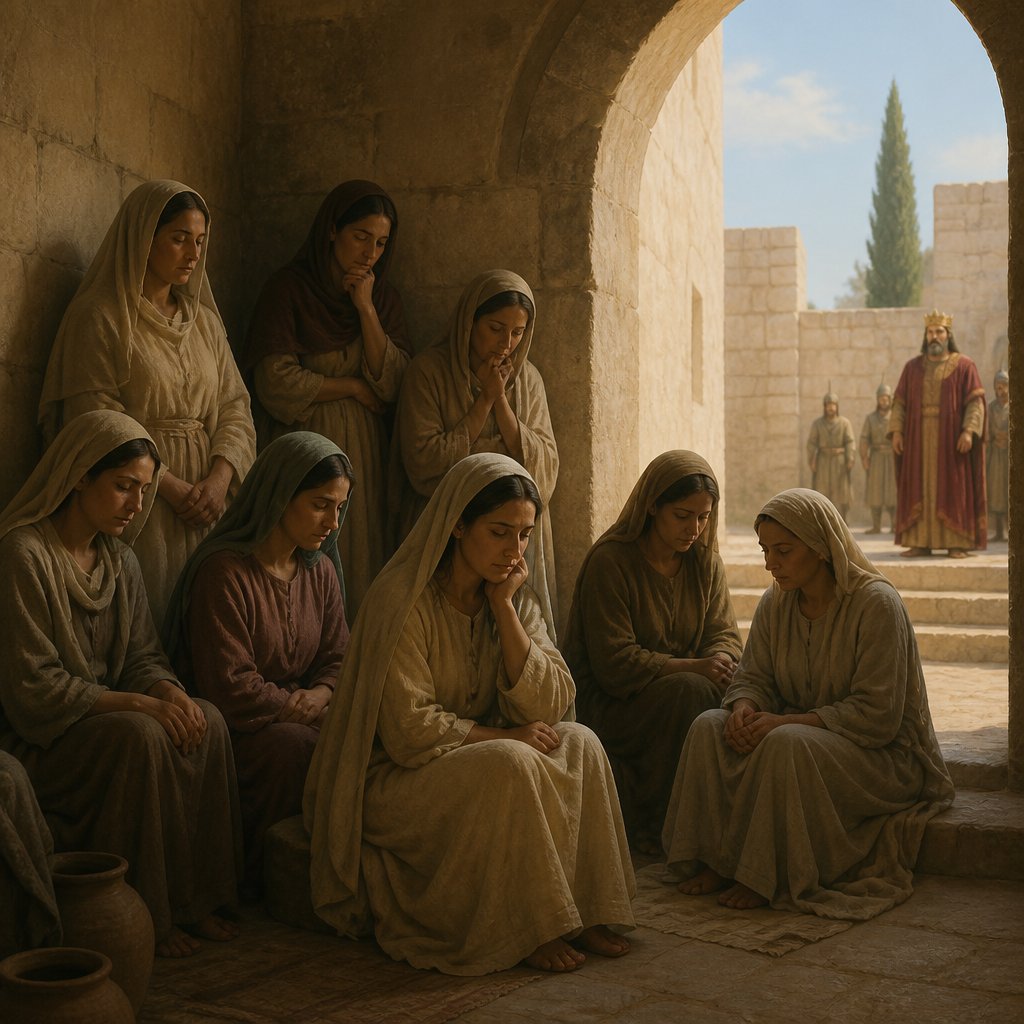
In the annals of biblical history, few figures loom as large as King David. His life is filled with the richness of God's blessings and the depths of human struggle. In the narrative of 2 Samuel 20:3, we encounter a moment that captures both the complexity of leadership and the weight of personal choices—a moment that invites us to reflect deeply on the implications of our actions and decisions.
The verse states: "And David came to his house at Jerusalem; and the king took the ten women his concubines, whom he had left to keep the house, and put them in ward, and fed them, but went not in unto them. So they were shut up unto the day of their death, living in widowhood."
At first glance, this may seem like a straightforward account of a king returning home and managing his household. Yet, within these words lie profound themes of loss, isolation, and the repercussions of betrayal—emotions that resonate with us even in modern times.
When David returned to Jerusalem, having been embroiled in conflict and rebellion, he found not just a kingdom to rule, but a heart-wrenching reality awaiting him. The ten women he left behind were not just mere servants; they were concubines—women who had shared intimacy with the king, and yet, in this moment, they faced life in a state of perpetual widowhood. This reflects a dry and harsh turn of fate, highlighting not simply the loss of their status but the emotional and relational alienation imposed upon them.
In this moment, we witness the heavy burden of leadership. David’s decision to put these women in ward can be viewed as an effort to protect his realm’s dignity after Absalom’s rebellion; however, it also served as a stark reminder that leadership often comes with collateral damage. The king could not afford the scandal that would have arisen from a public acknowledgment of these women. Thus, in a bid to shield himself and his kingdom from disgrace, he unintentionally condemned them to a life in isolation.
As believers, we are often called to reflect on the consequences of our choices—how they can affect those around us. Just as David’s decision led to the demise of these women’s joy and relational identity, our actions too can hold the power to uplift or diminish others. When we speak, act, or choose to ignore certain relationships, we must consider: Are we fostering community and connection, or are we creating walls of separation?
This biblical moment invites us into a deeper understanding of our relationships and responsibilities. David’s reluctance to engage with the concubines further underscores a sense of abandonment—despite providing for their physical needs, he had withdrawn emotionally and relationally. In our own lives, do we sometimes provide for others while neglecting their emotional or spiritual needs?
Moreover, the isolation that the women experience over the years leads to a profound lesson on widowhood. They were left without the companionship or love of their king, living in a reality that reflected loss and resignation. The life of a widow is one marked by absence, yet also one endowed with hope—as widows in the Bible often find themselves in positions where they turn to God for their sustenance and strength. In our periods of isolation and despair, we too can find refuge in our relationship with God, who sees, hears, and understands our plight.
As we meditate on 2 Samuel 20:3, let’s take a moment to evaluate the relationships in our lives. Are we fully present with those around us? Are we careful in our choices and cognizant of the potential for unintended consequences? May we strive to live in a manner that uplifts others, serving as a source of comfort rather than a cause for loneliness. Let us remember that true leadership—whether in the workplace, at home, or in our communities—requires listening, engaging, and providing not just for needs but also for the hearts of those entrusted to our care. May we all endeavor to learn from David’s story and choose wisely, nurturing rather than isolating those we love.
Want to reflect more on 2 Samuel 20:3?
Continue your spiritual journey with Bible Chat — an AI-powered tool for exploring God's Word through conversation. Ask questions, discover connections, and deepen your understanding.
Get Our Apps


2 Samuel 20:3 Artwork

2 Samuel 20:3 - "¶ And David came to his house at Jerusalem; and the king took the ten women his concubines, whom he had left to keep the house, and put them in ward, and fed them, but went not in unto them. So they were shut up unto the day of their death, living in widowhood."
"¶ And David came to his house at Jerusalem; and the king took the ten women his concubines, whom he had left to keep the house, and put them in ward, and fed them, but went not in unto them. So they were shut up unto the day of their death, living in widowhood." - 2 Samuel 20:3

2 Samuel 3:20 - "So Abner came to David to Hebron, and twenty men with him. And David made Abner and the men that were with him a feast."

1 Samuel 3:20 - "And all Israel from Dan even to Beer-sheba knew that Samuel was established to be a prophet of the LORD."

2 Samuel 22:17-20

2 Samuel 20:20 - "And Joab answered and said, Far be it, far be it from me, that I should swallow up or destroy."

2 Samuel 20:25 - "And Sheva was scribe: and Zadok and Abiathar were the priests:"

2 Samuel 20:24 - "And Adoram was over the tribute: and Jehoshaphat the son of Ahilud was recorder:"

2 Samuel 20:26 - "And Ira also the Jairite was a chief ruler about David."

2 Samuel 2:20 - "Then Abner looked behind him, and said, Art thou Asahel? And he answered, I am."

2 Samuel 16:20 - "¶ Then said Absalom to Ahithophel, Give counsel among you what we shall do."
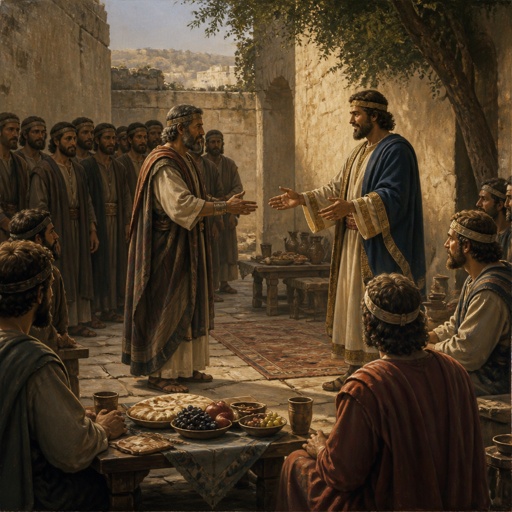
"So Abner came to David to Hebron, and twenty men with him. And David made Abner and the men that were with him a feast." - 2 Samuel 3:20

"And all Israel from Dan even to Beer-sheba knew that Samuel was established to be a prophet of the LORD." - 1 Samuel 3:20

2 Samuel 3:2 - "¶ And unto David were sons born in Hebron: and his firstborn was Amnon, of Ahinoam the Jezreelitess;"

2 Samuel 1:20 - "Tell it not in Gath, publish it not in the streets of Askelon; lest the daughters of the Philistines rejoice, lest the daughters of the uncircumcised triumph."

2 Samuel 20:4 - "¶ Then said the king to Amasa, Assemble me the men of Judah within three days, and be thou here present."

2 Samuel 4:3 - "And the Beerothites fled to Gittaim, and were sojourners there until this day.)"

2 Samuel 7:20 - "And what can David say more unto thee? for thou, Lord GOD, knowest thy servant."

2 Samuel 20:23 - "¶ Now Joab was over all the host of Israel: and Benaiah the son of Jehoiada was over the Cherethites and over the Pelethites:"

2 Samuel 22:20 - "He brought me forth also into a large place: he delivered me, because he delighted in me."

2 Samuel 3:4 - "And the fourth, Adonijah the son of Haggith; and the fifth, Shephatiah the son of Abital;"

2 Samuel 3:3 - "And his second, Chileab, of Abigail the wife of Nabal the Carmelite; and the third, Absalom the son of Maacah the daughter of Talmai king of Geshur;"

2 Samuel 3:33 - "And the king lamented over Abner, and said, Died Abner as a fool dieth?"

2 Samuel 3:5 - "And the sixth, Ithream, by Eglah David's wife. These were born to David in Hebron."

2 Samuel 20:13 - "When he was removed out of the highway, all the people went on after Joab, to pursue after Sheba the son of Bichri."

"And Sheva was scribe: and Zadok and Abiathar were the priests:" - 2 Samuel 20:25

2 Samuel 20:2 - "So every man of Israel went up from after David, and followed Sheba the son of Bichri: but the men of Judah clave unto their king, from Jordan even to Jerusalem."

2 Samuel 2:3 - "And his men that were with him did David bring up, every man with his household: and they dwelt in the cities of Hebron."

2 Samuel 20:11 - "And one of Joab's men stood by him, and said, He that favoureth Joab, and he that is for David, let him go after Joab."

2 Samuel 20:9 - "And Joab said to Amasa, Art thou in health, my brother? And Joab took Amasa by the beard with the right hand to kiss him."