The Tears of a Warrior: Reflecting on the Fall of Jonathan
"How are the mighty fallen in the midst of the battle! O Jonathan, thou wast slain in thine high places." - 2 Samuel 1:25
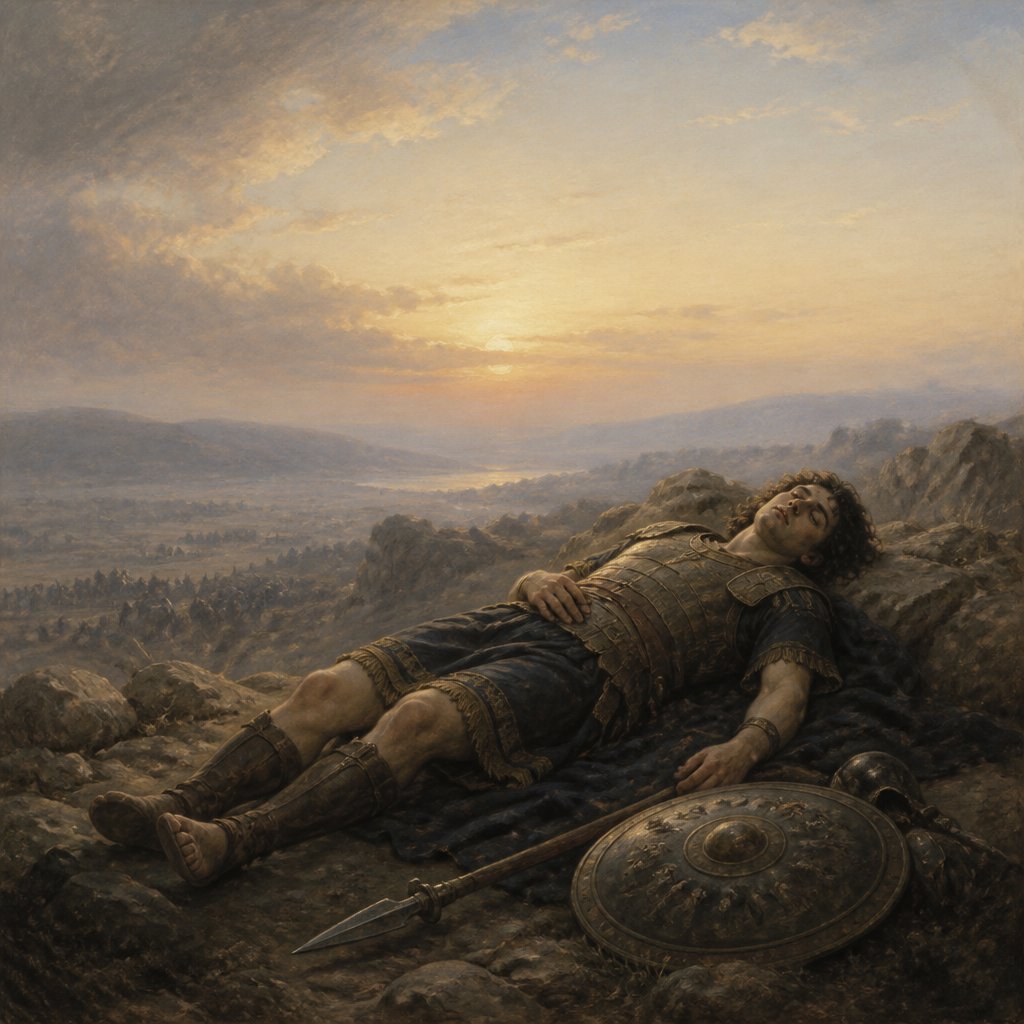
In 2 Samuel 1:25, we encounter a profound moment of grief as David laments the death of his beloved friend, Jonathan. The verse reads, "How are the mighty fallen in the midst of the battle! O Jonathan, thou wast slain in thine high places." This visceral cry carries with it the weight of warfare, friendship, and the tragedy of loss, resonating deeply with all who have ever lost someone dear or faced the harsh realities of life’s battles.
To grasp the full significance of David's lamentation, we must first consider the context of their friendship. Jonathan, the son of King Saul, was not only a skilled warrior but also one of David’s closest allies. Their bond was forged in an atmosphere of danger and mutual respect, as they stood together amid the strife that marked Saul’s reign. The love between Jonathan and David was characterized by loyalty, sacrifice, and an agreement that transcended the expectations placed on them by their families and society. 1 Samuel 18:1 tells us, "And it came to pass, when he had made an end of speaking unto Saul, that the soul of Jonathan was knit with the soul of David, and Jonathan loved him as his own soul."
The lament itself is marked by a profound sense of irony and heartbreak. The phrase "How are the mighty fallen" signifies not just the physical demise of Jonathan but also the spiritual and moral decay present in the battle that led to such a loss. In life, battles are often fought on multiple fronts—against external enemies, personal demons, and the struggles that we engage in for our faith and principles. Jonathan fell in battle not just as a warrior, but as a symbol of hope for David and the future of Israel.
David’s choice of words, especially the mention of Jonathan being slain "in thine high places," evokes a vivid image. High places, ripe with honor and prestige, were often elevated spots where important decisions were made and worship, sacrifices, or battles occurred. It emphasizes that Jonathan fought honorably and valiantly, yet such high aspirations could not shield him from the tragedy of death. His fall signifies the loss of not only a heroic warrior but an immense promise and potential for a reunited Israel had he survived. This stark reminder invites us to reflect on the unexpected nature of life and death.
The loss of Jonathan also illuminates a critical truth about life: no one is immune to the casualties of battle, whether they be physical or spiritual. One may be mighty and revered one moment and fallen the next. This should prompt us to appreciate our loved ones while we are given the chance, to cherish moments together, and to support each other through life’s various battles. Every verse of mourning reminds us of the finite nature of life, urging us to reach out and fortify our connections with those around us.
Moreover, David’s lament provides a glimpse into the power of emotional expression. In a world that often devalues vulnerability, David exemplifies a courageous acknowledgment of grief—encouraging us to recognize our own feelings when we experience loss. True strength does not lie in the absence of grief, but in our willingness to confront it honestly and allow it to mold us into more compassionate individuals.
In the complexities of relationships, battles, and the inevitable loss, the legacy of Jonathan reminds us to uphold the bonds of friendship. As we reflect upon this poignant scripture, let us not forget to love fiercely, support one another valiantly, and hold dear those who walk beside us in the battles of life. For in the echo of Jonathan's fall, we are invited to rise in resilience, fostering connections that uphold and sustain us, no matter the outcomes of our struggles. May our hearts always remember the mighty who have fallen, propelling us into a deeper appreciation for those we hold dear.
Want to reflect more on 2 Samuel 1:25?
Continue your spiritual journey with Bible Chat — an AI-powered tool for exploring God's Word through conversation. Ask questions, discover connections, and deepen your understanding.
Get Our Apps


2 Samuel 1:25 Artwork

2 Samuel 1:25 - "How are the mighty fallen in the midst of the battle! O Jonathan, thou wast slain in thine high places."
"How are the mighty fallen in the midst of the battle! O Jonathan, thou wast slain in thine high places." - 2 Samuel 1:25

1 Samuel 1:25 - "And they slew a bullock, and brought the child to Eli."

2 Samuel 23:25 - "Shammah the Harodite, Elika the Harodite,"

2 Samuel 20:25 - "And Sheva was scribe: and Zadok and Abiathar were the priests:"

1 Samuel 25:2 - "And there was a man in Maon, whose possessions were in Carmel; and the man was very great, and he had three thousand sheep, and a thousand goats: and he was shearing his sheep in Carmel."

2 Samuel 1. 17-27

1 Samuel 9:25 - "¶ And when they were come down from the high place into the city, Samuel communed with Saul upon the top of the house."

"And they slew a bullock, and brought the child to Eli." - 1 Samuel 1:25

1 Samuel 25:1 - "And Samuel died; and all the Israelites were gathered together, and lamented him, and buried him in his house at Ramah. And David arose, and went down to the wilderness of Paran."

2 Samuel 2:25 - "¶ And the children of Benjamin gathered themselves together after Abner, and became one troop, and stood on the top of an hill."

1 Samuel 10:25 - "Then Samuel told the people the manner of the kingdom, and wrote it in a book, and laid it up before the LORD. And Samuel sent all the people away, every man to his house."

1 Samuel 14:25 - "And all they of the land came to a wood; and there was honey upon the ground."

1 Samuel 25:4 - "¶ And David heard in the wilderness that Nabal did shear his sheep."

"Shammah the Harodite, Elika the Harodite," - 2 Samuel 23:25
1 Samuel 2:25 - "If one man sin against another, the judge shall judge him: but if a man sin against the LORD, who shall intreat for him? Notwithstanding they hearkened not unto the voice of their father, because the LORD would slay them."

2 Samuel 12:25 - "And he sent by the hand of Nathan the prophet; and he called his name Jedidiah, because of the LORD."

Nabal becomes like stone in 1 Samuel 25:37

Nabal becomes like stone in 1 Samuel 25:37

1 Samuel 25:43 - "David also took Ahinoam of Jezreel; and they were also both of them his wives."

1 Samuel 25:38 - "And it came to pass about ten days after, that the LORD smote Nabal, that he died."

1 Samuel 30:25 - "And it was so from that day forward, that he made it a statute and an ordinance for Israel unto this day."

1 Samuel 25:44 - "¶ But Saul had given Michal his daughter, David's wife, to Phalti the son of Laish, which was of Gallim."

2 Samuel 22:25 - "Therefore the LORD hath recompensed me according to my righteousness; according to my cleanness in his eye sight."

1 Samuel 12:25 - "But if ye shall still do wickedly, ye shall be consumed, both ye and your king."

1 Samuel 28:25 - "And she brought it before Saul, and before his servants; and they did eat. Then they rose up, and went away that night."

1 Samuel 25:32 - "¶ And David said to Abigail, Blessed be the LORD God of Israel, which sent thee this day to meet me:"

2 Samuel 5:25 - "And David did so, as the LORD had commanded him; and smote the Philistines from Geba until thou come to Gazer."

2 Samuel 1:27 - "How are the mighty fallen, and the weapons of war perished!"

"And Sheva was scribe: and Zadok and Abiathar were the priests:" - 2 Samuel 20:25