The Cursing of Shimei: Recognizing our Humanity in Adversity
"And thus said Shimei when he cursed, Come out, come out, thou bloody man, and thou man of Belial:" - 2 Samuel 16:7
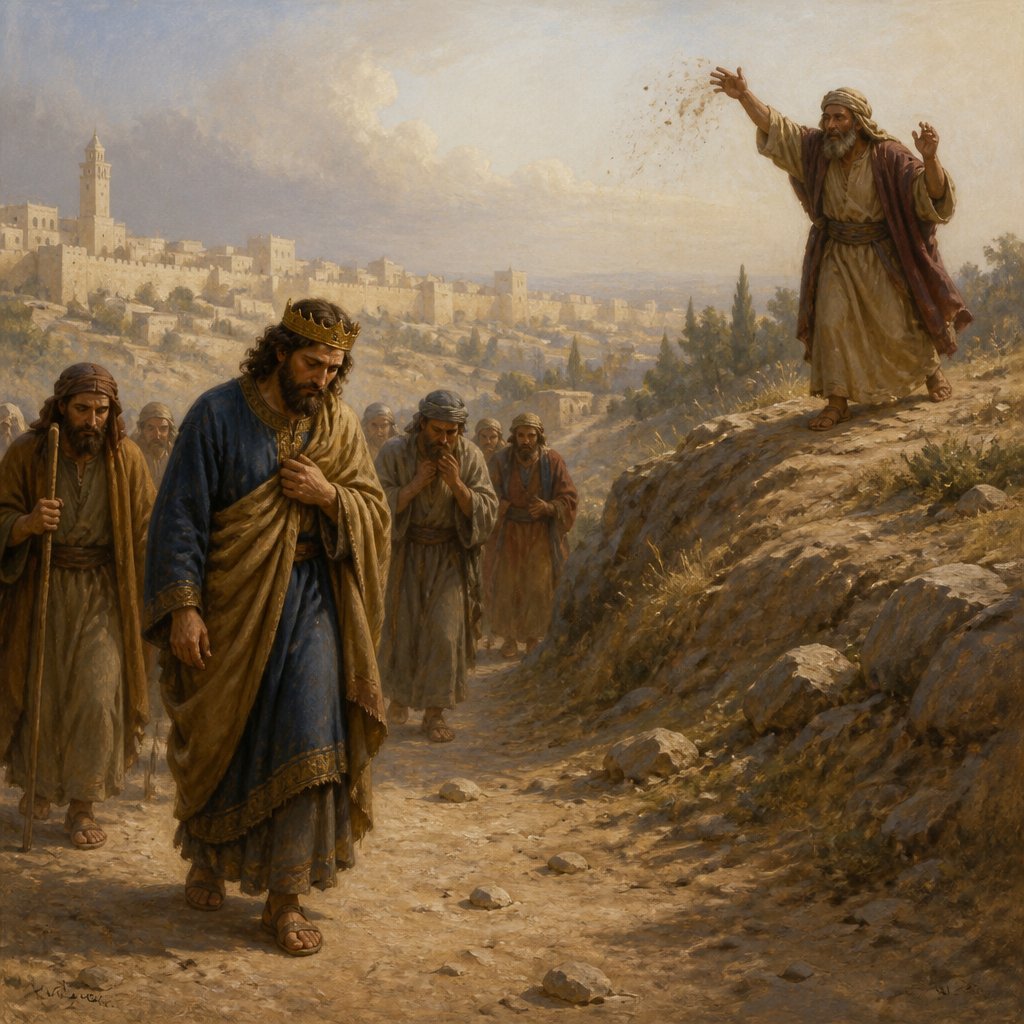
In 2 Samuel 16:7, we encounter a striking moment in the life of King David, who is not only the leader of Israel but also a man marked by imperfections and failures. The verse states, "And thus said Shimei when he cursed, Come out, come out, thou bloody man, and thou man of Belial." This condemnation from Shimei offers us a profound lens through which we can view the challenges of leadership, the nature of curses, and ultimately, the experience of grace in our lives.
Shimei, from the house of Saul, represents the anger and bitterness stemming from David's ascent to the throne. As David flees Jerusalem in the wake of Absalom's rebellion, Shimei takes this opportunity to express his disdain. His words, stark and accusatory, pierce the atmosphere: “thou bloody man” and “man of Belial.” To refer to David as a "man of Belial" signifies calling him worthless, a scoundrel, or even a worthless fellow. In essence, Shimei was unearthing David's past sins—the bloodshed from his battles, the moral failures, and the shame attached to his reign.
As we delve into this scripture, we are met with a portrait of vulnerability. David, the giant slayer and beloved king, is not immune to the bitter prophecies and accusations cast upon him. His raw human experience is palpable. Often in life, particularly as leaders and influencers—be it in our workplaces, homes, or communities—we find ourselves under harsh scrutiny from others. When faced with criticism and curses, it’s easy to become defensive, to lash out, or, worse yet, to shrink into despair.
David's reaction to Shimei's cursing offers a powerful lesson in humility. Instead of retaliating or allowing Shimei’s words to penetrate his spirit, David chooses to reflect on his own failings. In the verses that follow, he acknowledges, "It may be that the Lord will look on mine affliction, and that the Lord will requite me good for his cursing this day" (2 Samuel 16:12). Here, we see a deep level of introspection and a willingness to offer his pain back to the Lord, understanding that perhaps this scorn was a moment for personal growth and a reflection of God’s grace.
As we navigate our own lives, we can find ourselves in situations akin to David’s. Perhaps we face accusations and humiliation from peers or loved ones. Maybe we have records of our past deeds that haunt us, whispering the flaws and regrets into our present-day experience. Setbacks can make us feel like Shimei’s curse has come true, provoking shame and anger within us.
In such moments, we are called to remember that we, like David, are moving towards something greater. Instead of taking the weight of criticism to heart, we can engage in soul-searching, acknowledging our humanity, and admitting where we fall short. It is in kneeling under the weight of our failings that we might gain a clearer perspective of who God is and how He loves us despite our shortcomings. David's response pushes us towards grace-filled introspection. In his acceptance of his own faults, we find an invitation to reflect on the boundless mercy God offers to the repentant heart.
Moreover, let's not forget the dual significance of Shimei's accusation—the notion of being a “bloody man” and “man of Belial” reveals the harsh reality that our identity may be misunderstood or misrepresented by others. Yet, this is not our ultimate identity in Christ. We can hold fast to the truth that in Him, we are called beloved, redeemed, and made new.
Thus, as we tread through our daily lives facing adversities, criticisms, or the remnants of past mistakes, let us look to David’s example. May we remain grounded, understanding that curses do not define us; rather, they can become catalysts for deeper intimacy with our Creator as we acknowledge our frailty and turn towards His unending grace.
Want to reflect more on 2 Samuel 16:7?
Continue your spiritual journey with Bible Chat — an AI-powered tool for exploring God's Word through conversation. Ask questions, discover connections, and deepen your understanding.
Get Our Apps


2 Samuel 16:7 Artwork

2 Samuel 16:7 - "And thus said Shimei when he cursed, Come out, come out, thou bloody man, and thou man of Belial:"

"And thus said Shimei when he cursed, Come out, come out, thou bloody man, and thou man of Belial:" - 2 Samuel 16:7

2 Samuel 7:16 - "And thine house and thy kingdom shall be established for ever before thee: thy throne shall be established for ever."

2 Samuel 5:16 - "And Elishama, and Eliada, and Eliphalet."

2 samuel 9:7 fhdhdhdhhd

2 Samuel 7:1–29

"And thine house and thy kingdom shall be established for ever before thee: thy throne shall be established for ever." - 2 Samuel 7:16

1 Samuel 7:16 - "And he went from year to year in circuit to Beth-el, and Gilgal, and Mizpeh, and judged Israel in all those places."

2 Samuel 8:16 - "And Joab the son of Zeruiah was over the host; and Jehoshaphat the son of Ahilud was recorder;"

"And Elishama, and Eliada, and Eliphalet." - 2 Samuel 5:16

1 Samuel 16:7 - "But the LORD said unto Samuel, Look not on his countenance, or on the height of his stature; because I have refused him: for the LORD seeth not as man seeth; for man looketh on the outward appearance, but the LORD looketh on the heart."

2 Samuel 16:15 - "¶ And Absalom, and all the people the men of Israel, came to Jerusalem, and Ahithophel with him."

2 Samuel 16:14 - "And the king, and all the people that were with him, came weary, and refreshed themselves there."

2 Samuel 5:7 - "Nevertheless David took the strong hold of Zion: the same is the city of David."

2 Samuel 16:20 - "¶ Then said Absalom to Ahithophel, Give counsel among you what we shall do."

2 Samuel 16:16 - "And it came to pass, when Hushai the Archite, David's friend, was come unto Absalom, that Hushai said unto Absalom, God save the king, God save the king."

1 Samuel 16:2 - "And Samuel said, How can I go? if Saul hear it, he will kill me. And the LORD said, Take an heifer with thee, and say, I am come to sacrifice to the LORD."

2 Samuel 16:12 - "It may be that the LORD will look on mine affliction, and that the LORD will requite me good for his cursing this day."

2 Samuel 7:4 - "¶ And it came to pass that night, that the word of the LORD came unto Nathan, saying,"

2 Samuel 16:17 - "And Absalom said to Hushai, Is this thy kindness to thy friend? why wentest thou not with thy friend?"

2 Samuel 12:16 - "David therefore besought God for the child; and David fasted, and went in, and lay all night upon the earth."

2 Samuel 10:7 - "And when David heard of it, he sent Joab, and all the host of the mighty men."

1 Samuel 2:7 - "The LORD maketh poor, and maketh rich: he bringeth low, and lifteth up."

2 Samuel 8:7 - "And David took the shields of gold that were on the servants of Hadadezer, and brought them to Jerusalem."

2 Samuel 17:7 - "And Hushai said unto Absalom, The counsel that Ahithophel hath given is not good at this time."

2 Samuel 7:3 - "And Nathan said to the king, Go, do all that is in thine heart; for the LORD is with thee."

2 Samuel 22:16 - "And the channels of the sea appeared, the foundations of the world were discovered, at the rebuking of the LORD, at the blast of the breath of his nostrils."

2 Samuel 18:16 - "And Joab blew the trumpet, and the people returned from pursuing after Israel: for Joab held back the people."

2 Samuel 7:2 - "That the king said unto Nathan the prophet, See now, I dwell in an house of cedar, but the ark of God dwelleth within curtains."

2 Samuel 19:16 - "¶ And Shimei the son of Gera, a Benjamite, which was of Bahurim, hasted and came down with the men of Judah to meet king David."