The Wisdom of Mourning: A Call to Authenticity
"And Joab sent to Tekoah, and fetched thence a wise woman, and said unto her, I pray thee, feign thyself to be a mourner, and put on now mourning apparel, and anoint not thyself with oil, but be as a woman that had a long time mourned for the dead:" - 2 Samuel 14:2
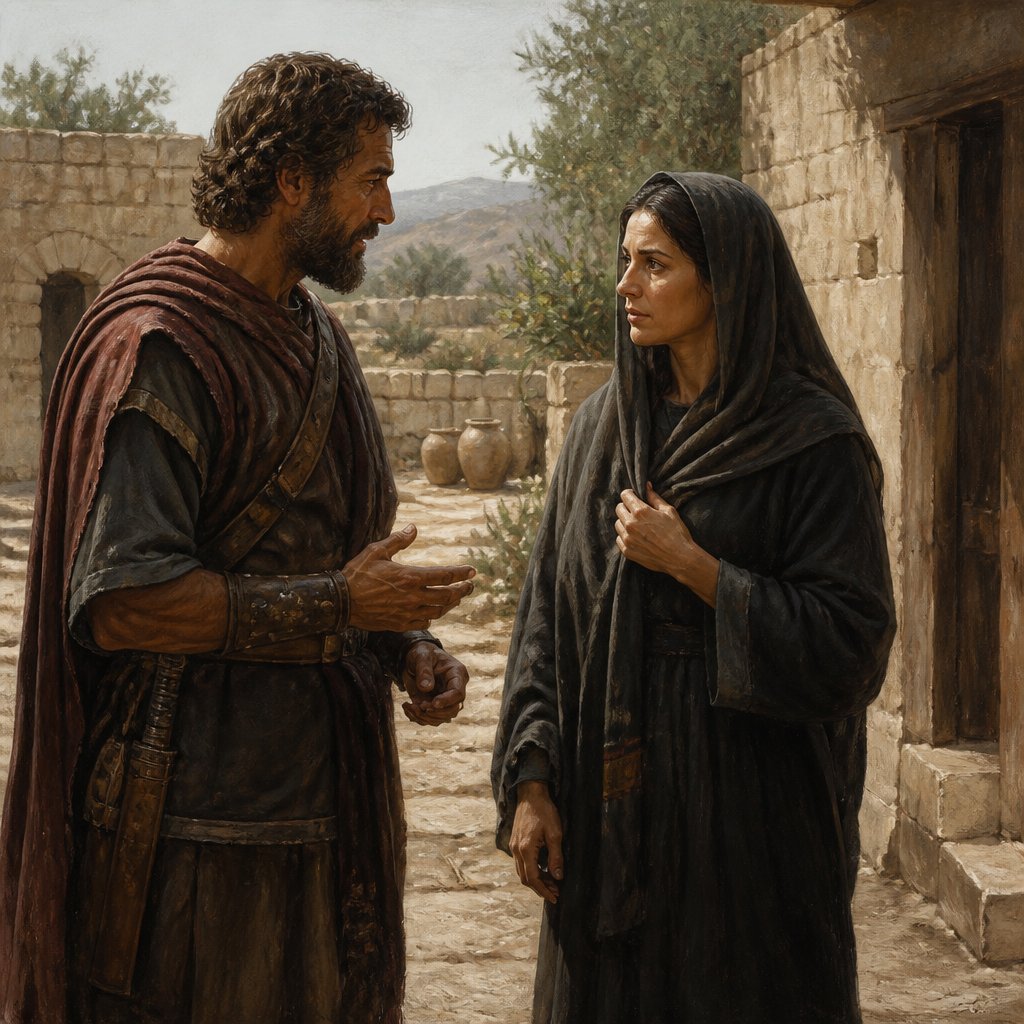
In 2 Samuel 14:2, we encounter a powerful moment orchestrated by Joab, the commander of King David’s army. The verse reads: "And Joab sent to Tekoah, and fetched thence a wise woman, and said unto her, I pray thee, feign thyself to be a mourner, and put on now mourning apparel, and anoint not thyself with oil, but be as a woman that had a long time mourned for the dead." This verse may appear to be a mere historical account, but within it lies profound spiritual truths concerning identity, authenticity, and our understanding of grief.
Joab, seeking to reconcile King David with his estranged son Absalom, recognizes the power of narrative and the art of persuasion. He employs a wise woman from Tekoah to craft a story that would appeal to the king’s emotions and ultimately influence his decisions. The depiction of the wise woman and her deliberate mourning attire symbolizes the necessity of authenticity in our expressions of grief.
In biblical times, mourning was an all-consuming process. Widows, in particular, were required not just to appear mournful, but to embody grief in every facet of their being. The wise woman was instructed to "feign" mourning, suggesting a performance that, while deceptive on the surface, pointed to an undeniable truth about the expressions of our hearts.
As we reflect on this verse, we are confronted with the reality that many of us wear masks in our everyday lives. We often present polished versions of ourselves, withholding our genuine emotions, especially during periods of grief or sorrow. Just as Joab instructed the woman to adopt mourning attire, we too might find ourselves adopting facades that hinder our true selves from emerging. Rather than pretending to have it all together, we must learn to embrace the authenticity of our own grief.
The wisdom of this biblical narrative is not simply in the action of feigning sorrow but in understanding the depth of the human experience. Each one of us carries wounds, burdens, and unexpressed grief that shapes our relationships and our walk with God. To "feign" mourning may feel deceptive; however, it mirrors the reality of individuals who struggle to articulate their pain. In our moments of grief, we may feel compelled to project strength or resilience rather than allowing ourselves to engage honestly with our emotions.
In the Gospel of John, we witness Jesus weeping at the tomb of Lazarus. His sorrow was not merely a pretense. It communicated deep compassion and understanding of humanity’s grief. Jesus’ authentic emotional response reminds us that sorrow is not a sign of weakness, but rather an essential aspect of being human. It allows for the healing of broken hearts and fosters connections with those who share in suffering.
As we engage with grief, either our own or that of those around us, let us remember that vulnerability allows for greater intimacy with God and our fellow believers. The wise woman of Tekoah teaches us that vulnerability does not diminish our dignity, but rather enhances it. To mourn genuinely, to dress in the garments of our grief, allows us to be seen and understood in ways that pretense never could.
Let us then take the opportunity to reflect on our own lives. Are there areas where we have been living outside of authenticity? Have we been feigning strength when we really should be expressing our sorrow? May we approach God with our hearts open, bringing our authentic selves to the One who understands our pain deeper than any earthly counselor or wise woman could. In doing so, we will find healing, community, and the courage to journey through our grief in a way that honors our true emotions and brings glory to God.
Want to reflect more on 2 Samuel 14:2?
Continue your spiritual journey with Bible Chat — an AI-powered tool for exploring God's Word through conversation. Ask questions, discover connections, and deepen your understanding.
Get Our Apps


2 Samuel 14:2 Artwork

2 Samuel 14:2 - "And Joab sent to Tekoah, and fetched thence a wise woman, and said unto her, I pray thee, feign thyself to be a mourner, and put on now mourning apparel, and anoint not thyself with oil, but be as a woman that had a long time mourned for the dead:"
"And Joab sent to Tekoah, and fetched thence a wise woman, and said unto her, I pray thee, feign thyself to be a mourner, and put on now mourning apparel, and anoint not thyself with oil, but be as a woman that had a long time mourned for the dead:" - 2 Samuel 14:2

2 Samuel 6:14

2 Samuel 6:14–22

2 Samuel 23:14 - "And David was then in an hold, and the garrison of the Philistines was then in Beth-lehem."

2 Samuel 2:14 - "And Abner said to Joab, Let the young men now arise, and play before us. And Joab said, Let them arise."

2 Samuel 14:23 - "So Joab arose and went to Geshur, and brought Absalom to Jerusalem."

2 Samuel 22:14 - "The LORD thundered from heaven, and the most High uttered his voice."

2 Samuel 16:14 - "And the king, and all the people that were with him, came weary, and refreshed themselves there."

2 Samuel 14:1 - "Now Joab the son of Zeruiah perceived that the king's heart was toward Absalom."

2 Samuel 14:28 - "¶ So Absalom dwelt two full years in Jerusalem, and saw not the king's face."

2 Samuel 11:14 - "¶ And it came to pass in the morning, that David wrote a letter to Joab, and sent it by the hand of Uriah."

2 Samuel 5:14 - "And these be the names of those that were born unto him in Jerusalem; Shammua, and Shobab, and Nathan, and Solomon,"

2 Samuel 6:14 - "And David danced before the LORD with all his might; and David was girded with a linen ephod."

2 Samuel 14:3 - "And come to the king, and speak on this manner unto him. So Joab put the words in her mouth."

2 Samuel 14:8 - "And the king said unto the woman, Go to thine house, and I will give charge concerning thee."

2 Samuel 1:14 - "And David said unto him, How wast thou not afraid to stretch forth thine hand to destroy the LORD'S anointed?"

2 Samuel 14:27 - "And unto Absalom there were born three sons, and one daughter, whose name was Tamar: she was a woman of a fair countenance."

"And David was then in an hold, and the garrison of the Philistines was then in Beth-lehem." - 2 Samuel 23:14

2 Samuel 14:10 - "And the king said, Whosoever saith ought unto thee, bring him to me, and he shall not touch thee any more."

2 Samuel 14:4 - "¶ And when the woman of Tekoah spake to the king, she fell on her face to the ground, and did obeisance, and said, Help, O king."

1 Samuel 14:2 - "And Saul tarried in the uttermost part of Gibeah under a pomegranate tree which is in Migron: and the people that were with him were about six hundred men;"

2 Samuel 14:5 - "And the king said unto her, What aileth thee? And she answered, I am indeed a widow woman, and mine husband is dead."

2 Samuel 14:16 - "For the king will hear, to deliver his handmaid out of the hand of the man that would destroy me and my son together out of the inheritance of God."

2 Samuel 14:21 - "¶ And the king said unto Joab, Behold now, I have done this thing: go therefore, bring the young man Absalom again."

2 Samuel 14:6 - "And thy handmaid had two sons, and they two strove together in the field, and there was none to part them, but the one smote the other, and slew him."

2 Samuel 14:12 - "Then the woman said, Let thine handmaid, I pray thee, speak one word unto my lord the king. And he said, Say on."

2 Samuel 7:14 - "I will be his father, and he shall be my son. If he commit iniquity, I will chasten him with the rod of men, and with the stripes of the children of men:"

2 Samuel 14:31 - "Then Joab arose, and came to Absalom unto his house, and said unto him, Wherefore have thy servants set my field on fire?"

2 Samuel 14:9 - "And the woman of Tekoah said unto the king, My lord, O king, the iniquity be on me, and on my father's house: and the king and his throne be guiltless."