The Heart of Revelation: Nathan's Parable to David
"And the LORD sent Nathan unto David. And he came unto him, and said unto him, There were two men in one city; the one rich, and the other poor." - 2 Samuel 12:1
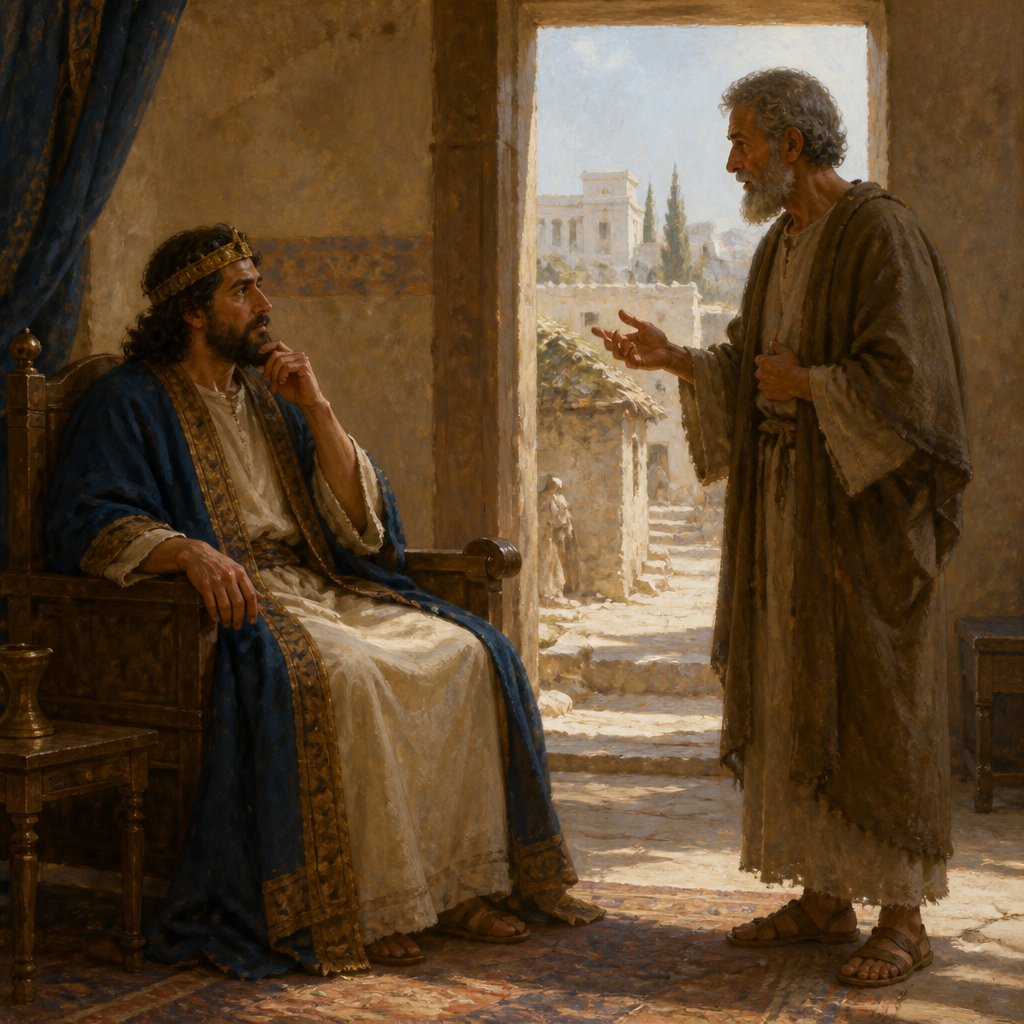
In the rich tapestry of Scripture, we find instances of profound divine intervention, and one of the most striking occurs in 2 Samuel 12:1, where it states: "And the LORD sent Nathan unto David. And he came unto him, and said unto him, There were two men in one city; the one rich, and the other poor." This moment, steeped in context, reveals not only the gravity of David's sin but also the intricate relationship between accountability, repentance, and God’s gracious correction.
To understand the significance of Nathan’s visit, we must first acknowledge the backdrop of David’s transgressions. Following his notorious sin with Bathsheba, David had spiraled into a cycle of deceit and concealment. A king, chosen by God, had succumbed to lust and orchestrated the murder of Uriah, Bathsheba’s husband, to cover his actions. Here lies the gravity of David's actions: for a man in David’s position, sin isn’t merely a personal failing; it carries national implications, affecting the people he governs and the honor of God’s name.
As Nathan approached David, he did so as a messenger of the Lord, bearing a heavy, yet necessary, task. In the life of every believer, there are moments when God sends a “Nathan” into our lives—someone who speaks truth, who confronts us gently yet firmly with our failings. The role of Nathan is crucial. He does not accuse David outright; instead, he employs a parable to engage David in self-reflection. This approach is both strategic and sensitive, allowing David to arrive at the realization of his sin without feeling outright condemned from the outset.
The introduction of the two men—a rich man who possessed numerous sheep and a poor man who had only one—sets the stage for a story of injustice and deep moral lesson. The rich man, representing power and privilege, exploits the poor man's singular possession, leading to the ultimate theft. Nathan’s parable resonates with the nature of David’s actions, albeit David initially fails to realize it. In this narrative, we explore how we often become blind to our own faults, seeing ourselves as the victims rather than the perpetrators.
Upon hearing Nathan's story, anger ignites within David. "As the LORD liveth, the man that hath done this thing shall surely die," (2 Samuel 12:5). David's response highlights his own moral compass—a goodness that is now overshadowed by his unacknowledged sin. Nathan’s revelation at this moment, "Thou art the man!" (2 Samuel 12:7), serves as a poignant reminder of the incisive nature of God’s truth. It confronts, it challenges, and ultimately it sets David on a path toward genuine repentance.
In our own lives, just as with David, God desires to bring us to a place of recognition. He loves us too much to allow us to remain ignorant of sin that could lead to our ruin. The truth can hurt, but it can also heal. Nathan’s declaration didn’t end in condemnation; rather, it was the catalyst for David’s heartfelt penitence. In Psalm 51, we see David’s transformation—his cry for mercy and restoration—where he pleads, "Create in me a clean heart, O God; and renew a right spirit within me" (Psalm 51:10).
This incident reminds us that God’s pursuit is for our hearts, not to propagate guilt but to reclaim our devotion to Him. When we find ourselves confronted by the consequences of our actions—or even by the loving confrontation of a friend or pastor—let us remember the nature of repentance. It is not merely about acknowledging sin but about turning back to God with a sincere heart.
In closing, as we meditate on this passage, let us invite accountability into our lives, recognizing the Nathan’s God may send our way. Let us be humble enough to receive, reflective enough to see our faults, and courageous enough to engage in the transformational journey of repentance. May we grow to reflect the character of our God who so graciously leads us away from darkness and into His marvelous light.
Want to reflect more on 2 Samuel 12:1?
Continue your spiritual journey with Bible Chat — an AI-powered tool for exploring God's Word through conversation. Ask questions, discover connections, and deepen your understanding.
Get Our Apps


2 Samuel 12:1 Artwork

2 Samuel 12:1 - "And the LORD sent Nathan unto David. And he came unto him, and said unto him, There were two men in one city; the one rich, and the other poor."
"And the LORD sent Nathan unto David. And he came unto him, and said unto him, There were two men in one city; the one rich, and the other poor." - 2 Samuel 12:1

2 Samuel 12:1-15 - "And the LORD sent Nathan unto David. And he came unto him, and said unto him, There were two men in one city; the one rich, and the other poor. The rich man had exceeding many flocks and herds: But the poor man had nothing, save one little ewe lamb, which he had bought and nourished up: and it grew up together with him, and with his children; it did eat of his own meat, and drank of his own cup, and lay in his bosom, and was unto him as a daughter. And there came a traveller unto the rich man, and he spared to take of his own flock and of his own herd, to dress for the wayfaring man that was come unto him; but took the poor man's lamb, and dressed it for the man that was come to him. And David's anger was greatly kindled against the man; and he said to Nathan, As the LORD liveth, the man that hath done this thing shall surely die: And he shall restore the lamb fourfold, because he did this thing, and because he had no pity. And Nathan said to David, Thou art the man. Thus saith the LORD God of Israel, I anointed thee king over Israel, and I delivered thee out of the hand of Saul; And I gave thee thy master's house, and thy master's wives into thy bosom, and gave thee the house of Israel and of Judah; and if that had been too little, I would moreover have given unto thee such and such things. Wherefore hast thou despised the commandment of the LORD, to do evil in his sight? thou hast killed Uriah the Hittite with the sword, and hast taken his wife to be thy wife, and hast slain him with the sword of the children of Ammon. Now therefore the sword shall never depart from thine house; because thou hast despised me, and hast taken the wife of Uriah the Hittite to be thy wife. Thus saith the LORD, Behold, I will raise up evil against thee out of thine own house, and I will take thy wives before thine eyes, and give them unto thy neighbour, and he shall lie with thy wives in the sight of this sun. For thou didst it secretly: but I will do this thing before all Israel, and before the sun. And David said unto Nathan, I have sinned against the LORD. And Nathan said unto David, The LORD also hath put away thy sin; thou shalt not die. Howbeit, because by this deed thou hast given great occasion to the enemies of the LORD to blaspheme, the child also that is born unto thee shall surely die. And Nathan departed unto his house. And the LORD struck the child that Uriah's wife bare unto David, and it was very sick."

1 Samuel 2:12

1 Samuel 2:12 - "¶ Now the sons of Eli were sons of Belial; they knew not the LORD."
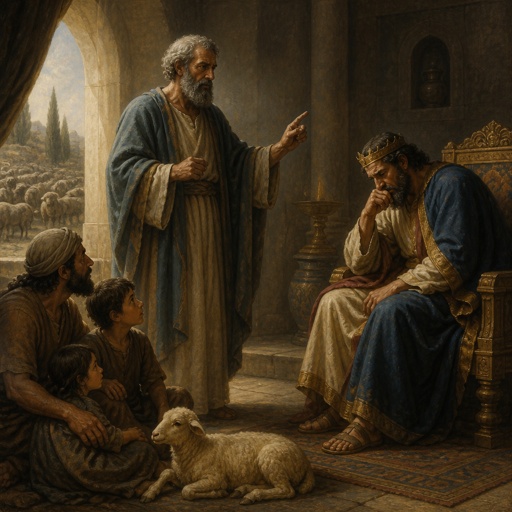
"And the LORD sent Nathan unto David. And he came unto him, and said unto him, There were two men in one city; the one rich, and the other poor. The rich man had exceeding many flocks and herds: But the poor man had nothing, save one little ewe lamb, which he had bought and nourished up: and it grew up together with him, and with his children; it did eat of his own meat, and drank of his own cup, and lay in his bosom, and was unto him as a daughter. And there came a traveller unto the rich man, and he spared to take of his own flock and of his own herd, to dress for the wayfaring man that was come unto him; but took the poor man's lamb, and dressed it for the man that was come to him. And David's anger was greatly kindled against the man; and he said to Nathan, As the LORD liveth, the man that hath done this thing shall surely die: And he shall restore the lamb fourfold, because he did this thing, and because he had no pity. And Nathan said to David, Thou art the man. Thus saith the LORD God of Israel, I anointed thee king over Israel, and I delivered thee out of the hand of Saul; And I gave thee thy master's house, and thy master's wives into thy bosom, and gave thee the house of Israel and of Judah; and if that had been too little, I would moreover have given unto thee such and such things. Wherefore hast thou despised the commandment of the LORD, to do evil in his sight? thou hast killed Uriah the Hittite with the sword, and hast taken his wife to be thy wife, and hast slain him with the sword of the children of Ammon. Now therefore the sword shall never depart from thine house; because thou hast despised me, and hast taken the wife of Uriah the Hittite to be thy wife. Thus saith the LORD, Behold, I will raise up evil against thee out of thine own house, and I will take thy wives before thine eyes, and give them unto thy neighbour, and he shall lie with thy wives in the sight of this sun. For thou didst it secretly: but I will do this thing before all Israel, and before the sun. And David said unto Nathan, I have sinned against the LORD. And Nathan said unto David, The LORD also hath put away thy sin; thou shalt not die. Howbeit, because by this deed thou hast given great occasion to the enemies of the LORD to blaspheme, the child also that is born unto thee shall surely die. And Nathan departed unto his house. And the LORD struck the child that Uriah's wife bare unto David, and it was very sick." - 2 Samuel 12:1-15

2 Samuel 1:12 - "And they mourned, and wept, and fasted until even, for Saul, and for Jonathan his son, and for the people of the LORD, and for the house of Israel; because they were fallen by the sword."

1 Samuel 2:12 Now the sons of Eli were sons of Belial; they knew not the LORD.

1 Samuel 2:12 Now the sons of Eli were sons of Belial; they knew not the LORD.

1 Samuel 2:12 Now the sons of Eli were sons of Belial; they knew not the LORD.

1 Samuel 12

1 Samuel 4:12

2 Samuel 5:12

1 Samuel 2:12 Now the sons of Eli were sons of Belial; they knew not the LORD.

1 Samuel 2:12 Now the sons of Eli were sons of Belial; they knew not the LORD.

1 Samuel 2:12 Now the sons of Eli were sons of Belial; they knew not the LORD.

1 Samuel 2:12 Now the sons of Eli were sons of Belial; they knew not the LORD.

2 Samuel 12:2 - "The rich man had exceeding many flocks and herds:"

1 Samuel 12:13

"¶ Now the sons of Eli were sons of Belial; they knew not the LORD." - 1 Samuel 2:12

2 Samuel 12:12 - "For thou didst it secretly: but I will do this thing before all Israel, and before the sun."

1 Samuel 12:13

1 Samuel 12:18 - "So Samuel called unto the LORD; and the LORD sent thunder and rain that day: and all the people greatly feared the LORD and Samuel."

2 Samuel 2:12 - "¶ And Abner the son of Ner, and the servants of Ish-bosheth the son of Saul, went out from Mahanaim to Gibeon."

1 Samuel 12:2 - "And now, behold, the king walketh before you: and I am old and grayheaded; and, behold, my sons are with you: and I have walked before you from my childhood unto this day."

1 Samuel 12:6 - "¶ And Samuel said unto the people, It is the LORD that advanced Moses and Aaron, and that brought your fathers up out of the land of Egypt."

1 Samuel 13:12 Saul's disobedience

1 Samuel 13:12 No face of persons

1 Samuel 1:12 - "And it came to pass, as she continued praying before the LORD, that Eli marked her mouth."

1 Samuel 12:1 - "And Samuel said unto all Israel, Behold, I have hearkened unto your voice in all that ye said unto me, and have made a king over you."