The Weight of Prophecy: Understanding God's Sovereignty in Crisis
"¶ And the king appointed the lord on whose hand he leaned to have the charge of the gate: and the people trode upon him in the gate, and he died, as the man of God had said, who spake when the king came down to him." - 2 Kings 7:17
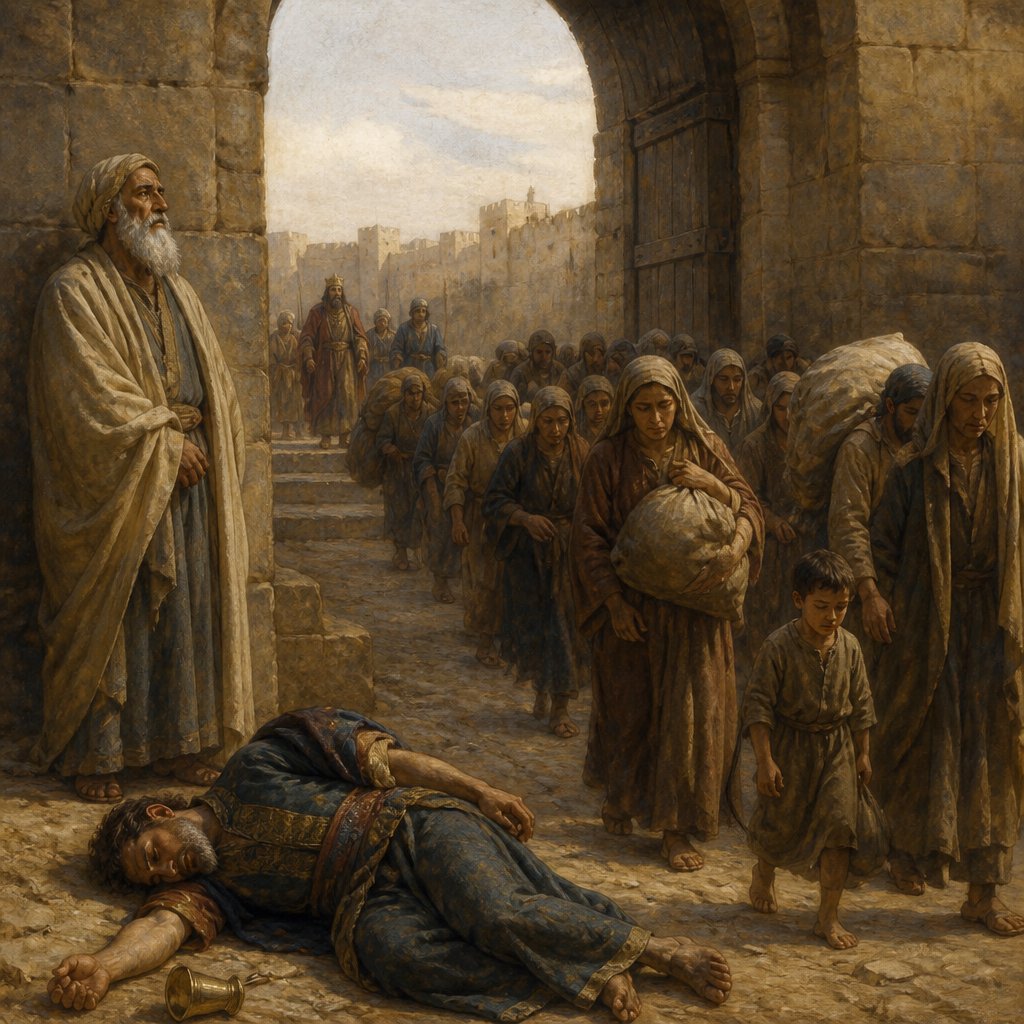
As we delve into 2 Kings 7:17, we encounter a profound illustration of both the gravity of prophetic words and the sovereignty of God in tumultuous circumstances. The verse reads: "And the king appointed the lord on whose hand he leaned to have the charge of the gate: and the people trode upon him in the gate, and he died, as the man of God had said, who spake when the king came down to him" (KJV). This passage is layered with meaning and serves as a powerful reminder of how God moves even in the darkest of times.
To understand the full implication of this verse, we must first appreciate the context surrounding it. The backdrop of this moment is a city engulfed in famine, with desperation infiltrating every household. The Israelites were besieged by the Arameans, and the situation was dire. Amidst this chaos, Elisha, the prophet of God, delivered a message of hope, declaring that within twenty-four hours the situation would turn, and abundance would replace scarcity. However, as is often the case with God’s promises, the fulfillment of His word would be met with human doubt and skepticism.
The king, influenced by the voice of reason rather than faith, appointed a lord to oversee the gate – a position of great responsibility during such a tumultuous time. This lord, leaning on the king for support, fell victim to the overwhelming panic and chaos of the people as the situation turned. All around him, there was mistrust and fear; when the people gained access to relief from their hunger, they essentially trampled the very individual who had been appointed to ensure order. The prophecy spoken by Elisha was fulfilled in this tragic scene, causing us to reflect deeply on the dynamics of faith, leadership, and God’s judgement.
In this narrative, we see a clear dichotomy between the believing heart and the heart that leans solely on human strength. This lord’s death marks a sobering end to his role, demonstrating that when one dismisses God’s word and fails to trust in the prophetic declarations of hope, devastating consequences may await. The weight of prophecy can be both liberating and condemning, depending on our response to it.
The fact that the king appointed this lord points to the reality that leadership and trust are intertwined. The king, relying on his own judgment, invited disaster—not just on himself but on the one who was placed in charge. It reminds us to be cautious about where we place our trust. Proverbs 3:5-6 reminds us: "Trust in the Lord with all thine heart; and lean not unto thine own understanding. In all thy ways acknowledge him, and he shall direct thy paths" (KJV). Trusting God is foundational in moments of crisis; when we lean on our own understanding, we risk becoming trampled by the very circumstances we thought we could control.
God’s sovereignty in this situation cannot be overlooked. He had already spoken through the man of God that a miraculous turnaround was forthcoming, yet the response of the people and the king led to a tragic fulfillment that seemed contrary to the promise. The lesson extends far beyond this narrative; it serves as a reminder that God’s plans may come to fruition in ways that we cannot foresee. His declarations do not bend to our understanding or emotional responses.
In the present day, we may not face a physical siege as the Israelites did, but each of us encounters areas of famine—be it in relationships, finances, or spiritual droughts. In these moments, we too can dismiss prophetic words of hope. Let this passage serve as both a caution and a call to trust in God’s promises, no matter how distant deliverance may seem. In our lives, may we find our steadfastness in His word and operate under the understanding that God’s timing is perfect, His purpose unfailing, and His authority absolute.
As we reflect upon 2 Kings 7:17, let us commit to seeking God in our despair and to adopting a posture of faith with every word He speaks, understanding that prophecies come with weight, responsibility, and unyielding truth.
Want to reflect more on 2 Kings 7:17?
Continue your spiritual journey with Bible Chat — an AI-powered tool for exploring God's Word through conversation. Ask questions, discover connections, and deepen your understanding.
Get Our Apps


2 Kings 7:17 Artwork
2 Kings 7:17 - "¶ And the king appointed the lord on whose hand he leaned to have the charge of the gate: and the people trode upon him in the gate, and he died, as the man of God had said, who spake when the king came down to him."
"¶ And the king appointed the lord on whose hand he leaned to have the charge of the gate: and the people trode upon him in the gate, and he died, as the man of God had said, who spake when the king came down to him." - 2 Kings 7:17

2 Kings 17:2 - "And he did that which was evil in the sight of the LORD, but not as the kings of Israel that were before him."

2 Kings 17:7 - "For so it was, that the children of Israel had sinned against the LORD their God, which had brought them up out of the land of Egypt, from under the hand of Pharaoh king of Egypt, and had feared other gods,"

2 Kings 7:2

2 Kings 19:17 - "Of a truth, LORD, the kings of Assyria have destroyed the nations and their lands,"

Daniel 7:17 - "These great beasts, which are four, are four kings, which shall arise out of the earth."

1 Kings 17:7 - "And it came to pass after a while, that the brook dried up, because there had been no rain in the land."

1 Kings 17:2 - "And the word of the LORD came unto him, saying,"

1 Kings 7:17 - "And nets of checker work, and wreaths of chain work, for the chapiters which were upon the top of the pillars; seven for the one chapiter, and seven for the other chapiter."

2 Kings 17:40 - "Howbeit they did not hearken, but they did after their former manner."

2 Kings 17:8 - "And walked in the statutes of the heathen, whom the LORD cast out from before the children of Israel, and of the kings of Israel, which they had made."

2 Kings 21:17 - "¶ Now the rest of the acts of Manasseh, and all that he did, and his sin that he sinned, are they not written in the book of the chronicles of the kings of Judah?"

2 Kings 7:11 - "And he called the porters; and they told it to the king's house within."

2 Kings 7:7 - "Wherefore they arose and fled in the twilight, and left their tents, and their horses, and their asses, even the camp as it was, and fled for their life."

2 Kings 17:17 - "And they caused their sons and their daughters to pass through the fire, and used divination and enchantments, and sold themselves to do evil in the sight of the LORD, to provoke him to anger."

"And he did that which was evil in the sight of the LORD, but not as the kings of Israel that were before him." - 2 Kings 17:2

"Of a truth, LORD, the kings of Assyria have destroyed the nations and their lands," - 2 Kings 19:17

2 Kings 17:19 - "Also Judah kept not the commandments of the LORD their God, but walked in the statutes of Israel which they made."

2 Kings 2:7 - "And fifty men of the sons of the prophets went, and stood to view afar off: and they two stood by Jordan."

2 Kings 17:5 - "¶ Then the king of Assyria came up throughout all the land, and went up to Samaria, and besieged it three years."

2 Kings 24:17 - "¶ And the king of Babylon made Mattaniah his father's brother king in his stead, and changed his name to Zedekiah."

2 Kings 17:22 - "For the children of Israel walked in all the sins of Jeroboam which he did; they departed not from them;"

2 Kings 17:12 - "For they served idols, whereof the LORD had said unto them, Ye shall not do this thing."

2 Kings 17:14 - "Notwithstanding they would not hear, but hardened their necks, like to the neck of their fathers, that did not believe in the LORD their God."

2 Kings 11:17 - "¶ And Jehoiada made a covenant between the LORD and the king and the people, that they should be the LORD'S people; between the king also and the people."

2 Kings 17:3 - "Against him came up Shalmaneser king of Assyria; and Hoshea became his servant, and gave him presents."

2 Kings 17:10 - "And they set them up images and groves in every high hill, and under every green tree:"

2 Kings 14:17 - "¶ And Amaziah the son of Joash king of Judah lived after the death of Jehoash son of Jehoahaz king of Israel fifteen years."

2 Kings 2:17 - "And when they urged him till he was ashamed, he said, Send. They sent therefore fifty men; and they sought three days, but found him not."