Death in the Pot: A Reflection on God’s Provision and His Sovereign Protection
"So they poured out for the men to eat. And it came to pass, as they were eating of the pottage, that they cried out, and said, O thou man of God, there is death in the pot. And they could not eat thereof." - 2 Kings 4:40
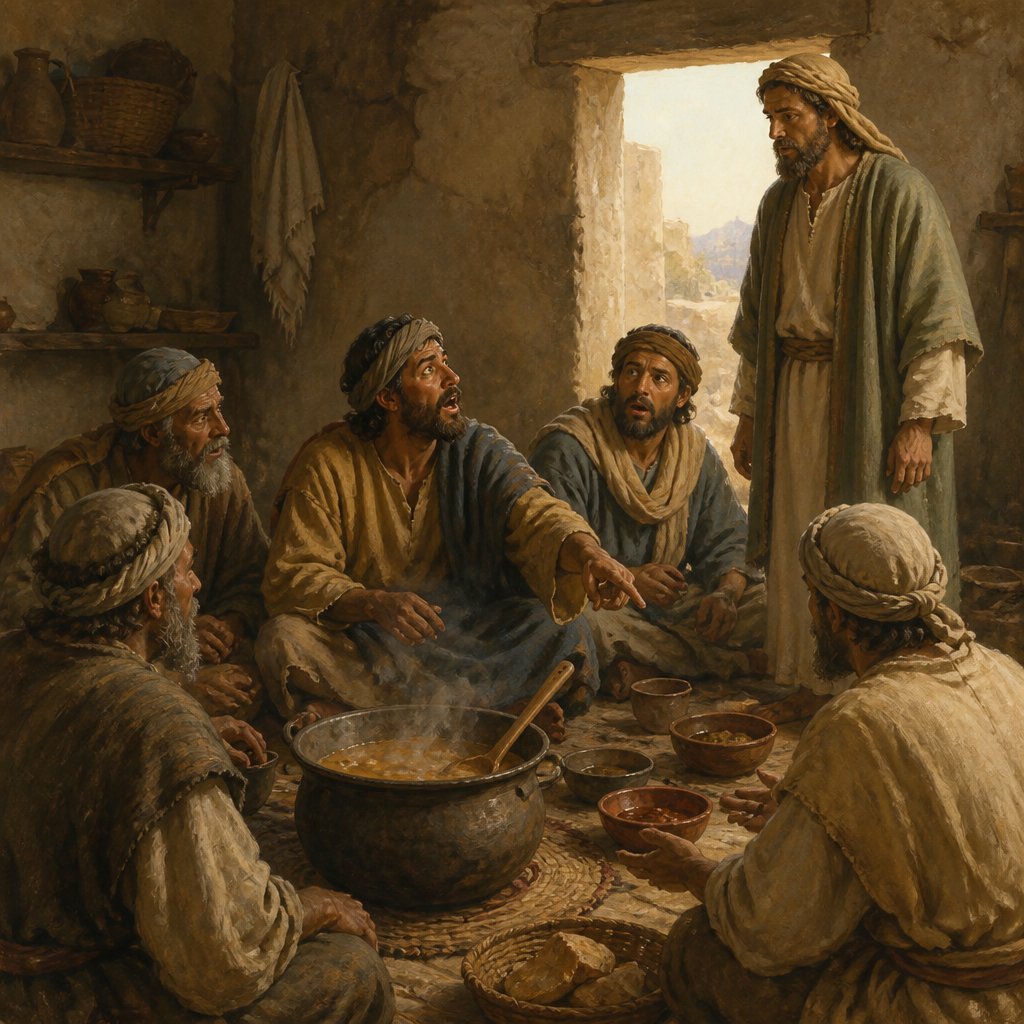
In 2 Kings 4:40, we encounter a moment of crisis that resonates deeply with the human experience. The King James Version reads: "So they poured out for the men to eat. And it came to pass, as they were eating of the pottage, that they cried out, and said, O thou man of God, there is death in the pot. And they could not eat thereof." This scene unfolds against the backdrop of a gathering of prophets during a time of famine, where food was scarce and sustenance was a constant concern.
The prophet Elisha, acting as a source of guidance and provision, had instructed these men to prepare a pot of stew. In their effort to provide nourishment, they unwittingly prepared a meal that contained poisonous ingredients—a harrowing depiction of the fragility of human effort. The phrase, "there is death in the pot," captures the severity of their plight. This is not merely a literal crisis but can also symbolize the spiritual and moral challenges we face today.
At first glance, the act of preparing the stew may seem mundane. However, it speaks volumes about our lives. Similar to these prophets, we often strive to create something meaningful and good from the resources at our disposal. Yet, sometimes, our best efforts can lead us astray or spiral into disaster. Whether it's a project we’ve undertaken, a relationship we are nurturing, or even our spiritual lives, we can find ourselves pouring our energies into something that ultimately turns toxic.
In the case of the pottage, the root of the issue lies in the ingredients used—a reminder that not everything that appears good or beneficial is innocent. As believers, we must remain vigilant about what we allow into our lives. Just as they did not discern the poison in their meal, we sometimes overlook the harmful influences that can creep in, eroding our faith, joy, and peace.
The men cried out in desperation to Elisha, recognizing that they could not eat the stew. Their immediate response introduces an important principle of faith: when faced with danger or adversity, we should turn our hearts toward God. The phrase, "O thou man of God," signifies their acknowledgment of Elisha’s authority and divine connection.
This is a crucial moment of turning from self-reliance to divine dependence. Their first instinct was not to panic but to seek help. They understood that their survival was intertwined with divine intervention. Likewise, we too should cultivate a habit of reaching out in prayer and supplication during our trials.
Elisha’s response to their distress was both practical and miraculous. He asked for flour to be added to the pot. Flour—an ordinary ingredient—represents God's ability to take what is flawed and transform it into something redeeming. This speaks to the heart of our faith: God is in the business of healing and restoration. When we present our life's toxicity to Him, He has the power to make something beautiful from our ashes.
Through the addition of flour, the pottage was purified; they were able to eat and be nourished. This incident instills hope as it illustrates the faithfulness of God amidst our deadly circumstances. When our efforts run dry and we recognize the death that surrounds us, God invites us to place our trust in Him. He invites us to submit our "pot" to Him, to let Him sift through our situations with His grace and life-giving power.
As we go about our lives, let us continuously seek to discern what we are sustaining, allowing only those things that reflect God's goodness. Let us also remain open to God's transformative work in our hearts. In our weakness, He is strong; in death, He offers life.
May we learn to cry out to God in our times of need, trust in His ability to redeem our situations, and always remember that He can turn our death into life.
Want to reflect more on 2 Kings 4:40?
Continue your spiritual journey with Bible Chat — an AI-powered tool for exploring God's Word through conversation. Ask questions, discover connections, and deepen your understanding.
Get Our Apps


2 Kings 4:40 Artwork

2 Kings 4:40 - "So they poured out for the men to eat. And it came to pass, as they were eating of the pottage, that they cried out, and said, O thou man of God, there is death in the pot. And they could not eat thereof."
"So they poured out for the men to eat. And it came to pass, as they were eating of the pottage, that they cried out, and said, O thou man of God, there is death in the pot. And they could not eat thereof." - 2 Kings 4:40

2 Kings 17:40 - "Howbeit they did not hearken, but they did after their former manner."

2 Kings 4:4-5

"Howbeit they did not hearken, but they did after their former manner." - 2 Kings 17:40

1 Kings 2:40 - "And Shimei arose, and saddled his ass, and went to Gath to Achish to seek his servants: and Shimei went, and brought his servants from Gath."

Isaiah 40:4

2 Kings 10:4 - "But they were exceedingly afraid, and said, Behold, two kings stood not before him: how then shall we stand?"

2 Kings 4:11 - "And it fell on a day, that he came thither, and he turned into the chamber, and lay there."

1 Kings 4:2 - "And these were the princes which he had; Azariah the son of Zadok the priest,"

2 Kings 9:4 - "¶ So the young man, even the young man the prophet, went to Ramoth-gilead."

2 Kings 6:4 - "So he went with them. And when they came to Jordan, they cut down wood."

2 Kings 4:15 - "And he said, Call her. And when he had called her, she stood in the door."

1 Kings 22:40 - "So Ahab slept with his fathers; and Ahaziah his son reigned in his stead."

2 Kings 16:4 - "And he sacrificed and burnt incense in the high places, and on the hills, and under every green tree."

2 Kings 4:33 - "He went in therefore, and shut the door upon them twain, and prayed unto the LORD."

2 Kings 4:32 - "And when Elisha was come into the house, behold, the child was dead, and laid upon his bed."

2 Kings 4:18 - "¶ And when the child was grown, it fell on a day, that he went out to his father to the reapers."

1 Kings 8:40 - "That they may fear thee all the days that they live in the land which thou gavest unto our fathers."

2 Kings 4:44 - "So he set it before them, and they did eat, and left thereof, according to the word of the LORD."

2 Kings 5:4 - "And one went in, and told his lord, saying, Thus and thus said the maid that is of the land of Israel."

2 Kings 15:4 - "Save that the high places were not removed: the people sacrificed and burnt incense still on the high places."

2 Kings 4:28 - "Then she said, Did I desire a son of my lord? did I not say, Do not deceive me?"

2 Kings 3:4 - "¶ And Mesha king of Moab was a sheepmaster, and rendered unto the king of Israel an hundred thousand lambs, and an hundred thousand rams, with the wool."

2 Kings 21:4 - "And he built altars in the house of the LORD, of which the LORD said, In Jerusalem will I put my name."

2 Kings 4:17 - "And the woman conceived, and bare a son at that season that Elisha had said unto her, according to the time of life."

2 Kings 20:4 - "And it came to pass, afore Isaiah was gone out into the middle court, that the word of the LORD came to him, saying,"

2 Kings 13:4 - "And Jehoahaz besought the LORD, and the LORD hearkened unto him: for he saw the oppression of Israel, because the king of Syria oppressed them."

2 Kings 4:3 - "Then he said, Go, borrow thee vessels abroad of all thy neighbours, even empty vessels; borrow not a few."

1 Kings 11:40 - "Solomon sought therefore to kill Jeroboam. And Jeroboam arose, and fled into Egypt, unto Shishak king of Egypt, and was in Egypt until the death of Solomon."