United for the Battle: Lessons from 2 Kings 3:7
"And he went and sent to Jehoshaphat the king of Judah, saying, The king of Moab hath rebelled against me: wilt thou go with me against Moab to battle? And he said, I will go up: I am as thou art, my people as thy people, and my horses as thy horses." - 2 Kings 3:7
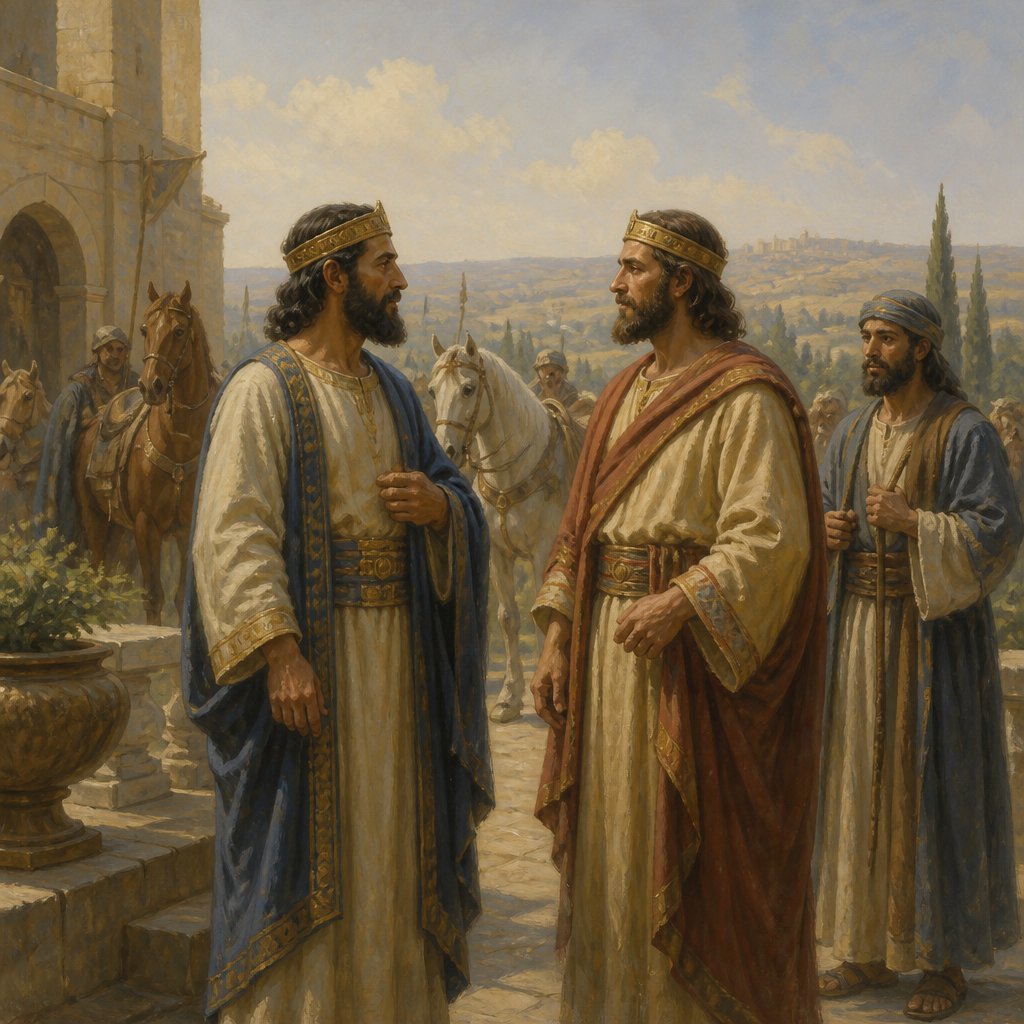
In the ever-changing landscape of leadership and alliances, the kingdoms of Israel and Judah during the reigns of their respective kings face tumultuous challenges. One such moment is captured in 2 Kings 3:7, which reads,
"And he went and sent to Jehoshaphat the king of Judah, saying, The king of Moab hath rebelled against me: wilt thou go with me against Moab to battle? And he said, I will go up: I am as thou art, my people as thy people, and my horses as thy horses."
This verse presents a fascinating interplay of leadership, unity, and the essential ingredients required to combat the tides of opposition. It opens windows into the hearts of two men at crucial crossroads, beckoning us to reflect on our own alliances and the battles we face today.
**Trust in Partnership**
First, we observe the communication between the king of Israel and Jehoshaphat, the king of Judah. The moment is significant; it is not merely a request for military aid but a call for unity in purpose against a common foe. In our lives, as Christians, we find encouragement in this model of partnership. In navigating the challenges of our spiritual lives—whether they arise from personal struggles or societal pressures—we must lean on the relationships we hold with fellow believers. A division often appears in its most insidious forms, causing us to forget that we are all part of one body. The attack on one is an attack on all, just as the empowerment provided by unity strengthens each part. As Jehoshaphat responds, “I am as thou art, my people as thy people, and my horses as thy horses,” we are reminded that shared tribulations can forge bonds that are both durable and sacred.
**Identity and Belonging**
The statement by Jehoshaphat carries significant weight—he identifies with Israel’s king and ties his identity to the cause at hand. This moment calls us to examine the identities we forge not just as individuals, but as members of Christ’s body. Are we recognizing that our bonds transcend mere labels or denominations? When the world divides us into factions, be it through race, politics, or social status, we are called to rise above and assert our oneness in Christ. Jehoshaphat’s willingness to take part in this battle symbolizes the need for a collective identity as followers of Christ, promoting peace and encouraging each other to face the trials of life together.
**Preparation for Battle**
Moreover, this verse nudges us to consider preparation. The king of Israel reached out not only for assistance but also to forge a plan of action. Spiritual warfare requires intentional preparation. In Ephesians 6:11-12 (KJV), we are reminded to “put on the whole armor of God, that ye may be able to stand against the wiles of the devil.” Jehoshaphat agreed to go into battle, representing the willingness we must embody when faced with spiritual disagreements or conflicts. We must not shy away from establishing connections with fellow believers, united under the truth of God’s Word.
**Courage and Commitment**
Finally, Jehoshaphat’s acceptance to join in the battle exhibits courage and commitment. In the face of rebellion, he does not falter. Thus, we are called to bravely face the challenges before us, armed with the assurance that God is our ally. Our commitment to stand with one another in faith reflects richly in our prayers and actions toward a world that desperately needs hope.
As you reflect on 2 Kings 3:7, consider how you can embody these principles of partnership, identity, and courageous commitment in your life. Are you forging alliances with other believers for strength in battle? Are you defining your identity and sense of belonging in Christ’s eternal kingdom above worldly divisions? Let this verse stir within you a renewed desire to stand united against challenges, prepared for the battles that lie ahead, committed to each other as we remember: our true strength lies in our unity.
Want to reflect more on 2 Kings 3:7?
Continue your spiritual journey with Bible Chat — an AI-powered tool for exploring God's Word through conversation. Ask questions, discover connections, and deepen your understanding.
Get Our Apps


2 Kings 3:7 Artwork

2 Kings 3:7 - "And he went and sent to Jehoshaphat the king of Judah, saying, The king of Moab hath rebelled against me: wilt thou go with me against Moab to battle? And he said, I will go up: I am as thou art, my people as thy people, and my horses as thy horses."
"And he went and sent to Jehoshaphat the king of Judah, saying, The king of Moab hath rebelled against me: wilt thou go with me against Moab to battle? And he said, I will go up: I am as thou art, my people as thy people, and my horses as thy horses." - 2 Kings 3:7

2 Kings 7:3 - "¶ And there were four leprous men at the entering in of the gate: and they said one to another, Why sit we here until we die?"

2 Kings 3:15

2 Kings 3:15

2 Kings 3:15

2 Kings 3:16-19

2 Kings 7:2

2 Kings 7:11 - "And he called the porters; and they told it to the king's house within."

2 Kings 7:7 - "Wherefore they arose and fled in the twilight, and left their tents, and their horses, and their asses, even the camp as it was, and fled for their life."

1 Kings 7:3 - "And it was covered with cedar above upon the beams, that lay on forty five pillars, fifteen in a row."

1 Kings 3:7 - "And now, O LORD my God, thou hast made thy servant king instead of David my father: and I am but a little child: I know not how to go out or come in."

2 Kings 3:10 - "And the king of Israel said, Alas! that the LORD hath called these three kings together, to deliver them into the hand of Moab!"

2 Kings 3:23 - "And they said, This is blood: the kings are surely slain, and they have smitten one another: now therefore, Moab, to the spoil."

2 Kings 3:6 - "¶ And king Jehoram went out of Samaria the same time, and numbered all Israel."

2 Kings 2:7 - "And fifty men of the sons of the prophets went, and stood to view afar off: and they two stood by Jordan."

2 Kings 3:16 - "And he said, Thus saith the LORD, Make this valley full of ditches."

2 Kings 3:3 - "Nevertheless he cleaved unto the sins of Jeroboam the son of Nebat, which made Israel to sin; he departed not therefrom."

2 Thessalonians 3:6-7

2 Kings 22:7 - "Howbeit there was no reckoning made with them of the money that was delivered into their hand, because they dealt faithfully."

2 Kings 20:7 - "And Isaiah said, Take a lump of figs. And they took and laid it on the boil, and he recovered."

2 Kings 3:5 - "But it came to pass, when Ahab was dead, that the king of Moab rebelled against the king of Israel."
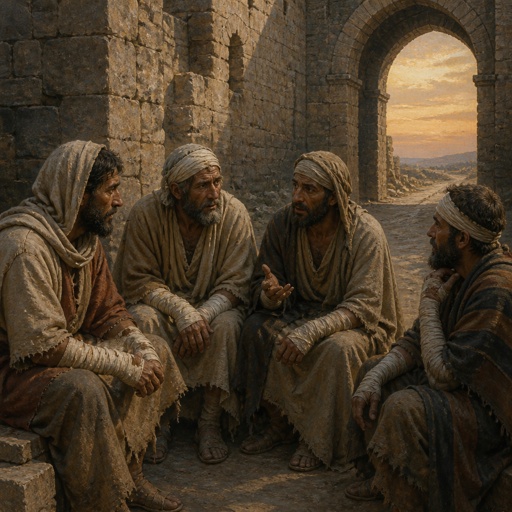
"¶ And there were four leprous men at the entering in of the gate: and they said one to another, Why sit we here until we die?" - 2 Kings 7:3

2 Kings 7:14 - "They took therefore two chariot horses; and the king sent after the host of the Syrians, saying, Go and see."

2 Kings 3:18 - "And this is but a light thing in the sight of the LORD: he will deliver the Moabites also into your hand."

2 Kings 25:3 - "And on the ninth day of the fourth month the famine prevailed in the city, and there was no bread for the people of the land."

2 Kings 3:21 - "¶ And when all the Moabites heard that the kings were come up to fight against them, they gathered all that were able to put on armour, and upward, and stood in the border."

2 Kings 6:7 - "Therefore said he, Take it up to thee. And he put out his hand, and took it."

2 Timothy 3:7 - "Ever learning, and never able to come to the knowledge of the truth."

2 Kings 7:20 - "And so it fell out unto him: for the people trode upon him in the gate, and he died."